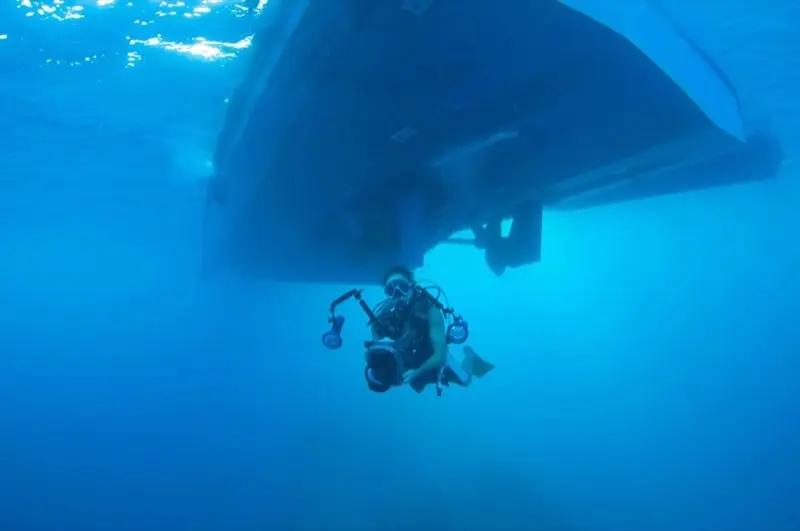
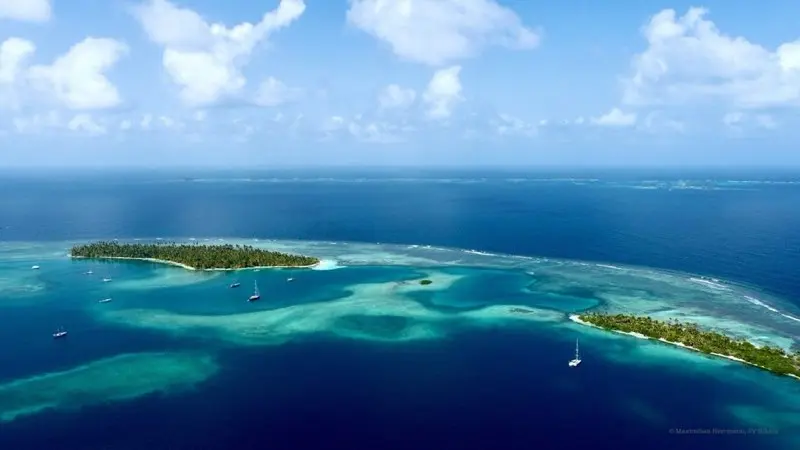
I’m hanging suspended in five meters of liquid turquoise off the coast of Little Bay, Montserrat. Below me, a field of Acropora palmata (Elkhorn coral) stretches out like a golden forest. The only sound is the rhythmic, metallic crack-crack of parrotfish scraping algae off the reef. Then, from the shadow of a volcanic overhang, a juvenile Hawksbill turtle emerges, its scalloped shell glowing in the refracted sunlight.
As a Marine Biology Consultant and RYA Yachtmaster, I often remind boaters that the Caribbean isn't just a playground, it’s a fragile, interconnected series of ecosystems. When we drop an anchor or discard grey water, we aren't just touching "the bottom"; we are interacting with a complex biological engine that drives everything from global oxygen levels to local tourism economies. This guide builds the species literacy and conservation instincts that every Caribbean sailor should carry alongside their charts.
Understanding what lives beneath your keel is the first step toward becoming a true steward of the sea.
About this guide: Marine species identifications, ecosystem data, and lionfish impact statistics are drawn from Alex Rivera's 15 years of field research across Caribbean reef systems, including published contributions to the Royal Society of Biology's reef telemetry database. Invasive species statistics reference the NOAA Lionfish Research Program. Disclosure: No commercial dive operator or equipment brand compensated BoatGuider for inclusion.
Part I: The Coral Reef Ecosystem
The Caribbean is home to roughly 10% of the world's coral reefs. These aren't just rocks; they are colonies of tiny animals called polyps that live in a symbiotic relationship with zooxanthellae (microscopic algae).
Key Indicators of Reef Health
When snorkeling or diving, look for the "Master" indicators of a healthy reef:
- Species Diversity: A healthy reef has a mix of branching corals, brain corals, and sea fans.
- Water Clarity: Highly turbid water is often a sign of nutrient runoff or excessive sediment from construction.
- Presence of Apex Predators: Seeing reef sharks or large groupers is a sign that the local food chain is intact.
| Reef Component | Scientific Name | Role in Ecosystem | Technical ID Feature |
|---|
| Elkhorn Coral | Acropora palmata | Reef building, wave break | Large, flat, branch-like arms |
| Brain Coral | Diploria labyrinthiformis | Structural density | Distinct, maze-like grooves |
| Sea Fan | Gorgonian | Filter feeding | Wide, flat, purple/yellow fan |
| Parrotfish | Scaridae | Bio-erosion/Algae control | Beak-like teeth, vibrant colors |
Part II: Megafauna & Seasonal Migrations
The Caribbean isn't just a static reef; it’s a highway for some of the planet's most majestic species. As a Yachtmaster, understanding these migration patterns is essential for safe navigation and ethical sightings.
The Great Migration Table
If you are sailing between January and April, keep your eyes on the horizon for the spray of a blowhole.
| Species | Peak Season | Location Focus | Protective Action |
|---|
| Humpback Whales | Jan–March | Silver Bank (DR) / Samaná | Maintain 100m distance |
| Whale Sharks | June–Sept | Isla Mujeres (MEX) / Utila | No engine use within 50m |
| Hawksbill Turtles | June–Dec | Antigua / Nevis (Nesting) | Avoid beach lights at night |
| Spotted Dolphins | Year-round | Bahamas / Virgin Islands | Avoid high-speed pursuit |
Part III: The Invasive Threat (The Lionfish)
As a technical consultant, I must address the "elephant in the room": the Indo-Pacific Lionfish (Pterois volitans). Since its introduction in the 1980s, this invasive species has decimated native reef populations because it has no natural predators in the Western Atlantic.
Lionfish Management Protocol
- The Problem: A single lionfish can reduce recruitment of native fish on a reef by 65% in just five weeks.
- The Action: Many marine parks offer "Lionfish Hunting Licenses" for divers. Use a Paralyzer Pole Spear and always use a "Zookeeper" container to avoid the venomous spines.
- The Payoff: Lionfish are delicious. Many sustainable marinas now host "Lionfish Derbies" to turn this ecological threat into a sustainable food source.
| Threat Factor | Metric | Environmental Impact | Mitigation Strategy |
|---|
| Lionfish Predation | ~1 juvenile fish per min | Decimation of reef cleaners | Localized culling / Derbies |
| Coral Bleaching | >30°C sustained | Loss of habitat/biodiversity | CO2 reduction / Shading |
| Sargassum Influx | Tons per mile | Coastal hypoxia / Reef smothering | Offshore diversion / Harvesting |
| Anchor Damage | Permanent reef scarring | Habitat fragmentation | Mandatory Eco-Moorings |
Part IV: Seagrass & Mangroves (The Nursery)
The reef couldn't exist without its two partner ecosystems: Seagrass Meadows and Mangroves.
- Seagrass (The Lungs): Meadows of Thalassia testudinum (Turtle Grass) act as massive carbon sinks and provide critical foraging grounds for Green Turtles.
- Yachtmaster Rule: Never anchor in grass. Use sand pockets only.
- Mangroves (The Nursery): These "walking trees" protect the coast from storm surges and provide a safe haven for juvenile reef fish.
- Ethics: Avoid taking dinghies deep into mangrove channels with high-power outboards. Use oars or electric silent drives.
| Ecosystem Type | Key Species | Primary Function | Yachtmaster Caution |
|---|
| Seagrass Meadow | Turtle Grass | Carbon sequestration | Anchor dragging/scarring |
| Mangrove Forest | Red Mangrove | Storm surge protection | Oil/Fuel runoff sensitivity |
| Deep Sand Flats | Conchs / Rays | Foraging/Nutrient cycling | Sediment disturbance |
| Pelagic Zone | Tuna / Marlin | High-energy food chain | Overfishing/By-catch |
Part V: Tactical Marine Gear for the Eco-Conscious
To truly understand marine life, you need the right tools that don't harm the environment you're observing.
| Equipment | Recommended Model | Rationale |
|---|
| Sunscreen | Stream2Sea | Non-nano zinc, 100% reef safe |
| Dive Mask | Scubapro Synergy | High-grade silicone, zero microplastics |
| Fins | Fourth Element (Recycled) | Made from ghost nets/marine plastic |
| Camera | OM-System Tough TG-7 | Macro mode for species ID without contact |
| Light | Light & Motion Sola | Sealed unit, prevents battery leakage |
The Philosophical Payoff: Connection
The Caribbean isn't just a map of islands; it’s a living, breathing entity. When you learn to identify a Queen Conch in the sand or recognize the alarm call of a Damselfish, the ocean stops being a "medium" for your boat and becomes a neighbor.
Connection breeds stewardship. When you see the intricate beauty of a healthy reef, you find it impossible to drop an anchor without checking the bottom, or to let a single piece of plastic fly off your deck. You realize that we aren't just "sailing the Caribbean"; we are being trusted with its legacy.
Watch the water. Respect the reefs. And always leave the sea better than you found it.
Part VI: Dangerous Encounters: The "Don't Touch" List
The Caribbean reef is beautiful, but it is also a landscape of chemical warfare. Many species have evolved painful defense mechanisms to deter predators (and curious snorkelers).
6.1 Fire Coral (Millepora)
Despite its name, Fire Coral is not a true coral; it’s a hydrozoan. It grows in smooth, mustard-colored plates or branches.
- The Sting: If you touch it, thousands of microscopic nematocysts (stinging cells) inject a toxin into your skin.
- The Symptom: An immediate, intense burning sensation followed by a red, itchy rash that can last for days.
- The Callahan Cure: Rinse the area with Vinegar (to neutralize the stinging cells) and apply a hydrocortisone cream. Never rub the area with fresh water, it only triggers more stinging cells.
6.2 The Stonefish and Scorpionfish
These masters of camouflage look exactly like a piece of algae-covered rock or coral rubble.
- The Risk: If you step on one while wading or touch one while exploring a reef, their dorsal spines inject a potent neurotoxin.
- The Prevention: Never touch the bottom. If you must wade, use the "Stingray Shuffle", slide your feet along the sand rather than lifting them. This warns the fish of your presence before you step on them.
6.3 Bristle Worms
These segmented worms live in the sand or under coral heads. They are covered in tiny, glass-like white bristles.
- The Sting: The bristles break off in your skin like fiberglass. They are incredibly painful and difficult to remove. Use adhesive tape to "pull" the bristles out of your skin.
Part VII: The "Invisible" Inhabitants: Spiny Lobsters and Conchs
Two of the most culturally and economically important species in the Caribbean are also the ones that boaters are most likely to accidentally disturb.
7.1 The Caribbean Spiny Lobster (Panulirus argus)
Unlike the Maine lobster, these have no claws. They hide in "holes" or under coral ledges during the day.
- The Life-Cycle: They are nocturnal foragers that can migrate hundreds of miles in long "trains" across the ocean floor.
- The Harvesting Rule: Each island has a strict "Closed Season" (usually April to July). Never take a lobster with "Berries" (eggs) on its underside. This is the single biggest threat to the future of the species.
7.2 The Queen Conch (Aliger gigas)
This giant sea snail is a Caribbean icon. They live in seagrass beds and sand flats.
- The Maturation Trap: A conch must be 3-5 years old before it can reproduce. You can tell if a conch is mature by the Flared Lip. If the lip is thin and sharp, it’s a juvenile.
- The Callahan Warning: Populations are crashing due to over-harvesting. If you see a conch in the wild, admire it, but leave it in the grass. Most islands now have a total ban on conch harvesting by foreign yachts.
Part VIII: Environmental Stewardship: The "Blue Anchor" Protocol
As a Yachtmaster, I have seen thousands of "Anchor Scars", permanent white lines in the seagrass and coral where a heavy anchor has been dragged across the seabed.
8.1 The "Sand-Only" Mandate
- Visual Verification: Before dropping the anchor, send a crew member to the bow with polarized sunglasses.
- The Target: Look for the "White Holes" in the seagrass or reef. This is pure sand.
- The Set: Drop the anchor in the center of the sand hole. Reverse slowly to set the hook.
- The Dive: Once the anchor is set, put on a mask and snorkel. Swim down to the anchor. Verify that the chain is not wrapped around a coral head. As the boat swings with the wind, the chain can act like a "Saw," cutting through delicate sea fans.
Part IX: Marine Protected Areas (MPAs): Understanding the Fees
The Caribbean is dotted with Marine Protected Areas (like the BVI National Parks or the Saba Marine Park). These areas often require a permit fee.
9.1 Why we Pay
These fees are not just "tourist taxes." They fund:
- The Installation of Mooring Buoys: This eliminates the need for anchoring and prevents reef damage.
- Patrol Boats: To prevent illegal commercial fishing on the protected reefs.
- Scientific Research: Monitoring coral bleaching and water quality.
- The Pro Move: Treat these fees as a standard "Operating Cost" of your cruise, just like fuel or dockage. You are paying for the privilege of experiencing a wilderness that is being actively managed for the next generation.
10. Summary Checklist: The Callahan Reef Ethics
- Never Touch the Coral: Not with your fins, not with your hands, and definitely not with your anchor.
- Use Reef-Safe Sunscreen: Standard sunscreens contain oxybenzone, which kills coral polyps.
- Identify before you Eat: Never spearfish a species you can't positively identify.
- Respect the Seasons: Know the lobster and conch rules for the specific island you are visiting.
- Diving vs. Snorkeling: If you're a diver, maintain perfect buoyancy. A single "kick" can destroy 50 years of coral growth.
The Caribbean is a biological treasure chest. By building your species literacy and adhering to the Blue Anchor Protocol, you are ensuring that the "Blue Wilderness" remains vibrant long after your wake has disappeared.
I'll see you at the ramp!
Part XI: The Importance of Bio-Erosion: Why Parrotfish "Poop" Sand
If you are standing on a white sand beach in the Caribbean, you are likely standing on parrotfish excrement.
11.1 The Sand Engine
Parrotfish are the "Gardeners" of the reef. They use their beak-like teeth to scrape algae off the coral rocks. In the process, they ingest small amounts of calcium carbonate (coral skeleton).
- The Physics of Sand: Their internal digestive system grinds the rock into fine powder. A single large parrotfish can produce up to 90 kg (200 lbs) of sand per year.
- The Lesson: Without these fish, the reefs would be smothered by algae, and the beaches would eventually erode away into the sea. Protecting the "cleaners" is the most effective way to protect the "playgrounds."
Part XII: Pelagic Encounters: Sharks and Rays
Nothing gets the heart racing like seeing a large fin in the water. In the Caribbean, these encounters are common and, if understood, safe.
12.1 The Nurse Shark (The "Lazy" Shark)
The most common shark you'll see in anchorages. They are bottom-dwellers with small, vacuum-like mouths.
- The Behavior: They are generally harmless but can be defensive if cornered or provoked. Never try to "pet" or feed them.
12.2 The Reef Shark
Sleek, grey, and fast. They are the apex predators of the reef.
- The Behavior: They are curious but cautious. If you see one, stay calm and maintain a vertical position in the water. Avoid splashing at the surface, which can mimic the vibrations of a wounded fish.
12.3 Southern Stingrays vs. Eagle Rays
- Southern Stingrays: Found in the sand. They are the ones you'll see at "Stingray City" in Grand Cayman. They are docile but have a venomous barb at the base of their tail.
- Spotted Eagle Rays: The "Fighters" of the sea. They swim in the open water and have beautiful white spots on their dark backs. Seeing a group of Eagle Rays "gliding" in formation is one of the most spiritual experiences a sailor can have.
13. Summary Checklist: The Master Stewardship Protocol
- polarized Glasses: Use them for every anchor set to find the sand holes.
- No Touching: Maintain 3 feet of clearance from all marine life.
- Zero Discharge: Ensure your holding tanks are only emptied offshore, never in the reef lagoon.
- Identify the Invasives: Know what a Lionfish looks like and report sightings to local authorities.
- Listen to the Reef: If the "crackle" of the parrotfish stops, it’s a sign of a stressed or dying ecosystem.
The Caribbean is a living library of biological complexity. By mastering the Blue Anchor Protocol and becoming a student of Bio-Erosion, you are ensuring that this library remains open for the next generation of sailors.
I'll see you at the ramp!