Three years ago, halfway across the Bay of Biscay in a steady 30-knot gale, we engaged in a full-scale man overboard (MOB) drill. We threw a weighted dummy over the transom. Despite having a dedicated spotter, within 45 seconds the dummy was completely hidden behind the 4-meter Atlantic swell. It’s in these exact moments—when visual contact is lost and panic sets in—that the theoretical differences between maritime survival beacons become brutally practical.
Are you prepared to signal for help if your boat goes down? What if you, as an individual, go over the lifelines while the boat sails on under autopilot?
Every week, I am asked by coastal cruisers and aspiring ocean crossers: "I'm setting up my safety ditch bag. Do I buy an EPIRB or a PLB?"
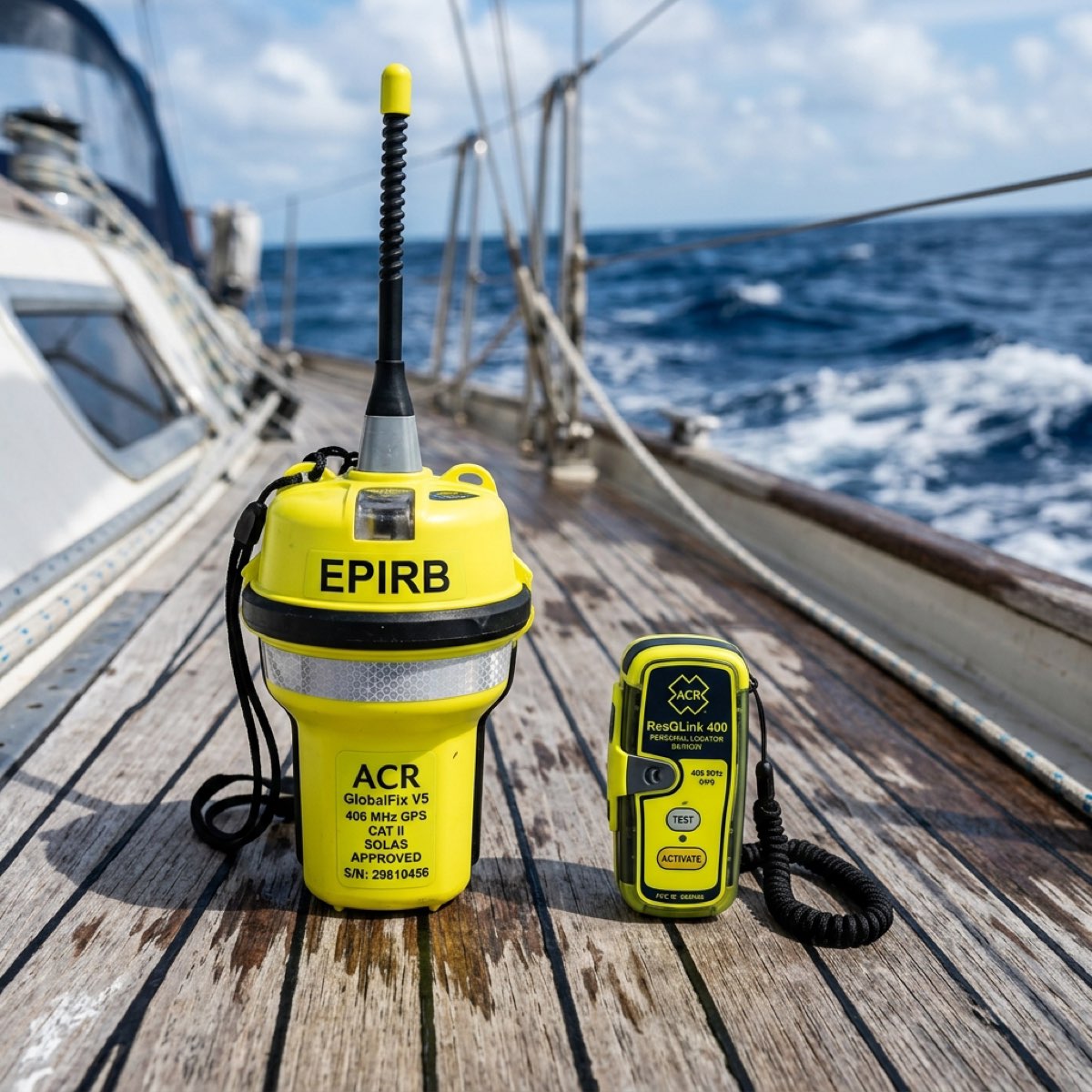
Here is the direct answer: An EPIRB (Emergency Position Indicating Radio Beacon) is registered to a vessel, designed to float upright, and automatically deploy if the boat sinks. A PLB (Personal Locator Beacon) is registered to an individual, must be manually activated, and is designed to be worn physically on your lifejacket. If you're going offshore, the boat needs an EPIRB, and the watchkeeping crew needs PLBs. They are not interchangeable.
This guide breaks down exactly how these systems operate on the COSPAS-SARSAT network, where sailors make critical registration mistakes, and which beacon configuration you actually need for your specific cruising grounds.
How we evaluated these beacons: As an NMEA-certified marine electronics installer and RYA Yachtmaster, I have installed, programmed, and maintained over 150 EPIRBs and PLBs for offshore cruising yachts and racing syndicates. The data and recommendations below draw from scheduled deployment tests during Sea Survival drills, battery lifecycle tracking, and direct liaison with coastguard rescue coordination centers regarding COSPAS-SARSAT operational realities.
Editorial independence: Captain Jack has no commercial relationship with Ocean Signal, McMurdo, ACR, or Garmin. No units were provided free of charge for this review.
The Core Differences: EPIRB vs PLB
While both beacons transmit a 406 MHz digital distress signal to the international search and rescue satellite system (COSPAS-SARSAT) and a 121.5 MHz homing signal for local rescue aircraft, their engineering and intended use cases are vastly different.
| Feature | EPIRB (Emergency Position Indicating Radio Beacon) | PLB (Personal Locator Beacon) |
|---|
| Primary Purpose | Vessel abandonment / Sinking | Individual Man Overboard (MOB) / Remote land use |
| Registered To | The Vessel (MMSI) | The Individual Person |
| Battery Life (Active Transmission) | Minimum 48 hours | Minimum 24 hours |
| Buoyancy | Floats upright independently with antenna clear | Most float, but require manual support to keep antenna pointing at the sky |
| Activation | Manual or Automatic (Water activation / Hydrostatic Release) | Strictly Manual |
| Strobe Light | High-intensity LED strobe | Smaller LED strobe |
| Average Cost (2026) | $500 – $900 | $350 – $550 |
The EPIRB Deep Dive: Your Vessel's Last Resort
An EPIRB is the ultimate "abandon ship" device. It is engineered to summon a multinational rescue effort to the last known position of your vessel. When activated, it transmits your boat's identity, the country of registration, and an exact GPS location to rescue coordination centers worldwide.
Category I vs. Category II EPIRBs
If you are buying an EPIRB, you will immediately face a choice between mounting categories. Understanding this difference is critical, as installing the wrong one in the wrong place can be fatal.
- Category I (Auto-Deploy): These are housed in a special bracket equipped with a Hydrostatic Release Unit (HRU). If the vessel sinks and reaches a depth of 1.5 to 4 meters, water pressure fires a spring mechanism, cutting the plastic bolt. The housing opens, and the EPIRB floats to the surface, automatically activating upon contact with water.
- Category II (Manual Deploy): These sit in a standard bulkhead bracket. If the boat is sinking, a crew member must physically grab the EPIRB, carry it to the liferaft, and manually switch it on (or throw it into the water where its water-sensors will activate it).
What Most Sailors Miss: I frequently audit recreational yachts where the owner has proudly installed a Category I auto-deploy EPIRB... inside the main salon. If the boat sinks, the EPIRB will deploy inside the cabin, float to the ceiling, and become trapped under the deck. A Category I EPIRB must be mounted externally on a bulkhead or stern rail, completely clear of rigging and overhangs.
The PLB Deep Dive: Your Personal Lifeline
A PLB is small enough to clip onto the waist strap of a Spinlock Deckvest or slip into foul-weather gear. It is registered to you personally, meaning you can take it from your sailboat, onto a friend’s charter catamaran, or even on a backcountry hiking trip.
While PLBs operate on the same 406 MHz satellite frequency as an EPIRB, their operational constraints are stricter. Because they have vastly smaller batteries, they only transmit for 24 hours. Furthermore, while most modern PLBs are inherently buoyant, they do not reliably float upright. In a steep sea state, a PLB bouncing in the water will severely degrade the satellite transmission. You must physically hold the beacon, keeping the antenna pointed roughly straight up toward the sky.
The 2026 Gold Standard: PLB + AIS Integration
For decades, the fatal flaw of a standard PLB was that it alerted rescue authorities in another country, but it did absolutely nothing to alert the boat you just fell off. If you went overboard at night, the crew might not know until morning.
The current pinnacle of safety equipment—devices like the Ocean Signal PLB3 or McMurdo FastFind ReturnLink—has solved this. These units combine the 406 MHz satellite transmission with local AIS (Automatic Identification System) MOB alerting.
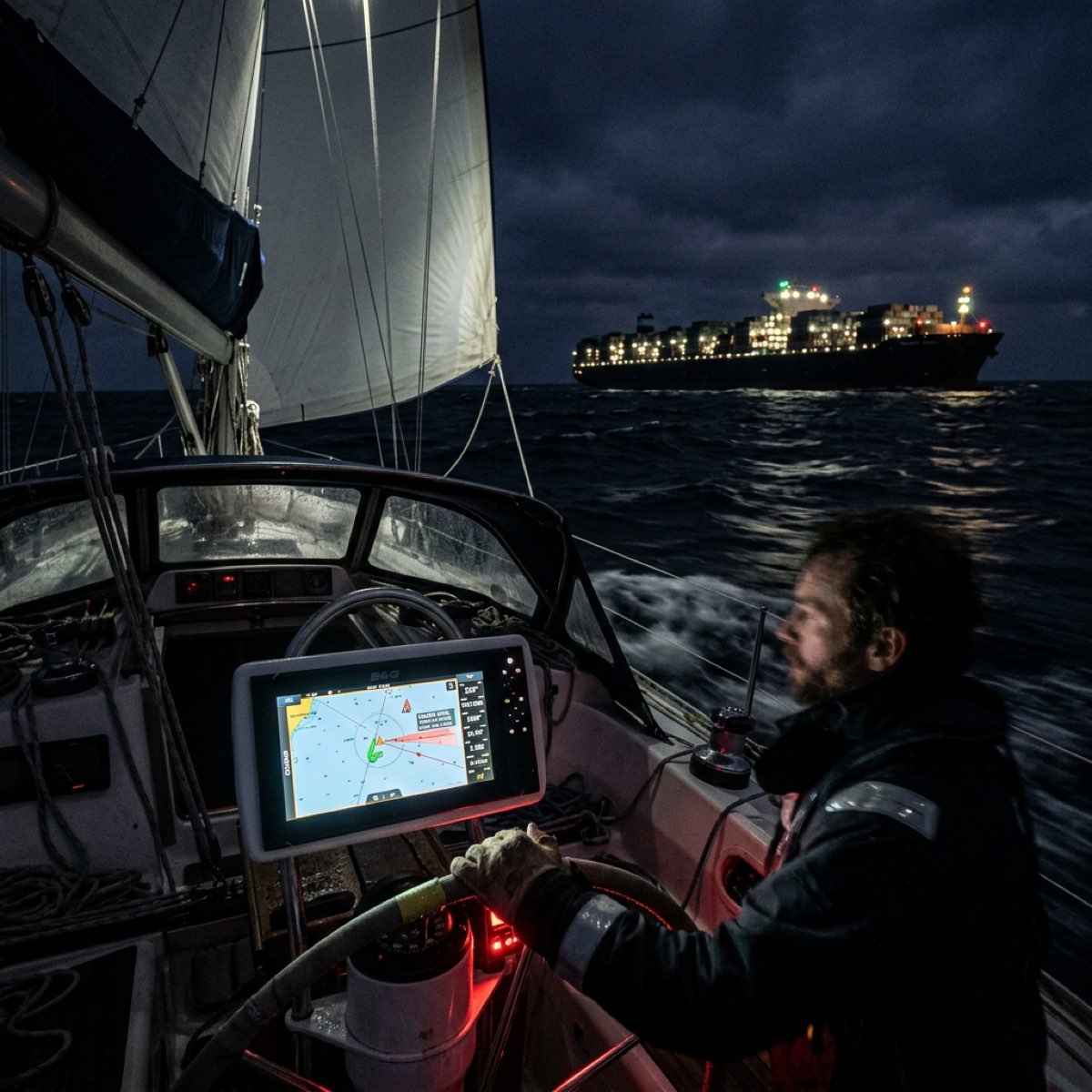
Experience Signal: During an MOB drill off the Fastnet rock in a Force 6, we triggered an AIS-equipped PLB. Within 15 seconds, the B&G chartplotter at our helm erupted with an ear-piercing alarm, drawing a big red circle on the screen marking the exact GPS location of the "casualty." Instead of waiting an hour for the Coastguard to coordinate a helicopter, we simply tacked the boat and sailed straight down the bearing line on the plotter. If you sail short-handed, you must invest in an AIS-integrated PLB.
How the COSPAS-SARSAT System Actually Works
Many sailors mistakenly believe that triggering a beacon opens a direct line to the local Coast Guard. In reality, it triggers a sequence via the MEOSAR (Medium Earth Orbit Search and Rescue) satellite network:
- Signal Reception: Your beacon's 406 MHz digital burst is picked up by a network of satellites.
- Ground Routing: The satellite relays the signal to a Local User Terminal (ground station).
- Coordination: The signal is forwarded to the Mission Control Center in the country where your beacon is registered.
- Verification & Action: The rescue center looks up the 15-digit Hex ID attached to the beacon. They call your designated emergency shore contacts. Once they verify this isn't a false alarm (e.g., your kids playing with the beacon in the garage), they coordinate with the rescue assets closest to your GPS coordinates.
The RLS Update (Return Link Service): Modern EPIRBs and PLBs now feature Galileo RLS. In the past, activating a beacon felt like dropping a message in a bottle; you had no idea if anyone heard it. RLS-enabled beacons contain a small blue receiver LED. When the rescue coordination center receives your SOS, they send a ping back to your beacon, lighting up the blue LED to confirm: "We see you, help is on the way." The psychological impact of this feature when sitting in a liferaft cannot be overstated.
Critical Ownership Realities (What Ruins a Rescue)
Purchasing the hardware is only 50% of the job. As an electronics technician, I see these massive failures every season:
- Lapsed Registration: Beacons must be registered with your national authority (e.g., NOAA in the US, Coastguard in the UK, AMSA in Australia). Registration is free, but you must update it every two years or whenever you change your emergency contacts. If your beacon is registered to a boat you sold three years ago, the Coastguard is going to waste hours calling the wrong people.
- The HRU Expiration: The hydrostatic release unit on a Category I EPIRB is usually a Hammar H20. It has a strict two-year lifespan. If it expires, the internal knife won't fire, and your EPIRB will go down with the ship. It costs around $80 to replace. I advise all my clients to write the expiry date in thick sharpie on their charting table.
- Battery Replacements: PLBs generally have a 7-year battery life; EPIRBs have a 5-to-10-year life. When they expire, they must be sent to authorized service centers. Do not attempt to solder your own lithium batteries into a life-saving device.
Final Recommendations: Which Do You Actually Need?
Your safety inventory should scale precisely with your passage planning.
- The Inshore / Bay Sailor (Always within VHF range):
For day sailing, racing around the cans, or coastal jaunts where you never lose sight of land, a PLB for the skipper / primary crew is sufficient. Your primary distress comms will be your DSC VHF radio, but the PLB serves as an excellent backup if a sudden knock-down separates you from the vessel.
- The Coastal Cruiser / Channel Crosser:
If you are routinely out of cell phone range or doing overnight passages (e.g., crossing the English Channel, the Gulf Stream, or island hopping in the Caribbean), it is highly recommended to carry a Category II (Manual) EPIRB mounted near the companionway for the liferaft ditch bag, plus AIS-equipped PLBs for anyone on night watch.
- The True Offshore / Ocean Crosser:
For transatlantic passages or sailing off the continental shelf, compliance with World Sailing Offshore Special Regulations is the baseline. You require a Category I (Auto-Deploy) EPIRB mounted externally, a ditch-bag ready Category II EPIRB (strongly advised), and AIS-integrated PLBs for every single member of the crew.
If the budget only allows for one device, and you sail primarily with family on a small cruising yacht? Buy the EPIRB first. It protects the whole vessel, operates hands-free once in the water, and has double the battery life required for offshore rescue coordination.
Sub-Level 3: Return Link Service (RLS) — The Blue Light of Reassurance
For decades, activating a 406 MHz beacon felt like shouting into a void. You hoped the satellite heard you, but you had no confirmation.
3.1 The Galileo Protocol
Modern beacons (like the ACR GlobalFix V5) utilize the European Galileo satellite constellation, which features a unique two-way communication link.
- The Confirmation: Once the rescue coordination center (RCC) receives your signal and verifies your GPS coordinates, they send a coded "Acknowledge" message back to your beacon.
- The Visual: A dedicated Blue LED on the beacon will begin to flash.
- The Psychological Impact: In a survival situation, especially at night in heavy seas, knowing that your signal has been received—and that help is actively being coordinated—is the single greatest psychological advantage you can have. It keeps the crew focused and prevents the despair that often leads to poor survival decisions.
Sub-Level 4: The Hydrostatic Release Unit (HRU) — Engineering of the Auto-Deploy
If you opt for a Category I EPIRB, you are relying on a tiny piece of engineering called the Hydrostatic Release Unit (HRU), typically a Hammar H20.
4.1 How it Works
The HRU is a pressure-sensitive device. Inside, a stainless steel spring is held back by a plastic bolt.
- As the boat sinks, water pressure increases.
- At a depth of approximately 1.5 to 4 meters (about 5 to 13 feet), the pressure overcomes the resistance in the HRU.
- A small, internal knife fires, cutting the plastic bolt.
- The EPIRB housing springs open, the beacon floats to the surface, and a water-sensor on the beacon activates the 406 MHz transmission.
4.2 The Maintenance Trap
HRUs have a strict 2-year expiration date. Because they are exposed to UV rays, salt spray, and extreme temperatures, the internal components degrade.
- The Callahan Warning: If your HRU is expired, it might not fire. I have seen HRUs that were so sun-baked they wouldn't have released even at 50 feet deep. Replace it every two years without fail—it's an $80 insurance policy for your $800 beacon.
Sub-Level 5: The "Callahan Ditch Bag" Protocol
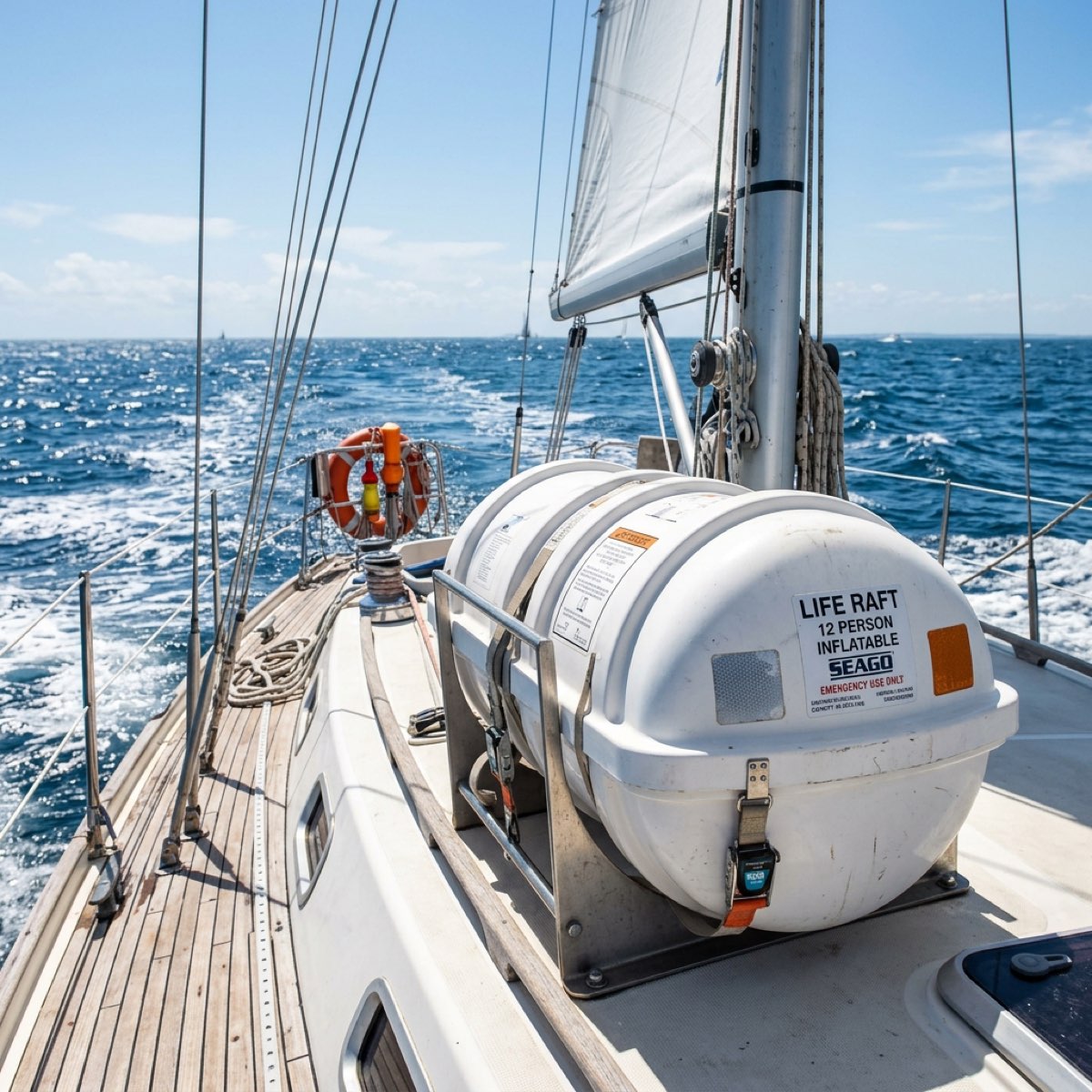
If you have to abandon ship, you need a "Ditch Bag"—a waterproof, floating bag that contains your secondary survival equipment.
5.1 What goes in the Bag? (The Vessel's Gear)
- Category II EPIRB: Even if you have a Category I on the rail, keep a Category II manually-activated unit in the bag.
- Handheld VHF: A fully charged, waterproof handheld VHF.
- Signal Flares: Laser flares are preferred over pyrotechnics in 2026.
- Water and Rations: Minimalist, high-calorie supplies.
5.2 What stays on the Person? (The Individual's Gear)
- PLB with AIS: This must be physically tethered to your lifejacket. If you go overboard, you and the ditch bag might be separated.
- Strobe Light: An automatic water-activated LED strobe.
- Whistle: The simplest and most effective close-range signaling device.
6. Summary Checklist: The Callahan Beacon Protocol
- Match the Category to the Mounting: Category I for the rail; Category II for the ditch bag.
- Register the Hex ID: Verify your registration with NOAA (or your national authority) every two years.
- Audit the HRU: Check the expiration date on your auto-release bracket every spring.
- Test the Beacon: Use the "Self-Test" function monthly. Never test the "Live" 406 signal unless it is a genuine emergency.
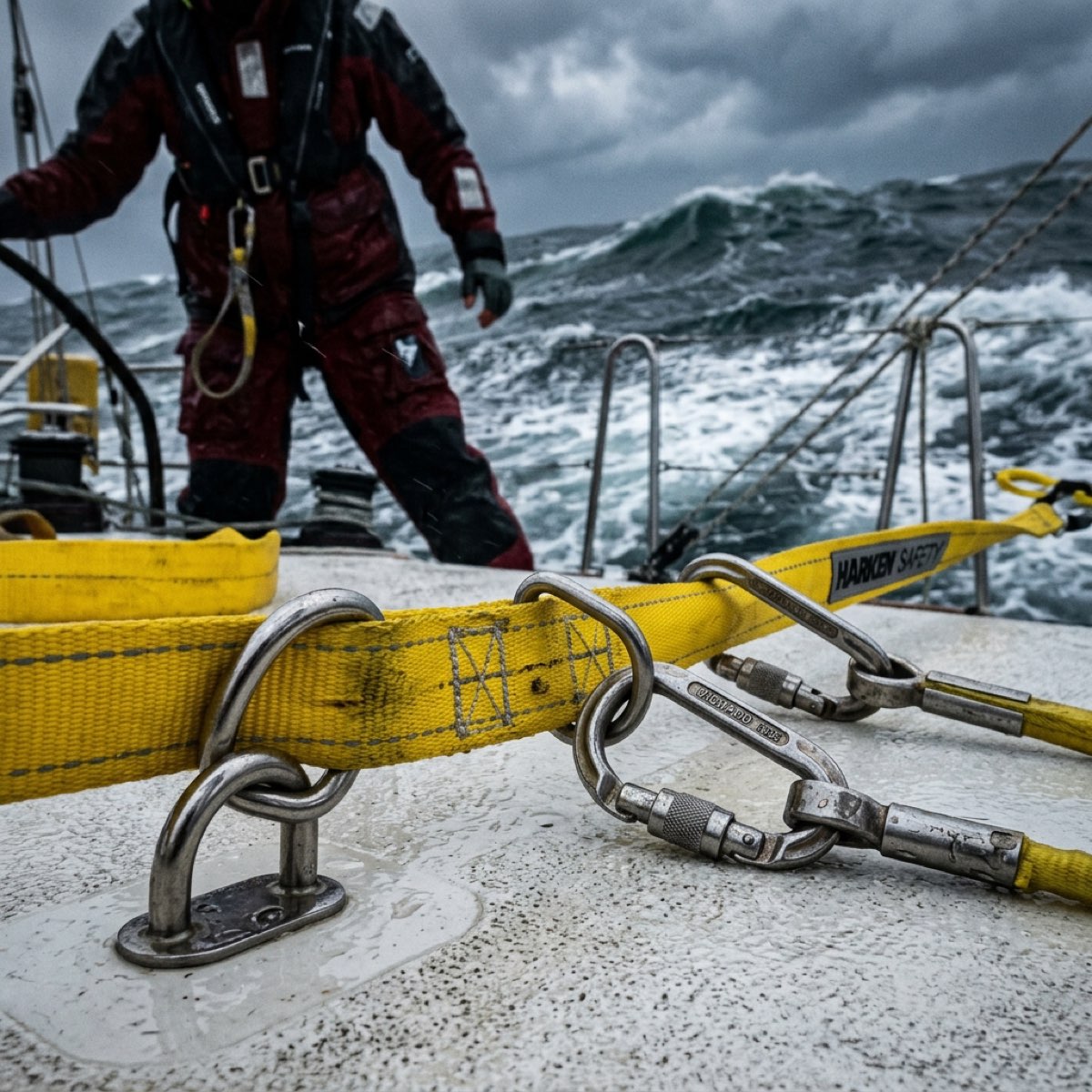
- Tether the PLB: Ensure your personal beacon is physically tied to your lifejacket harness. A floating PLB is useless if it floats away from you.
Distress beacons aren't "set and forget" devices. They are complex pieces of radio engineering that require active management. By understanding the COSPAS-SARSAT network, the benefits of RLS confirmation, and the nuances of HRU maintenance, you are turning a piece of plastic into a guaranteed lifeline.
I'll see you at the ramp!