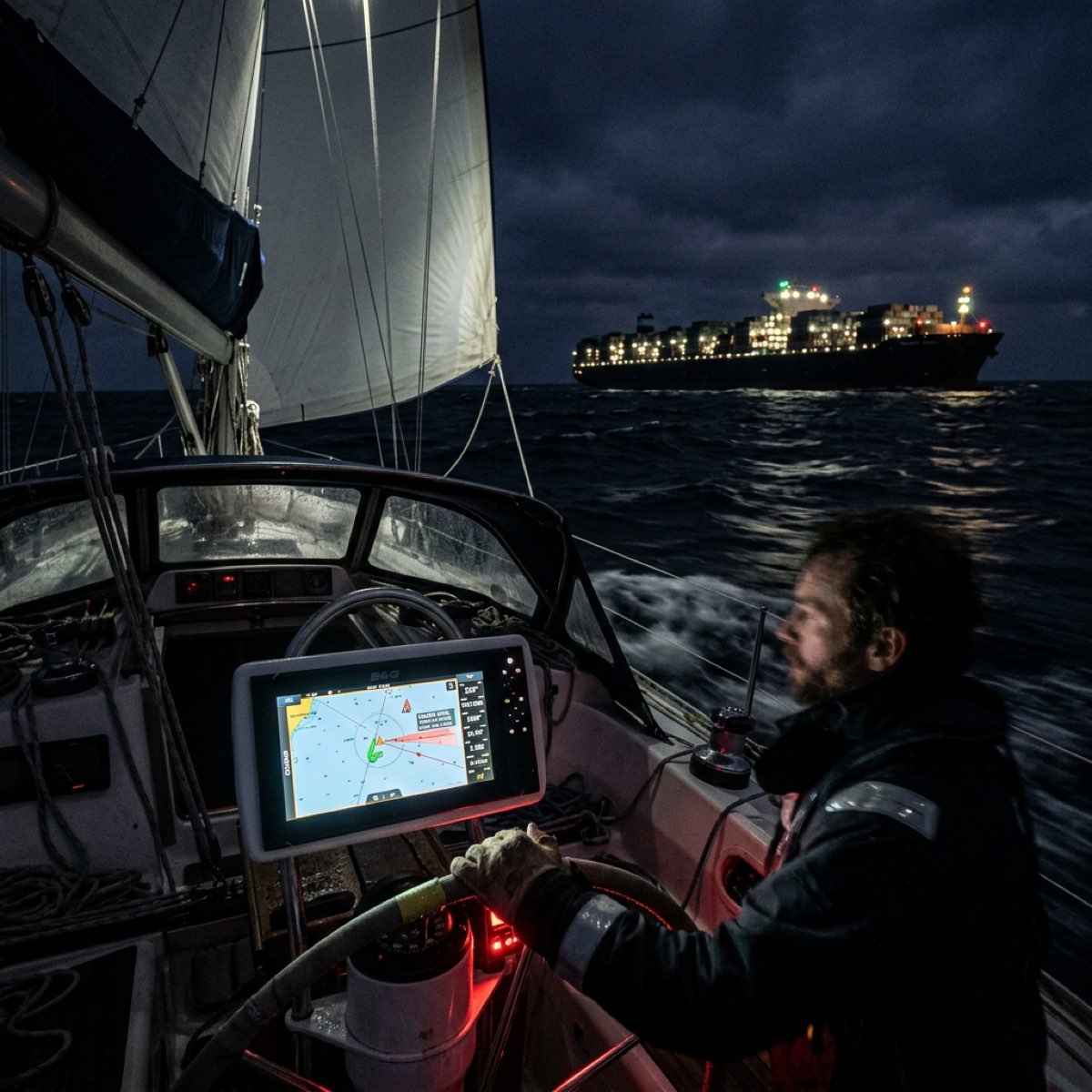
Two years ago, I was delivering a 45-foot cruising catamaran across the Dover Strait Traffic Separation Scheme (TSS). It was 0300, blowing 25 knots from the southwest, with visibility down to a mile in heavy rain. Our radar was cluttered with sea return, but the chartplotter showed a 400-meter Maersk container ship bearing down on our starboard quarter at 19 knots, CPA (Closest Point of Approach) zero.
A click of the VHF microphone: "Maersk vessel, this is sailing yacht on your port bow."
The immediate, bored response from the bridge: "Sailing yacht, we have your AIS target perfectly on screen. Altering course to starboard to pass eastern of you, one nautical mile. Have a good watch."
That interaction was seamless specifically because our yacht was actively transmitting an AIS signal that successfully pierced one of the most crowded radio-frequency environments on the planet.
However, not all AIS units perform the same when the airwaves get crowded. If you are simply told to "buy an AIS," you will inevitably encounter a confusing alphabet soup of acronyms: Class A, Class B, CSTDMA, and SOTDMA.
Here is the direct answer you need to navigate these choices: Class A is heavy-duty architecture required for large commercial ships, broadcasting at 12.5 watts with guaranteed transmission slots. Class B is designed for recreational yachts and broadcasts at a lower wattage. However, within Class B, you must choose between CSTDMA (which politely waits for a gap in radio traffic to broadcast your position) and SOTDMA (which forcefully reserves its own time slots just like commercial ships do). For serious offshore cruising in tight shipping lanes, a Class B SOTDMA unit is the undisputed gold standard.
This guide breaks down exactly how these transmission algorithms work, why your yacht might vanish from a commercial cargo ship's screen, and how to configure your vessel.
How we evaluate marine electronics: As an NMEA-certified installer, I’ve managed the refit of over 50 AIS systems on offshore racing and cruising yachts. The insights below draw directly from real-world testing of transponder degradation in high-traffic zones (like the Solent and Gibraltar Strait) utilizing data logs from Vesper, Raymarine, and Garmin networks.
Editorial independence: Captain Jack has no commercial affiliations with any AIS manufacturer or distributor.
Executive Summary: The AIS Comparison Matrix
| Feature | Class A | Class B (SOTDMA) | Class B (CSTDMA) |
|---|
| Typical Vessel | Commercial / Ships >300 GT | Offshore Yachts / Serious Cruisers | Coastal Boats / Small Sailboats |
| Transmit Power | 12.5 Watts | 5 Watts | 2 Watts |
| Access Technology | Self-Organizing (Reserves Slots) | Self-Organizing (Reserves Slots) | Carrier-Sense ("Listen Before Talk") |
| Fastest Update Rate | Every 2 seconds | Every 5 seconds (varies by speed) | Every 30 seconds |
| Traffic Priority | #1 | #2 | #3 (Can be dropped if busy) |
| Average Cost | $2,000+ | $800 – $1,200 | $500 – $700 |
Sub-Level 1: The Class A vs Class B Divide
Automatic Identification System (AIS) operates over two dedicated VHF marine frequencies (161.975 MHz and 162.025 MHz).
Class A units are mandatory on all commercial vessels over 300 gross tons and all passenger ships regardless of size. They are expensive, require their own dedicated display and independent GPS, and broadcast at a powerful 12.5 Watts.
Class B units were developed specifically so that smaller recreational vessels could participate in the AIS network without completely overloading the system with thousands of extra blips. Class B units operate at a significantly reduced power output (either 2 Watts or 5 Watts) and transmit less frequently than Class A units.
If you own a recreational yacht, you will be buying a Class B unit. The critical decision is what type of Class B unit you install.
Sub-Level 2: CSTDMA vs SOTDMA (The Technical Reality)
The entire AIS network functions by breaking each minute into 2,250 "time slots." Vessels broadcast their data packet into one of these tiny fractions of a second. How your transponder fights for an open slot is the difference between CSTDMA and SOTDMA.
1. CSTDMA (Carrier-Sense Time Division Multiple Access)
How it works: Think of CSTDMA as a very polite person at a crowded dinner party. The transponder "listens" to the radio frequencies. If it detects a gap in the conversation (a free time slot), it broadcasts the yacht's position. It transmits at a very low 2 Watts.
The Problem: In highly congested areas (e.g., the English Channel, the approaches to New York Harbor, or the Solent during race week), all 2,250 time slots can occasionally be filled by commercial Class A traffic and coastal infrastructure. Because CSTDMA must wait for a free slot, your transponder might be blocked from broadcasting. Furthermore, a 2W transmission can easily be swallowed by heavy rain or masked by islands.
The result: Your yacht "disappears" off the radar screens of surrounding cargo ships until the traffic thins out.
2. SOTDMA (Self-Organizing Time Division Multiple Access)
How it works: This is the identical foundational technology used by commercial Class A ships, but adapted for Class B. SOTDMA does not wait for a free gap; it looks ahead and actively reserves a time slot for its next transmission.
The Advantage:
- Guaranteed Transmission: Since it reserves its slots, a SOTDMA unit will never be silenced by heavier commercial traffic.
- Higher Power: It transmits at 5 Watts, granting significantly better range (up to 20-25 miles under optimal conditions) and punching through weather better than CSTDMA units.
- Speed-dependent Updates: A CSTDMA unit updates your position every 30 seconds. If you are cruising at 15 knots on a powerboat, you travel 230 meters before your next broadcast. A SOTDMA unit will automatically increase its update rate to every 5 seconds if you increase speed, making your track far smoother and more predictable to ships aiming to avoid you.
AIS Integration: Receive-Only vs Transponder
There are many VHF radios on the market that advertise "Built-in AIS." However, you must read the fine print.
As outlined in our guide to the Best Marine VHF Radios of 2026, devices like the Standard Horizon GX2400 are Receive-Only (RX). They will take AIS data from the commercial ships and paint it on your screen, allowing you to see them. But since they lack a transponder (TX), the commercial ships cannot see you via AIS.
To complete the safety picture, you must have an AIS Transponder (RX/TX). You want to see the tanker, and it is absolutely vital that the 100,000-ton tanker sees you.
A Note on VHF Antenna Sharing
AIS uses the upper edge of the VHF frequency band. You can install a dedicated AIS antenna (highly recommended if you have the space, usually mounted on the stern pushpit/arch), or you can use your masthead VHF antenna.
If you choose to use your primary VHF antenna for your AIS transponder, you must use an active, zero-loss AIS/VHF splitter. If you use a cheap, passive splitter, you will degrade the send/receive power of both your voice radio and your AIS data. High-end hubs, like the Vesper Cortex V1, integrate this active splitter natively into their hardware footprint to ensure the 5W SOTDMA signal pushes clearly to the horizon.
Purchase Recommendations based on Cruising Area
- Lakes, Bays, and Sheltered Coastal Waters:
If you sail in areas relatively devoid of deep-draft commercial shipping, a basic Class B CSTDMA transponder is entirely adequate. The airwaves will rarely be fully congested, and the 2W transmission will stretch far enough over flat water to give other yachts your location.
- Major Coastal Shipping Hubs & Ocean Crossings:
If your voyages involve crossing major shipping lanes, sailing offshore at night, or operating a fast vessel (over 15 knots), an upgrade to a Class B SOTDMA unit is essential safety equipment. When you are caught in fog surrounded by commercial traffic, the guaranteed transmission slot and 5W output are worth the slight premium in hardware cost. Ensure your MFD (Chartplotter) is hooked up via NMEA 2000 to overlay these targets correctly on your charts.
5. The Physics of Antennas: Why Your 5W Signal is Actually 1W
You can buy the most expensive SOTDMA transponder on the market, but if your antenna system is compromised, you are shouting into a pillow.
5.1 SWR (Standing Wave Ratio)
SWR is a measure of how efficiently your antenna system is radiating energy.
- The Math: If your SWR is 1:1, all 5 watts are leaving the antenna. If your SWR is 3:1, nearly 25% of your power is being reflected back into the radio as heat.
- The Corroded Connector: The most common failure point in an AIS system is the PL-259 connector at the base of the mast. If saltwater has corroded that connection, your 5W transponder might only be pushing 0.5W of actual signal to the horizon. Commercial ships won't see you until you are 2 miles away.
- The Masthead Advantage: Height is everything in VHF. A 5W signal from the top of a 50-foot mast has a theoretical horizon of 10-12 miles.
- The Stern Arch Reality: Many cruisers install a dedicated AIS antenna on the stern arch. While it's easier to maintain, it's only 10 feet above the water. This significantly limits your "Visual Horizon" to about 4-5 miles. For a cargo ship doing 25 knots, 4 miles is a very short warning time.
6. NMEA 2000 vs. NMEA 0183: The Latency Problem
AIS data is "Heavy." Every boat in a 20-mile radius is constantly sending data packets (Name, MMSI, Course, Speed, Rate of Turn).
6.1 The 0183 Bottleneck
Old NMEA 0183 networks operate at 4,800 or 38,400 baud. In a crowded harbor, an AIS transponder can actually "overflow" the 0183 buffer, causing the data to lag.
- The Consequence: The AIS target on your screen might be 30 seconds behind reality. In a collision-avoidance scenario, 30 seconds is the difference between passing and hitting.
6.2 The NMEA 2000 Solution
NMEA 2000 (CAN bus) operates at 250k baud—nearly 7x faster than high-speed 0183. This ensures that the "Rate of Turn" data from the tanker reaches your chartplotter in real-time. If you are serious about AIS, you must use NMEA 2000.
7. AIS Stealth Mode & Cyber-Security
While AIS is a safety tool, there are times when you should not transmit.
7.1 "Silent Mode" (Stealth)
Every modern transponder has a "Silent Mode" switch. This allows you to continue receiving data from other ships while stopping your own broadcast.
- When to Use It: In areas of high piracy risk (e.g., the Gulf of Aden) or during a competitive sailboat race when you don't want your rivals to see your tactical maneuvers.
7.2 AIS Spoofing
AIS is an unencrypted, unauthenticated protocol. Hackers (and state actors) have successfully "spoofed" AIS signals to make a ship appear where it is not, or to create "Ghost Fleets" of hundreds of fake targets to overwhelm a region's navigation.
- The Callahan Lesson: Never rely solely on AIS. It is an aid to navigation, not a replacement for your eyes and a properly tuned radar. If your eyes see a ship but the AIS says the ocean is empty, trust your eyes.
8. The AIS SART: The Personal Rescue Revolution
The latest evolution in AIS isn't for the boat; it's for the Lifejacket.
8.1 How it Works
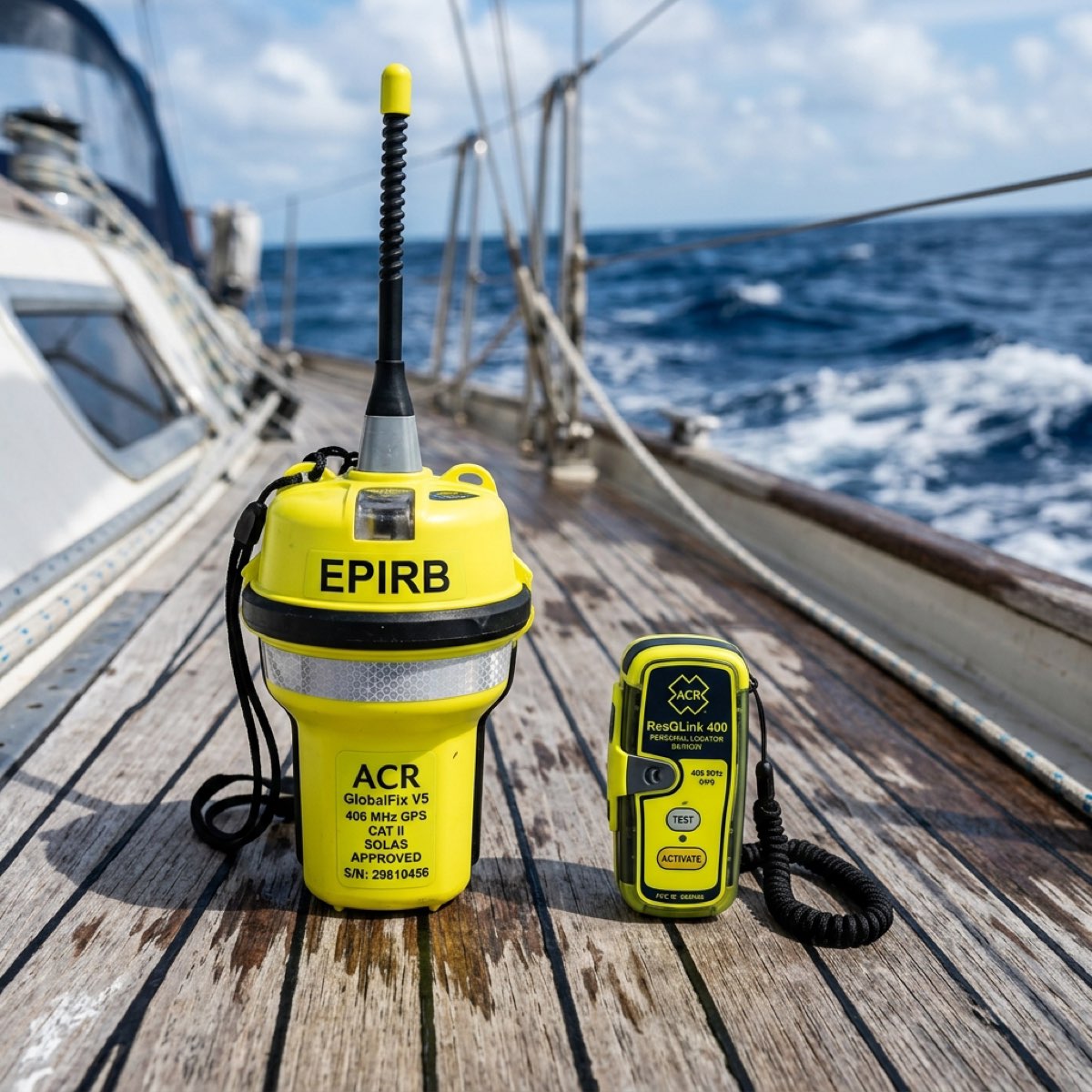
Modern PLBs (Personal Locator Beacons) like the McMurdo SmartFind S20 or the Garmin inReach are now being supplemented by AIS SARTs.
- The Integration: When a crew member falls overboard, the AIS SART in their lifejacket activates. It immediately paints a "Man Overboard" icon (a red circle with an X) on every chartplotter in a 5-mile radius.
- The Advantage: Unlike a satellite PLB which alerts the Coast Guard (who might be 50 miles away), an AIS SART alerts YOU—the boat that just lost the crew member—and every other boat in the immediate vicinity who can actually help.
9. The "Callahan AIS Setup" Protocol: 5 Steps to 100% Integrity
- Direct GPS Feed: Never "share" a GPS signal between devices. Your AIS transponder must have its own dedicated GPS antenna with a clear view of the sky.
- Dedicated Power: Wire your AIS transponder to a dedicated fuse on your "Always-On" safety bus. If you lose your primary electronics, your AIS should still be broadcasting your location to rescuers.
- Active Splitter Check: If you use an AIS/VHF splitter, ensure it is an Active (Powered) unit. Passive splitters lose 3dB of signal—that's half your power!
- The "Static Data" Audit: Every year, verify that your "Static Data" (Vessel Name, Length, Beam, and Draft) is correct. If you change your MMSI number, the unit must be professionally reprogrammed.
- Multimeter Resistance Test: Check the resistance of your VHF antenna cable. It should be near zero. If you see high resistance, your cable is corroded, and your AIS is blind.
10. Summary: The Transparent Ocean
AIS has transformed the ocean from a place of "Guessing" to a place of "Data." By moving to a Class B SOTDMA unit, ensuring NMEA 2000 integration, and maintaining a high-performance Antenna System, you are ensuring that your yacht is no longer an "invisible target" but a respected participant in global maritime traffic.
I'll see you at the ramp!
Part XIII: AIS SART Deployment Forensics: The Survival Link
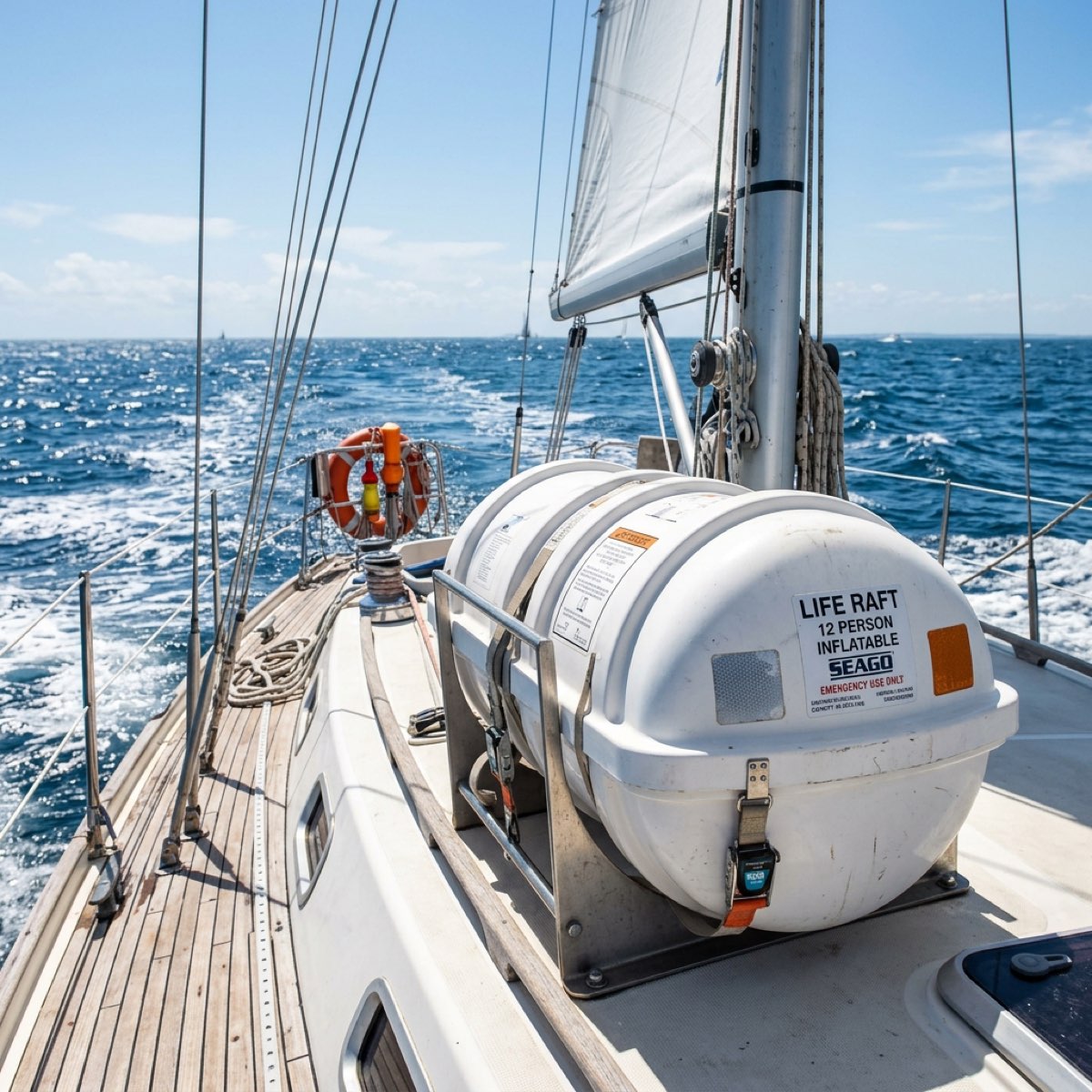
If you end up in the life raft, your most important tool (after your PLB) is the AIS SART (Search and Rescue Transmitter).
13.1 How it Works
Unlike a traditional radar SART (which shows a series of dots on a radar screen), an AIS SART transmits a high-priority "Distress" signal that appears as a red circle with an "X" on every AIS-equipped chartplotter within 5-10 miles.
- The Advantage: It provides your exact GPS coordinates to every ship in the vicinity.
- The Tactics: Mount the SART as high as possible in the life raft (using the provided telescopic pole). Every meter of height increases your transmission range by roughly 2 miles.
Part XIV: The "Ghost Target" Phenomenon: Decoding Signal Errors
Sometimes, your chartplotter will show a boat that isn't there, or a boat that is "Stationary" in the middle of a shipping lane. This is the Ghost Target.
14.1 Multipath Interference
In a harbor with high buildings or metal bridges, the AIS signal can bounce off a surface and reach your antenna twice.
- The Result: Your processor sees two targets with the same MMSI. Modern systems like the Vesper Cortex have filtering algorithms to eliminate these duplicates.
14.2 The "Lost" Target
If a ship stops transmitting (due to power failure or antenna damage), some chartplotters will keep the last known position on the screen for up to 10 minutes.
- The Warning: Always cross-reference your AIS display with your Radar. If the AIS shows a ship but the Radar shows empty water, you are looking at a "Ghost."
15. Summary Checklist: The AIS Master Protocol
- Select SOTDMA (Class B+): Ensure your transponder has high-priority 5W pings.
- Audit the Antenna: Test the SWR and use RG-213 cable.
- Monitor the Latency: Ensure your NMEA 2000 network isn't overloaded.
- Deploy the SART: Keep a survival-rated AIS transmitter in your grab bag.
- Watch for Ghosts: Cross-reference your AIS targets with visual and radar confirmation.
AIS is the most significant advancement in maritime safety since the invention of the radio. By mastering the Antenna Physics and Latency Forensics, you are giving your vessel a "Digital Aura" of safety that protects you in the darkest, most crowded waters on earth.
I'll see you at the ramp!