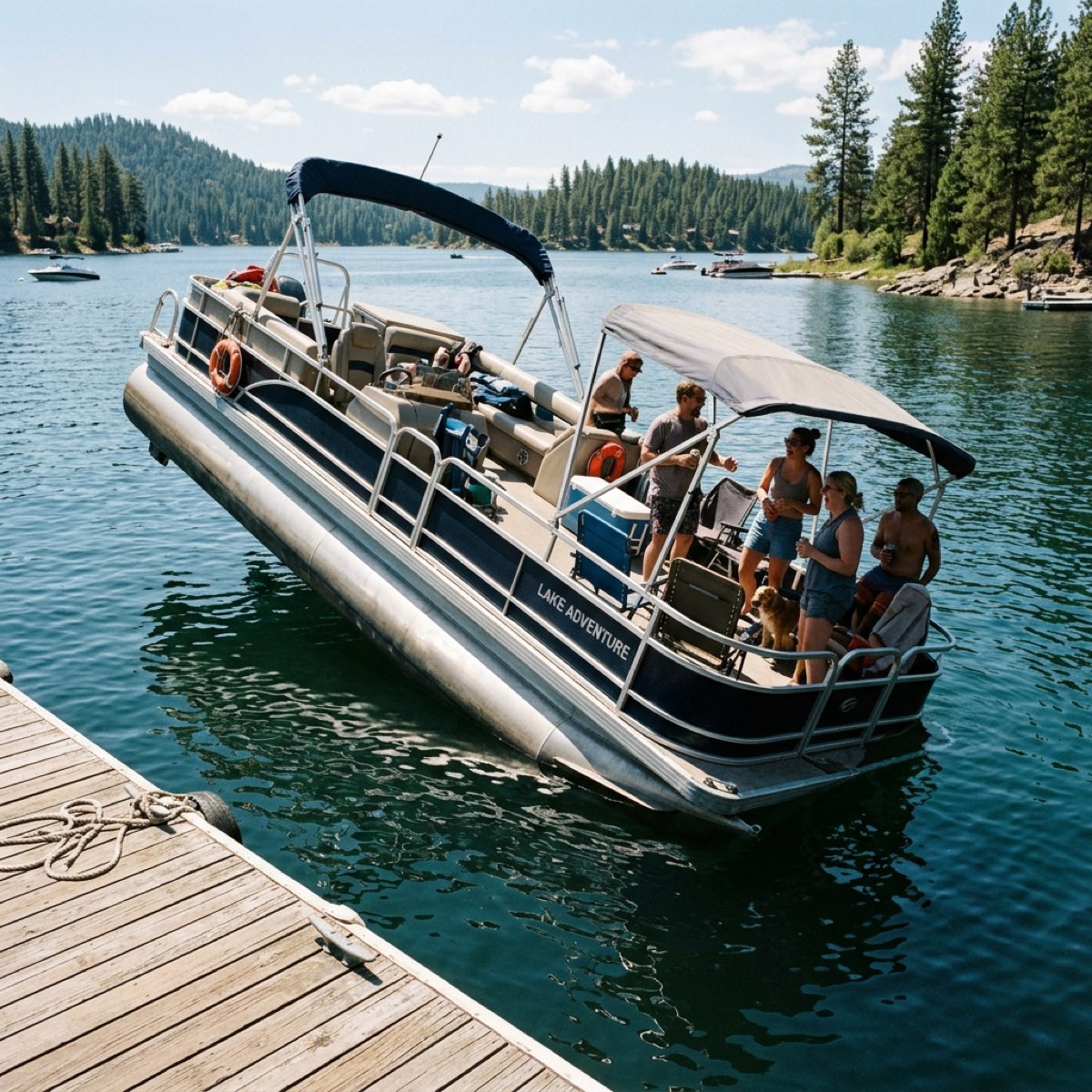
You back your pontoon into the lake, untie from the dock, and immediately notice something is wrong. The right side of the deck is hovering high while the left side is buried two inches deeper than it should be. You haven't even started the engine yet, and the boat already looks like it’s struggling.
It’s frustrating, it looks terrible, and more importantly, it can be dangerous when you're at speed.
A pontoon boat leaning to one side (listing) is typically caused by one of two issues: an uneven distribution of heavy static weight (batteries, fuel, console) or water trapped inside a compromised aluminum log. Most listings are fixed by simply redistributing gear, but a "dead thud" when tapping the log indicates a leak that needs immediate professional welding.
The good news: 90% of the time, your boat isn't "sinking." It's just a physics problem that you can solve in your driveway with a rubber mallet and a few minutes of reorganization. Let's find out exactly what's pulling your deck down.
Mike Callahan's Masterclass Note: "I get frantic calls about leaning pontoons every Monday morning in July. Most owners are terrified their log is full of water. While that happens, I usually start by asking: 'Where is your 65-quart cooler full of ice?' You'd be amazed how many 'leaks' are actually just 100 pounds of drinks sitting in the wrong corner."
| Checklist: The Leaning Diagnostic | What It Tests | Immediate Action |
|---|
| Empty Deck Audit | Static weight imbalance | Move portable gear to the high side |
| The Thump Test | Water inside the logs | Tap logs with a mallet; listen for "thuds" |
| Drain Plug Check | Water volume | Open rear plugs on the trailer; drain logs |
| Engine Trim Check | Propeller torque | Adjust trim tab anode or engine tilt |
| Soapy Water Test | Structural leaks | Pressurize to 3 PSI; spray welds for bubbles |
Scenario A: The "Ghost Passenger" (Static Weight Imbalance)
Before you assume your aluminum logs are compromised, you need to account for the "Permanent" weight built into your boat. Pontoons are giant teeter-totters. If you put all the heavy stuff on one side, they lean.
Take a look at the Starboard (Right) side of a standard 22-foot pontoon. What lives there permanently?
- The Helm Console: 75–150 lbs
- The Captain: 150–250 lbs
- The Starting Battery: 50–70 lbs
- The Fuel Tank: A full 30-gallon tank weighs roughly 185 lbs
Without a single guest on board, your boat might already be carrying 500 pounds of static weight on the right side. If your floor plan doesn't have a large couch or heavy storage on the left side to offset this, the boat will lean starboard.
What happens when you add gear?
If you put your massive Yeti cooler behind the driver and have all your friends sit on the starboard loungers to talk to the captain, you've just added another 600+ pounds to the heavy side. That’s how a "level" boat becomes a "listing" boat in five minutes.
Scenario B: The "Dead Thud" (Water Inside the Log)
If the boat leans even when the deck is empty and the passengers are balanced, you have a much bigger problem: water where it shouldn't be.
Fresh water weighs 8.34 pounds per gallon. A standard 24-inch diameter log that is 20 feet long has a massive internal volume. If a hairline crack in a weld allows just 50 gallons to seep in, you’ve hidden 417 pounds of dead weight inside your hull.
How to use the "Rubber Mallet Thump Test"
You don't need fancy tools. You just need your ears.
- Pull the boat out of the water and park it on the trailer.
- Take a rubber mallet (or the heel of your hand).
- Walk down the side of the log that is riding high. Strike the aluminum every two feet. It should ring out with a clear, high-pitched PING. That is the sound of a hollow drum.
- Now, walk down the side that is leaning. Strike the log.
- If it rings out with a PING, it's dry.
- If it makes a dull, heavy, dead THUD — like hitting a sandbag — you have found water.
📋 Free Download: The 50-Point Pre-Season Pontoon Checklist
Don't wait for a lean to find a leak. Our 50-Point Checklist includes the full "Thump Test" protocol and weld inspection guide so you catch hairline cracks before they turn into flooded logs.
[Download for Free →]
When the Water Moves: The Danger of "Free Surface Effect"
If you know you have water in a log, do not drive the boat at high speeds.
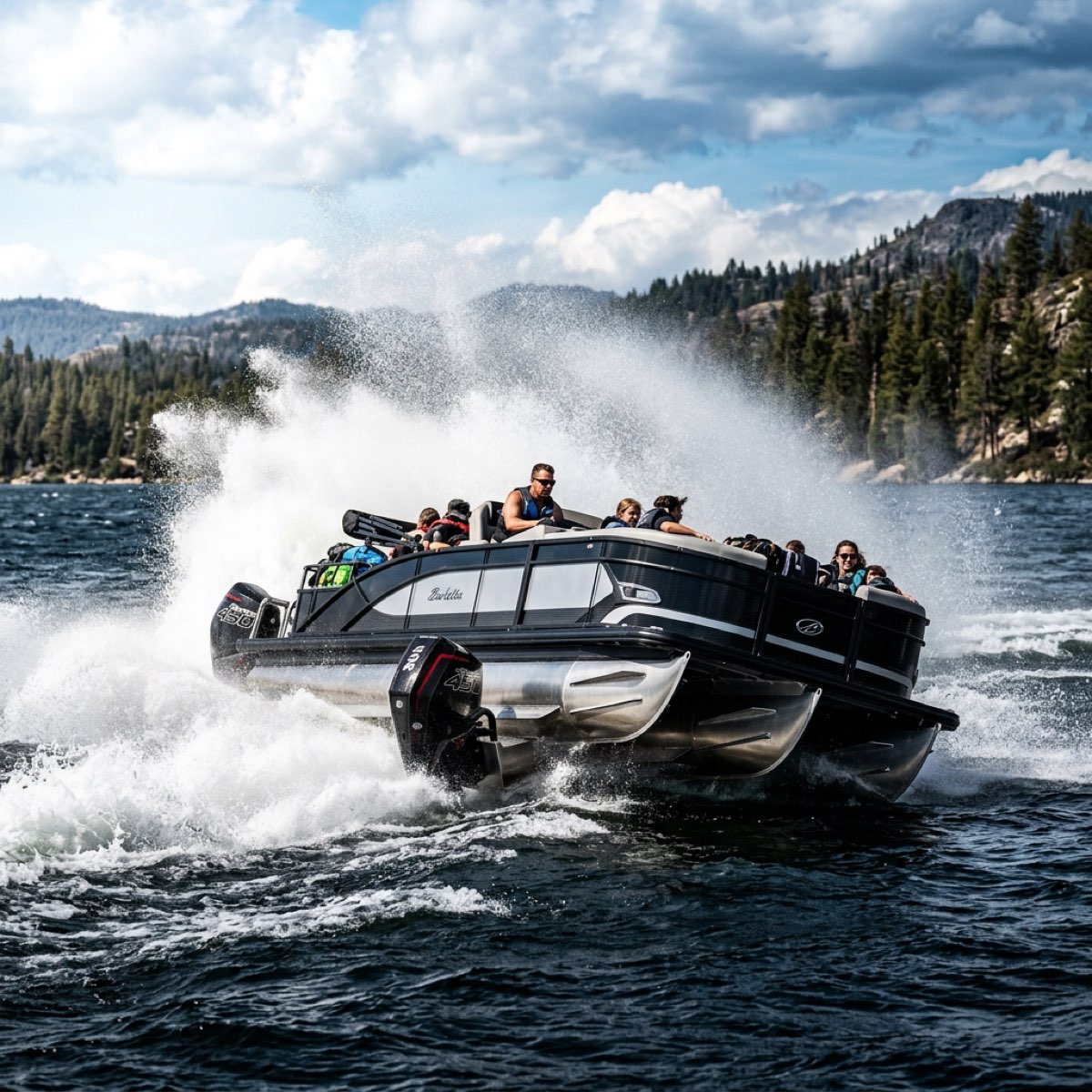
Trapped water doesn't stay in one place. When you accelerate, those 400 pounds of water rush to the back of the log. When you turn, they slosh to the side. This is called the Free Surface Effect. It can cause the boat to suddenly "plow" its nose into a wave or violently list during a turn, which can lead to a capsize or ejecting passengers.
Get the boat to the trailer slowly and pull it out immediately.
What Happens if You Leave Water in the Log Over Winter?
This is the $3,000 mistake. If you live in a climate where it freezes, water trapped in a pontoon log will expand. Aluminum doesn't stretch well when it's frozen. The ice will split the seams of your log wide open.
What could have been a $200 welding repair in October becomes a total log replacement in April. If you suspect water, drain it before the first freeze.
How to Find and Fix the Leak (The Professional Way)
Draining the log is Step 1. Finding the hole is Step 2.
Step 1: Draining
Most modern pontoons have drain plugs at the bottom-rear of each log. Park the boat on an incline, unscrew the plug, and let it drain. If you don't have a plug, a marine welder will need to drill a "service hole," drain it, and weld it shut.
Step 2: The Soapy Water Test
To find a microscopic leak:
- Remove the drain plug and install a low-pressure air fitting.
- Pressurize the log to MAX 3 PSI. (Go higher and you will blow the internal baffles — be very careful).
- Spray every weld and bracket with soapy water.
- Look for rapid bubbling. Mark the spot with a Sharpie.
Step 3: Proper Welding
Never use Marine-Tex, JB Weld, or silicone to fix a structural log leak. The logs flex as they move through waves. Any rigid epoxy will crack and fail within a few hours of use. You must have the leak TIG welded by a professional who understands aluminum.
Frequently Asked Questions
Why does my boat only lean when I'm driving fast?
This is likely Engine Torque Lean. Your propeller spins clockwise, which tries to "twist" the boat in the opposite direction. If your engine is trimmed too low, or your trim tab anode (the small fin above the prop) isn't adjusted correctly, the boat will list to the starboard side under power.
Can I drill my own drain holes in a pontoon log?
Technically yes, but it's not recommended unless you are prepared to have them welded shut immediately. You cannot use a "plug" or a screw to seal a hole in the hull. It must be a permanent, watertight weld.
How much does it cost to fix a leaking pontoon log?
Draining and welding a small crack typically costs $200–$500 if you take the boat to a weld shop. If the log is severely corroded or split from ice damage, a replacement log can cost $2,500–$4,500 plus labor.
Will water in the logs affect my top speed?
Significantly. Every gallon of water is over 8 pounds of dead weight that your engine has to push. A partially flooded log increases drag, reduces RPMs, and ruins your fuel economy. If your "fast" boat suddenly feels like a barge, check for water.