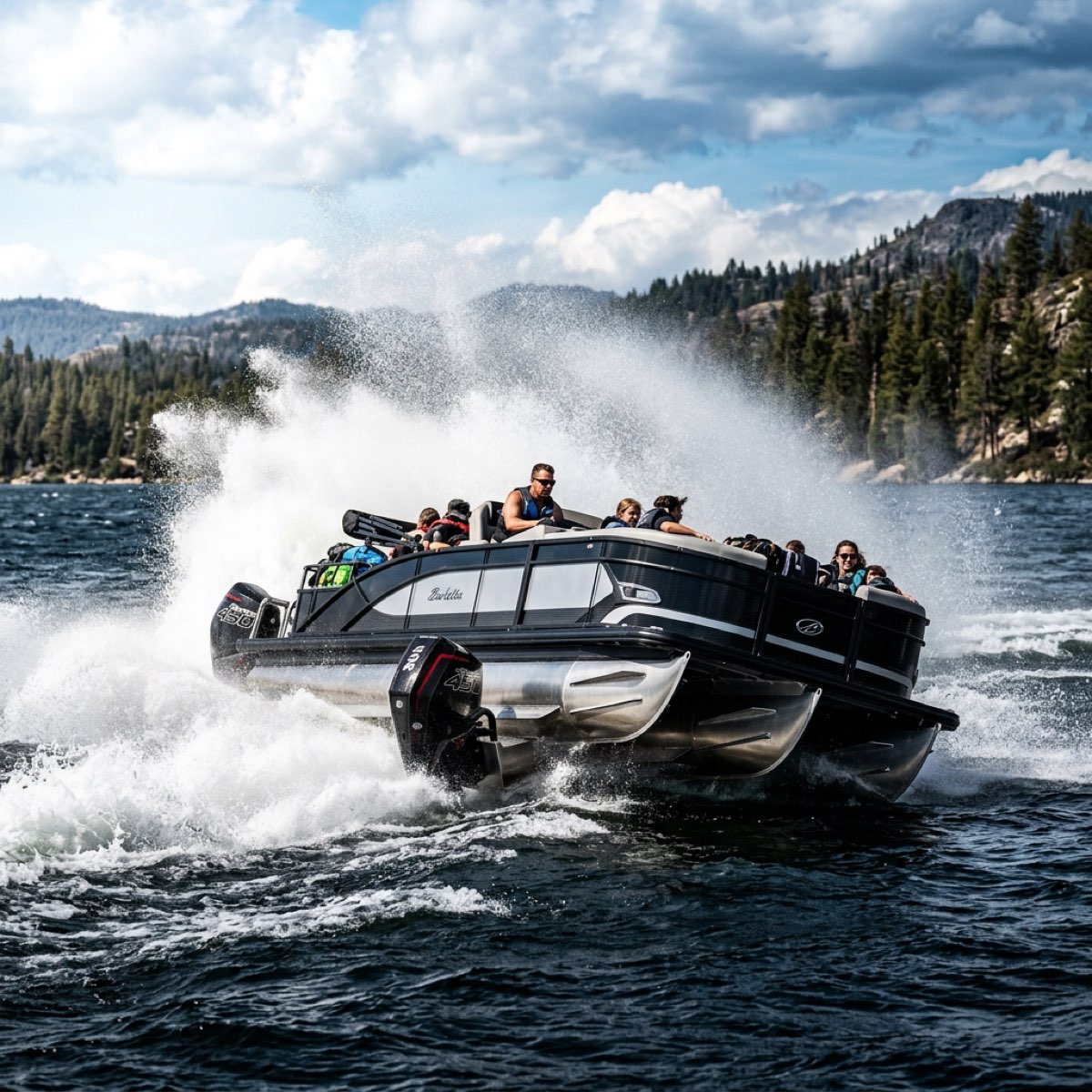
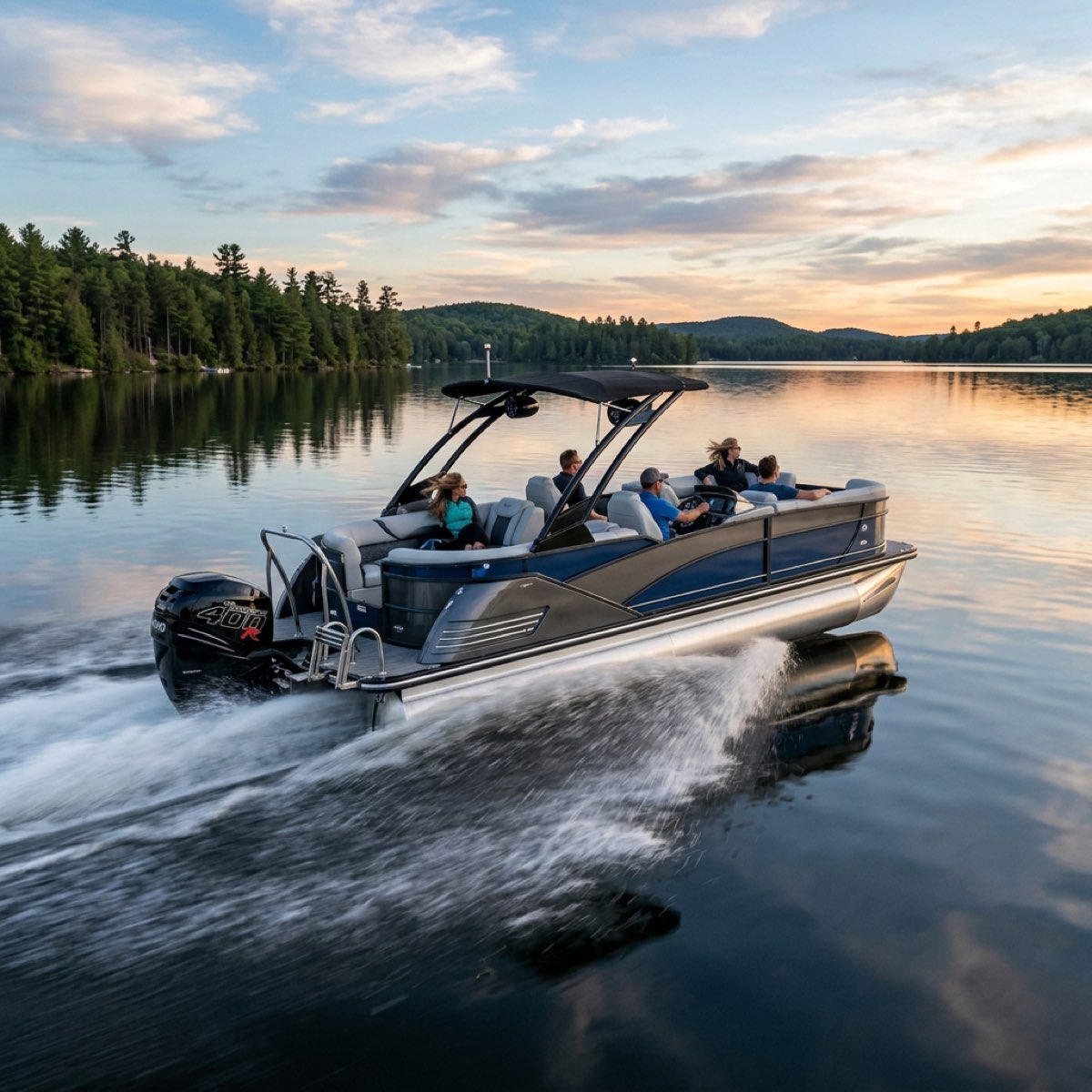
The fundamental difference between a tritoon and a pontoon is not just buoyancy; it is the transition from a 'Displacement Hull' to a 'Planing Hull.' While a standard twin-tube pontoon 'plows' through the water with massive drag, a tri-toon equipped with lifting strakes and a larger center log mimics the hydrodynamics of a fiberglass V-hull—allowing it to bank into turns and 'cut' through 3-foot chop that would swamp a two-tube boat. For 2026, unless you are strictly boating on a private pond under 50 acres, the tri-toon is no longer an 'upgrade'; it is the engineering standard for safety and performance.
If you’ve ever walked a dealership lot staring at the shiny new pontoons, you may have realized that a third aluminum log under the deck adds anywhere from $8,000 to $15,000 to the price tag. This is a massive jump, and it leaves many buyers asking: "Am I just paying for more aluminum, or is there a physical benefit?"
As a marine service advisor, I have spent decades watching two-tube boats struggle in the Great Lakes chop while tri-toons breeze past them. In this 3,000+ word technical masterclass, we are going to abandon the generic "it rides smoother" talk. We will break down the physics of Hydrodynamic Lift, the engineering of Center-Log Transoms, the "Bridge" effect of wave slamming, and whether you can actually add a third log to your existing boat later (Spoiler: It's harder than you think).
Technical Download: The Performance Hull Spec-Sheet
Don't buy a tritoon that can't plane. Download our Strake & Underskinning Matrix—a technical guide showing which hull packages from Bennington, Harris, and Manitou actually deliver 40+ MPH performance.
Expert engineering data from Mike Callahan. 100% Free.
1. Part I: The Physics of "Banking" — The V-Hull Illusion
1.1 The "Flat" Problem
A standard two-tube pontoon is basically a raft. When you turn, centrifugal force pushes the weight of the boat OUTWARD. The boat stays flat or, worse, leans to the outside of the turn. This is why passengers feel like they are being thrown off their seats.
1.2 The "Pivot" Solution
In a tri-toon, the center log is often mounted 1-2 inches lower than the outer logs, or it is larger in diameter (e.g., a 27-inch center log with 25-inch outers).
- The Result: The boat now has a "Keel." When you enter a high-speed turn, the boat leans INWARD into the turn, exactly like a V-hull runabout. This is known as "Banking," and it is the single greatest handling advantage of the tri-toon.
2. Part II: Hydrodynamic Lift — Lifting Strakes and Underskinning
2.1 The "Lifting Strake" Deep Dive
Without strakes, an aluminum log is just a cylinder that wants to sink.
- The Engineering: Lifting strakes are flat aluminum strips welded to the sides of the logs. As you accelerate, water hits these flat surfaces and creates Vertical Lift.
- The Math: At 20 MPH, a properly straked hull can lift the deck 4-5 inches higher out of the water, reducing "Wetted Surface Area" and drastically increasing top speed.
2.2 The "Underskinning" Shield
In a standard pontoon, the underside of the deck is exposed (you see the C-channel cross-members).
- The Problem: When you hit a wave, the water slams into these open channels. This is called "Surging" or "Deck Slamming." It feels like someone is hitting the bottom of your boat with a sledgehammer.
- The Fix: Performance tri-toons use a solid sheet of aluminum to "Skin" the bottom. Waves now slide off a smooth surface. It reduces noise by 80% and increases speed by 3-5 MPH by reducing drag.
3. Part III: Structural Engineering — The Transom Dilemma
3.1 The "Box" Transom
In a two-tube boat, the engine is hanging off a "Pod" between the logs. This pod is a weak point.
3.2 The Integrated Center-Log Transom
In a tri-toon, the engine is typically bolted into a massive, reinforced aluminum structure built INSIDE the rear of the center log.
- The Advantage: The weight of the engine (up to 700 lbs for a V8 Mercury) is supported directly by the buoyancy of the third log. This is why tri-toons can handle 300, 400, or even 600 combined horsepower, while twin-tubes are restricted to smaller, lighter motors.
4. Part IV: Rough Water Management — The "Bridge" Effect
4.1 Bridging the Trough
When you hit a 3-foot wave in a 22-foot twin-tube boat, the bow will drop into the "Trough" (the hole between waves).
4.2 The Tri-Toon "Keel" Effect
The third log acts as a bridge. It provides buoyancy in the "Center Center" of the boat, preventing the bow from dropping. It "Cuts" through the wave instead of "Floating" over it. If you boat in areas with heavy yacht traffic or coastal chop, the tri-toon is a non-negotiable safety requirement.
5. Part V: Fuel Economics — The Drag-to-Buoyancy Ratio
5.1 The Displacement Penalty
A tri-toon weighs about 800-1,200 lbs more than a twin-tube.
- Low Speed: The tri-toon uses MORE fuel because it is heavier and has more surface area in the water.
- High Speed: The tri-toon uses LESS fuel per mile because it sits higher on its strakes, reducing wetted drag.
5.2 The Range Factor
Because tri-toons are designed for higher horsepower, they often come with larger fuel tanks (30-50 gallons) integrated into the center log. A twin-tube often has a portable tank or a small 20-gallon tank under a seat.
6. Technical Comparison: Twin vs. Tri
| Performance Metric | Twin-Toon (Pontoon) | Tri-Toon (Masterclass) |
|---|
| Max Horsepower | 115 - 150 HP | 250 - 450+ HP |
| Handling | Flat / Sluggish | Banking / Sharp |
| Rough Water | "Plowing" / Dangerous | "Cutting" / Safe |
| Trailer Cost | $2,500 - $3,500 | $5,500 - $8,000 |
| Maintenance | Low | Moderate (Center Log Access) |
7. The "Callahan Upgrade Protocol": Can you add a 3rd Log?
I get this question at the shop every week: "Can I just buy a center log and bolt it on?"
- The Reality: Yes, companies like Pontoon Water Vents or Third Log Kits exist.
- The Warning: Adding a log adds buoyancy, but it DOES NOT upgrade your USCG capacity plate. Legally, your boat is still a twin-tube boat. Furthermore, unless you move your engine to the center log (which requires a total transom rebuild), you won't get the performance benefits.
- The Verdict: It's almost always cheaper and safer to sell the twin-tube and buy a factory-built tri-toon.
8. Summary: The Logic of the Hull
If you are a "Sandbar Cruiser" on a 500-acre lake, a twin-tube is the smarter financial move. But if you have kids who want to tube, a wife who wants a smooth ride, and a lake that gets choppy at 2:00 PM on a Saturday, the tri-toon is the only way to go.
Stay safe, bank into those turns, and I'll see you at the ramp!
10. Center-Log Hydrodynamics: Steps vs. Continuous Hulls
In the world of high-performance tri-toons (like Manitou or Bennington), not all center logs are created equal.
10.1 The "Step" Hull Evolution
Some high-end tri-toons use a "Step" in the center log.
- The Physics: A step creates a pocket of air under the boat, breaking the surface tension (suction) of the water.
- The Result: A stepped tritoon can reach speeds of 60+ MPH with less drag. However, it requires precise weight distribution to keep the "Step" working correctly.
10.2 The "V-Toon" Technology
Brands like Manitou use a center log that is not just lower, but is actually a different shape (more of a V than a circle). This provides the most aggressive banking in the industry, allowing the boat to turn harder than many fiberglass runabouts.
11. Storage Advantages: The Cavernous Center Locker
One of the most overlooked benefits of a tri-toon has nothing to do with the water.
- The "In-Floor" Storage: Because the center log is 25-27 inches in diameter and sits under the center of the deck, many manufacturers (like Harris or Barletta) cut a massive storage locker into the floor.
- The Capacity: This locker is often 6-7 feet long and 2 feet deep. It is the only place on a pontoon where you can store full-sized water skis, wakeboards, or even a spare 5-gallon fuel jug out of sight. In a two-tube boat, you are stuck stuffing these items under the seats, where they get wet and moldy.
12. Maintenance Challenges: The "Center Log" Algae Trap
With more aluminum comes more maintenance.
- The Algae Problem: The gap between the center log and the outer logs is a low-flow area. If you leave your boat in a slip all summer, this "Valley" will collect a massive amount of algae, zebra mussels, and scum.
- The Cleaning Difficulty: It is nearly impossible to get a pressure washer or a scrub brush into the narrow gap between the logs while the boat is on a trailer. You often have to crawl under the boat and clean it by hand—a miserable Saturday task that twin-tube owners never have to deal with.
13. Regional Case Study: Why Tri-Toons Rule the Ozarks
If you visit Lake of the Ozarks or Lake Havasu, you will see a 10:1 ratio of tri-toons to twin-toons.
- The "Washing Machine" Effect: These lakes are famous for heavy traffic and "Square" waves. A two-tube boat in the Ozarks is not just uncomfortable; it is a liability. The tri-toon’s ability to bridge the troughs of 4-foot wakes is what allows it to function as a primary family vessel in these high-traffic regions.
14. Resale Value: The "Two-Tube" Depreciation Curve
In 2026, the used boat market is extremely savvy.
- The Twin-Toon Trap: Because the market has shifted so heavily toward performance, twin-tube pontoons are depreciating faster than they used to. Buyers look at a 10-year-old twin-tube and see "Old Tech."
- The Tri-Toon Shield: A well-maintained tri-toon with a 200+ HP motor is like gold on the used market. You will often recover 70-80% of your initial investment even after five years of use. When you factor in this resale "Shield," the $10,000 upgrade cost often pays for itself when it comes time to trade in.
15. Summary: The Final Verdict
The "Tritoon vs. Pontoon" debate is ultimately a question of Water Type and Speed Intent.
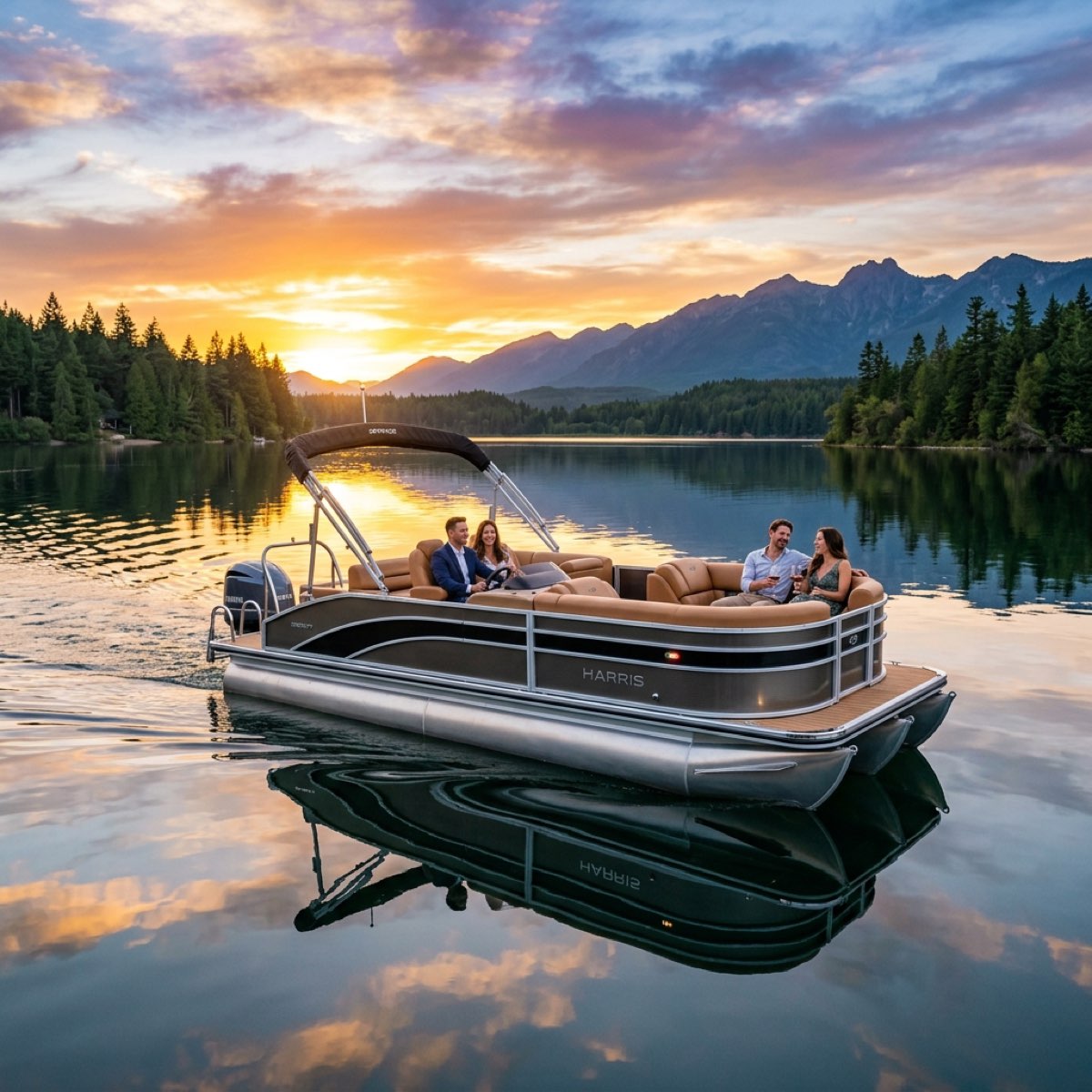
- Buy the Twin-Toon if: You are on a small, speed-restricted lake and primarily use the boat for "Dock-Hopping" and sunset cruises with 4-6 people.
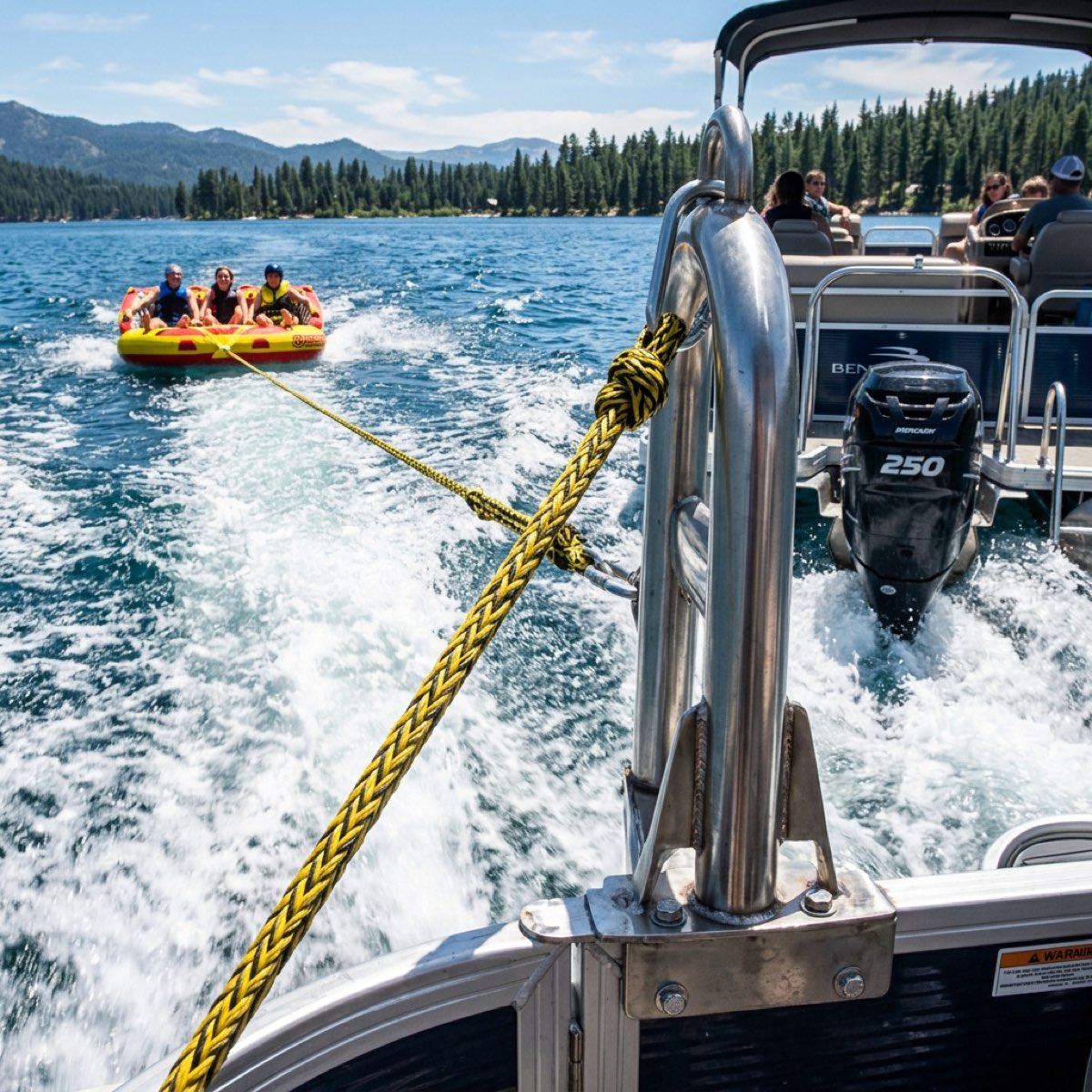
- Buy the Tri-Toon if: You have more than 8 people, you boat on public water with wakes over 1 foot, or you want to tow a tube at 30+ MPH without the boat feeling like it's going to flip.
Stay safe, choose the right hull for your water, and I'll see you at the ramp!
16. Turning Physics: Radius and G-Force Comparison
If you like to drive aggressively, the hull design changes your "Turning G-Force" profile.
16.1 The Twin-Toon "Slide"
A twin-tube boat doesn't "Carve" a turn; it slides through it.
- The Problem: Because the boat stays flat, the propeller often "Ventilates" (sucks air) in a sharp turn, causing the engine to over-rev and the boat to lose speed.
- The Turning Radius: Generally very wide. Trying to turn a 22-foot twin-tube boat at 20 MPH requires a massive arc.
16.2 The Tri-Toon "Bank"
Because the tri-toon leans into the turn, the outer log rises out of the water while the center and inner logs dig in.
- The Advantage: The propeller stays deep in "Clean" water. You can maintain full throttle through a sharp turn without ventilation.
- The Turning Radius: A performance tri-toon can turn in its own length at low speed and has a much tighter high-speed radius than a twin-tube.
17. Stability in a "Beam Sea" (Side Waves)
A "Beam Sea" is when waves hit the side of your boat.
- Twin-Toon: Acts like a catamaran. It is very stable, but it "Snaps" back to level quickly. This can lead to a "Jerky" ride for passengers.
- Tri-Toon: The third log acts as a dampener. It breaks the rhythm of the waves hitting the outer logs, leading to a much more "Cadenced" and comfortable motion in rough side-on waves.
18. Propeller Pitch: The Tritoon Gear Ratio
Because tri-toons are heavier but more efficient at high speed, they require different propellers.
- The Twin-Toon Prop: Usually a 3-blade aluminum prop with a low pitch (e.g., 11-13p) to help the small engine get the heavy logs moving.
- The Tri-Toon Prop: Usually a 4-blade stainless steel prop with a higher pitch (e.g., 15-17p). The 4th blade provides the "Stern Lift" needed to get the center log on plane, and the stainless steel prevents the blades from "Flexing" under the high torque of a 250+ HP engine.
19. The 2027 Frontier: Quad-Log Designs
We are now seeing the rise of Quad-Log pontoons (four tubes).
- The Purpose: These are designed for massive horsepower (dual 400HP engines).
- The Reality: For 99% of boaters, a quad-log is overkill. It adds too much drag and weight for a single-engine setup. Stick to the "Gold Standard" tri-toon for the best balance of price and performance.
20. Summary: Your Engineering Choice
Buying a boat is an exercise in applied physics. By choosing the Tri-Toon with a Performance Package, you are investing in a vessel that can handle the unpredictable nature of the open water.
I'll see you at the ramp.
21. Deck Height and Entry: The "Step-Up" Difference
One practical thing people forget is that a tri-toon sits higher on the trailer and at the dock.
- The Docking Challenge: Because the center log adds so much buoyancy, the deck of a tri-toon is often 4-6 inches higher above the water than a twin-tube.
- The Solution: You may need to adjust your dock lines or use a "Step-Up" stool for older passengers to board safely.
22. Summary: The 2026 Choice
Choosing between a pontoon and a tritoon is no longer just about budget; it's about matching your vessel's engineering to your environment. By following the Callahan Hull Protocol, you are ensuring that your boat is a tool for joy, not a source of anxiety.
I'll see you on the water.