If you’ve ever found yourself white-knuckling the steering wheel while trying to dock a pontoon in a crosswind, or wondering why your aluminum logs look like they are dissolving, you may have inadvertently realized that owning a pontoon isn't as simple as it looks. This happens from time to time, but what are the real challenges of a pontoon boat ownership guide?
A complete pontoon boat ownership guide covers handling the massive windage during docking, choosing between a displacement two-tube hull and a planing tri-toon, managing galvanic corrosion on bare aluminum logs, and outfitting the massive deck space with the correct high-wind anchors and square fenders.
If you accidentally bought the wrong style of pontoon or find yourself struggling to drive it, it’s not the end of the world (and you certainly aren’t alone). So let’s talk about what will happen in various pontoon ownership situations and what you should do about it.
Choosing Between Two Tubes and Three Tubes
Let’s say you’ve decided to buy a pontoon and just realized there are models with two logs and models with three. What will happen if you choose the wrong one? Well, it all depends on what kind of water you boat on, and what you actually want to do with the boat.
Example Situations
Taking a Two-Tube Pontoon in Rough Open Water – This is generally unsafe. If your pontoon is a traditional two-tube model and you accidentally take it into heavy coastal chop, there could be significant consequences. The boat acts as a displacement hull, meaning it plows through waves instead of riding over them. You may begin to experience severe nose-diving (submarining) and a very rough ride. Knocking around in rough chop will cause damage to the deck cross-members with time, so it’s important not to ride your two-tube boat in heavy offshore chop.
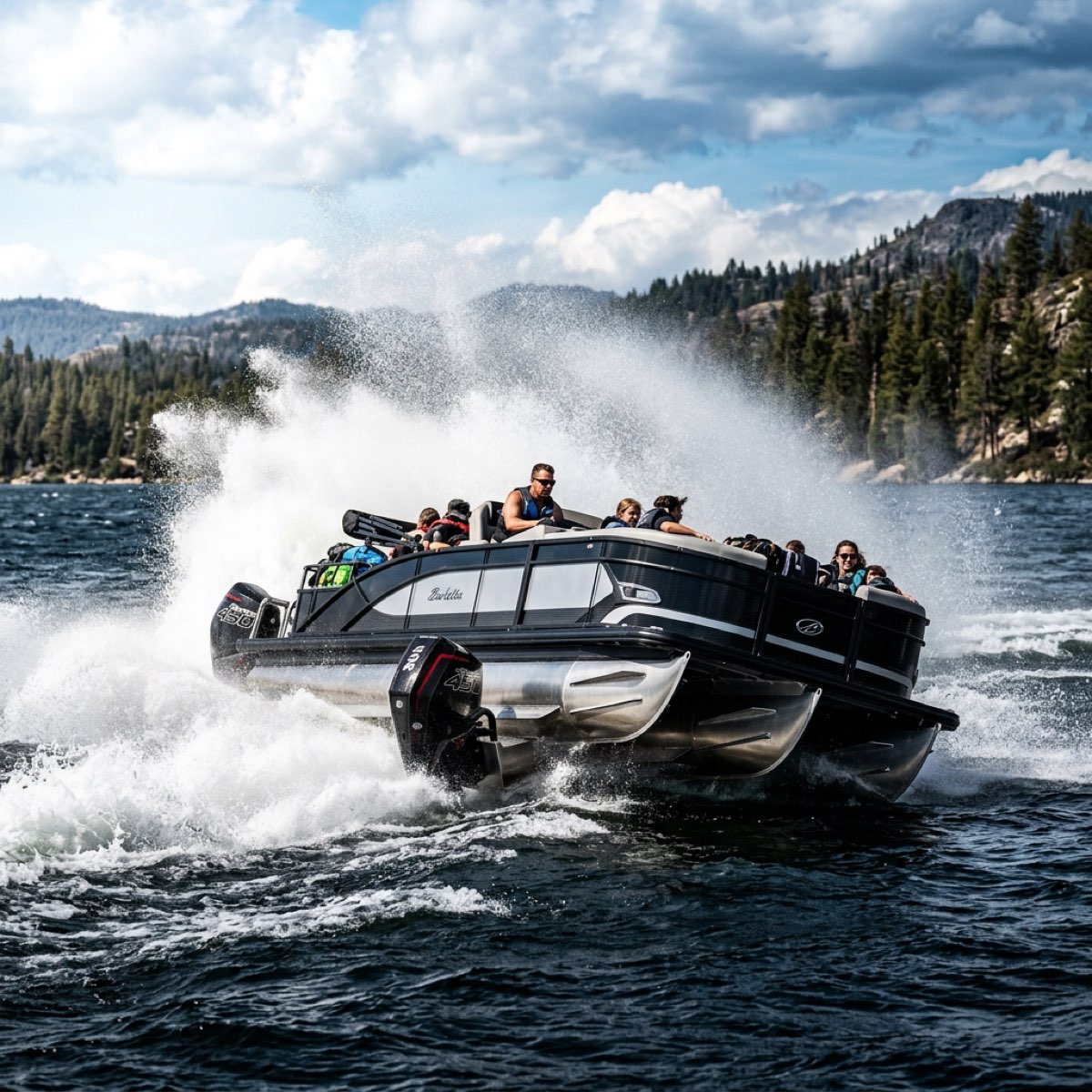
A Tri-Toon Pontoon Used for Watersports – This is generally safe. In tri-toon boats, the hull has a third center log and welded lifting strakes. Therefore the boat has a chance to rise up out of the water and plane like a regular V-hull boat. Your pontoon has a much better center of gravity and can stay well-balanced even with the use of heavy 300hp outboard motors. When you turn, it banks inward securely, making it perfect for towing tubers and skiers.
However, it’s good practice to just avoid dangerous offshore weather in general since it can lead to an increase in stress, even in a tri-toon boat.
Driving and Docking Your Pontoon
Driving a pontoon in open water is easy, but docking is where things get tricky.
Coasting into a Slip in a Heavy Crosswind – This is unsafe. If you try to put your pontoon in neutral and let it coast into a slip, you may begin to experience a total loss of steering. Because outboard motors require active thrust to turn, and the massive aluminum side paneling catches wind like a sail, your boat will spin out of control. This means your pontoon won’t go where you aim it, and it can easily lead to a smashed dock or damaged fencing.
Using Short Bursts of Power to Dock – This is generally safe. If you keep the boat in gear and use short, aggressive bursts of forward or reverse to pivot the boat, there shouldn’t be any significant consequences as long as you aren’t hearing any crunching from the dock. You may notice a slight learning curve, but your boat will still be able to dock perfectly. Turn the wheel completely before applying the throttle burst to kick the stern over.
Free Download: The 50-Point Pre-Season Pontoon Checklist
If you accidentally forget to prep your battery or navigation lights before the season starts, it should be fixed before you hit the ramp. Grab my personal step-by-step checklist to make sure your pontoon is ready to run.
100% free. No spam, just expert boat advice.
Maintaining the Aluminum Logs
All pontoons feature bare aluminum logs below the waterline. However, there are some major differences in how you maintain them depending on where you boat.
Leaving an Unpainted Pontoon in Saltwater – This is unsafe. The higher concentrations of salt and stray electrical currents in a marina will break down the bare aluminum. This means your pontoon logs won’t get the protection they normally need and it can easily lead to severe galvanic corrosion and pinhole leaks. If you must leave it in saltwater, ensure you have an aluminum-safe antifouling bottom paint applied.
Using Zinc Anodes in Freshwater – If you try to use zinc anodes in freshwater, you may begin to experience severe log corrosion. Zinc does not activate properly in freshwater. It’s definitely a bad idea to use the wrong anode. You must use magnesium anodes for freshwater to ensure they sacrifice themselves to the electrical current to save your boat.
If you accidentally left your unprotected pontoon in the water, pull it out and check the logs as soon as possible. Do not try to leave the boat in the slip long-term as it could be dangerous for the metal.
Outfitting with the Right Gear
When you buy a pontoon, one of the most important things to know is what type of accessories it requires.
Anchoring with a Standard Fluke Anchor – If you use a standard lightweight fluke anchor, dragging could become a severe issue. Because pontoons catch so much wind, they easily pull standard anchors right out of the mud. You should upgrade to a heavy-setting Box Anchor.
Using Round Hotdog Fenders – On the other hand, using round fenders isn’t dangerous for your pontoon's internals, but it can easily lead to dented side paneling. The wind will push your heavy pontoon into the dock, the round fender will roll right up the side of the log, and your aluminum fencing will smash into the wood. Buy the specialized square pontoon fenders that clip securely over the top rail.
Don’t be fooled into thinking that standard round fenders are always the best! Using the recommended square fenders for your boat will help it dock at the proper level without wasting extra money.
Trailering and Launching a Pontoon
Let’s say you’ve backed your trailer down the ramp and just realized a strong crosswind is blowing your pontoon completely sideways. What will happen if you try to winch it up now? Well, it all depends on the style of trailer you bought and your approach speed.
Using a Scissor Trailer in the Wind – This is generally unsafe. If your pontoon trailer is a flat "scissor" style lift that slides between the logs, and you accidentally approach it crooked in heavy wind, there could be significant consequences. You may begin to experience severe hull damage if you miss the center lift and scrape your bare logs across the steel trailer frame. You must be perfectly aligned to use a scissor trailer.
Using a Bunk Trailer with Guide-Ons – This is generally safe. If you have a float-on bunk trailer equipped with tall PVC guide-on posts, there shouldn’t be any significant consequences even if you approach a little crooked. The tall guide posts will catch the aluminum logs and force the boat into alignment as you drive it forward. It’s definitely a good idea to upgrade to tall guide posts if you frequently load the boat by yourself.
Winterizing a Pontoon for Freezing Climates
All modern outboard motors need proper winterization. However, there are some major differences in how you prep the boat itself depending on where you store it.
Annual Pontoon Maintenance Schedule
| Month | Component | Task | Product Used |
|---|
| April | Outboard Motor | Change engine oil and gear lube | 10W-30 Marine Oil |
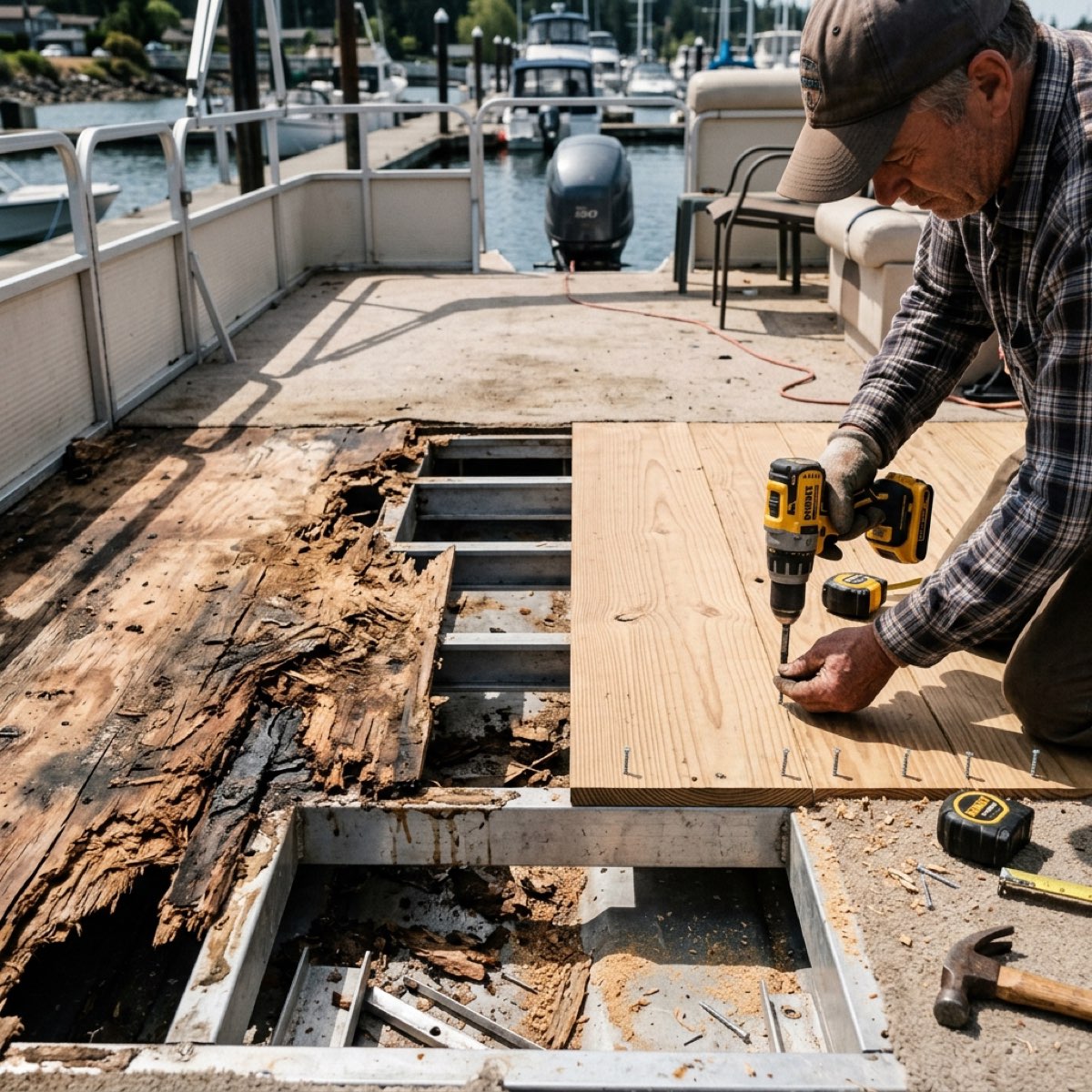
| May | Plywood Deck | Inspect for soft spots / leaks | Marine Sealant |
| June | Aluminum Tubes | Wipe down waterlines | Vinegar / Water |
| August | Propeller | Check for chips or fishing line | Grease / Cotter Pin |
| October | Fuel System | Stabilize fuel for winter | StarTron / Seafoam |
Leaving Water in the Lower Unit – This is unsafe. If you try to store your pontoon for the winter without changing the lower unit gear oil, you may begin to experience severe internal cracking. If water has leaked into the gearcase during the summer, that water will freeze, expand, and crack the expensive lower unit housing. It’s important not to skip your autumn oil changes.
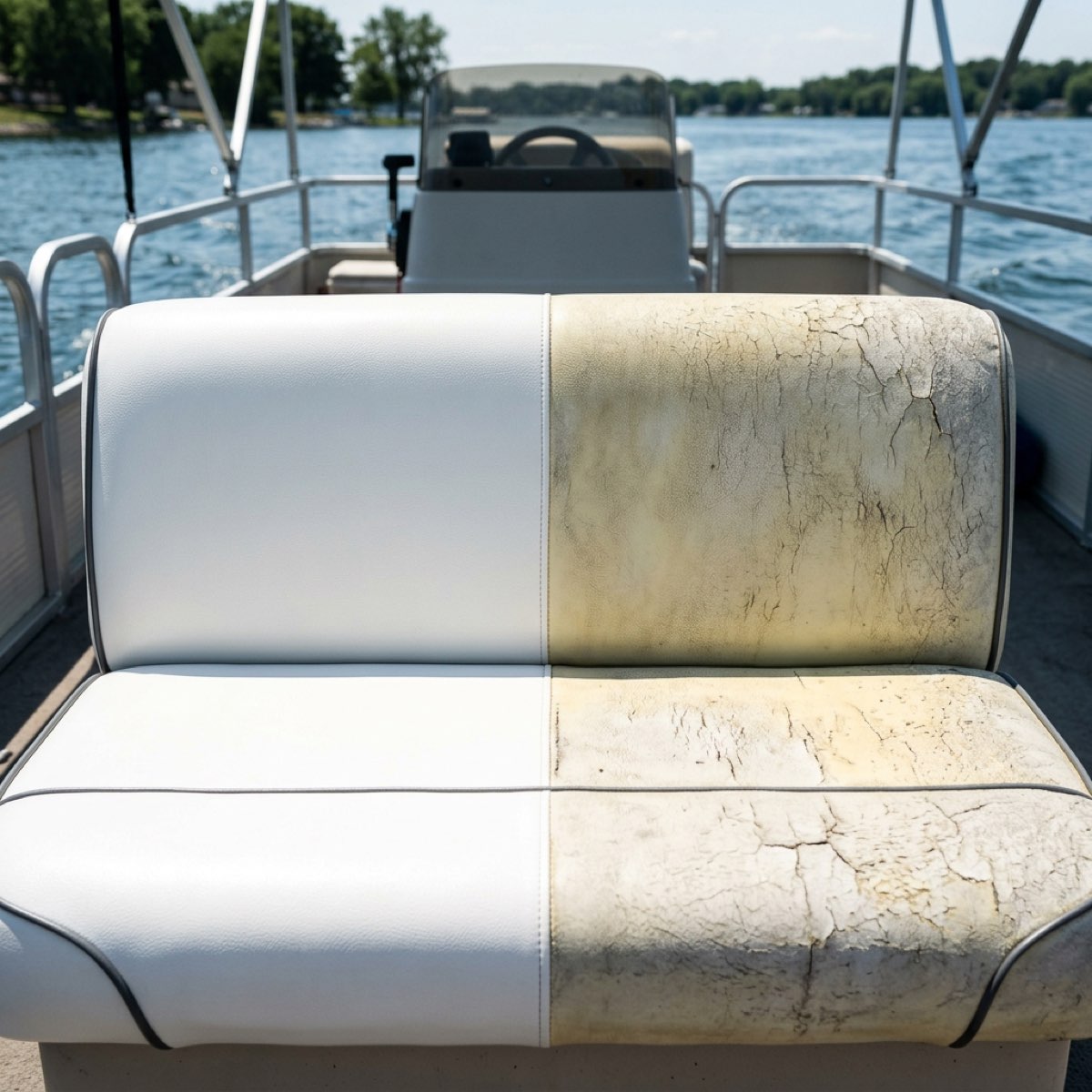
Shrink Wrapping with Moisture Absorbers – This is generally safe. If you shrink-wrap the entire playpen of your pontoon and place moisture absorbers inside the cabin, you won’t have to worry about mold. You may notice a slightly stale smell in the spring, but your boat’s marine upholstery will survive the winter perfectly.
Propeller Selection: Speed vs. Pushing Power
When you buy a pontoon, one of the most important things to know is that standard speedboat propellers usually don't work well on them.
Using a High-Pitch Speed Propeller – If you use a high-pitch prop designed for a fiberglass bass boat, severe engine lugging could become an issue. Because pontoons catch so much water and push a massive, un-aerodynamic profile, they easily overload speed props. You will notice poor acceleration and terrible fuel economy.
Using a Large-Diameter "Elephant Ear" Propeller – On the other hand, using a lower pitch, large-diameter pontoon propeller (often called "elephant ears") isn’t dangerous for your engine, and it can easily lead to much better handling. The larger blades will grab the water when docking and provide the massive thrust needed to get a heavy tri-toon onto plane. Buy the specialized high-thrust propellers designed specifically for pontoon applications.
Final Thoughts
Every one of our pontoon boats needs a captain to operate, that is unless you have one of those fancy self-driving boats of course. Although all the hull types and the various docking techniques can seem overwhelming at first, it’s actually fairly straightforward.
Just make sure you know your pontoon's recommended water limits and stick with it as much as possible. You can add higher horsepower if you so choose on a tri-toon, but don’t go lower than the suggested rating for rough water. Doing this will help you avoid plowing water and a really bad day due to a swamped bow.
Even if you accidentally make a mistake while docking or outfitting, you can always learn from it and start over again as long as you catch it before hitting the dock too hard and causing structural damage. Take a deep breath, relax, and work through this problem! Oh, and don’t kick yourself too much for the inattention while fighting the wind at the marina, we’ve all done it at some point!