Do I Need Zinc Anodes for My Pontoon in Saltwater? (2026 Guide)
AuthorMike Callahan
PublishedApril 1, 2026
Read Time9 min
UpdatedApril 1, 2026
Quick Brief
TL;DR Protocol
Considering taking your pontoon into the salt? We explain the critical physics of galvanic corrosion and why choosing the right sacrificial anode (Zinc vs. Aluminum vs. Magnesium) is the only thing standing between you and a 'leaky log' disaster.
UNIT-REF: BG-NAV-742
#pontoon zinc anodes saltwater#sacrificial anodes for aluminum boats#galvanic corrosion pontoon#aluminum vs zinc anodes#saltwater pontoon maintenance
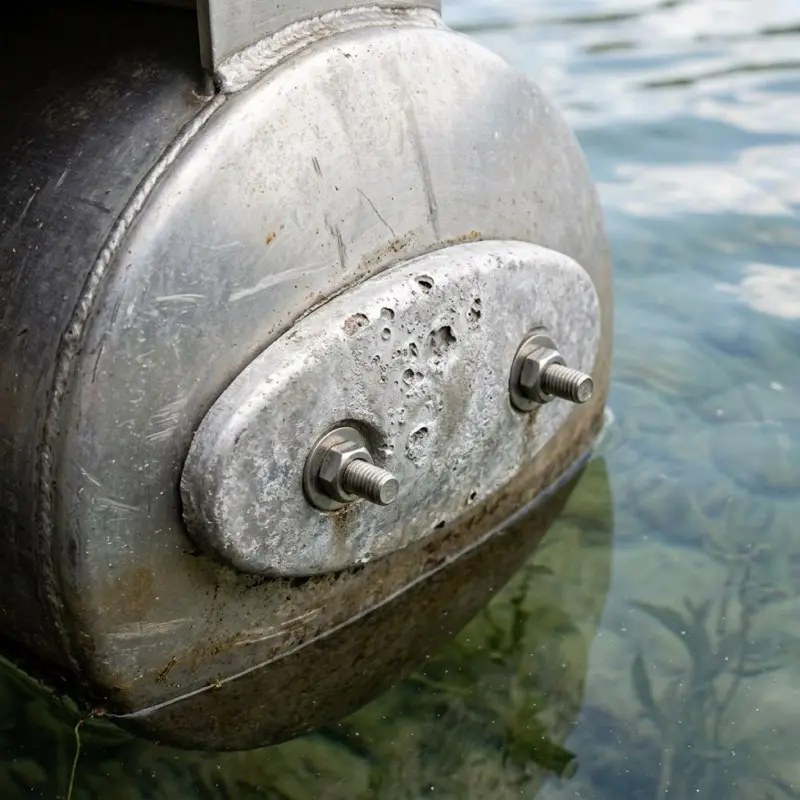
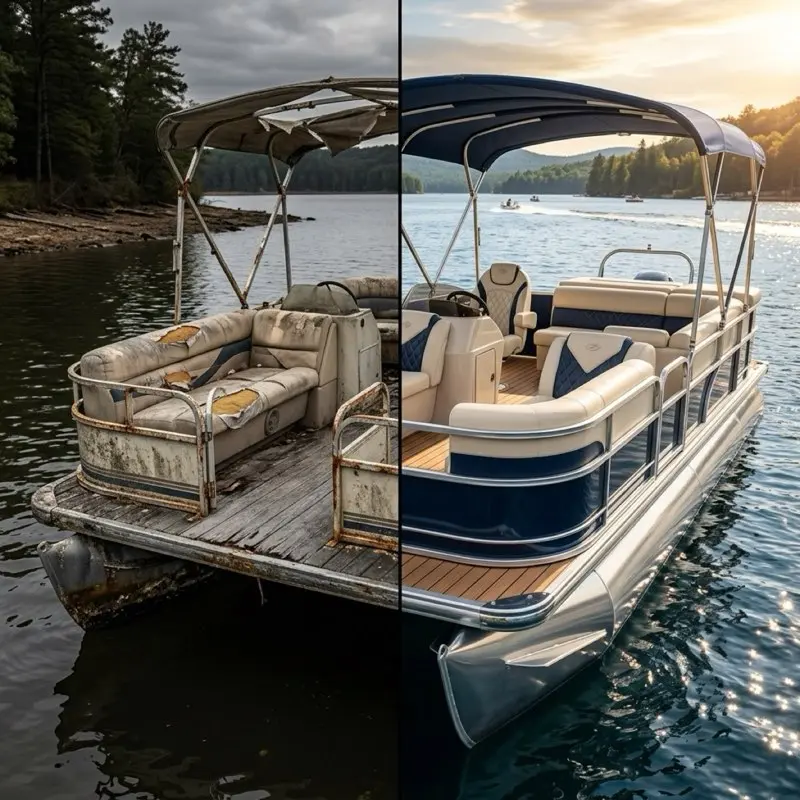
If you have ever seen a pontoon boat that looks like it has been "eaten" from the bottom up, covered in white, chalky pits and bubbling paint, you are looking at the aftermath of Galvanic Corrosion.
In a freshwater lake, your aluminum logs are relatively safe. But the moment you drop that boat into saltwater or brackish water, the entire vessel becomes a giant battery. Saltwater is a highly efficient electrolyte. Because your boat is made of aluminum but contains parts made of stainless steel (the prop, the bolts) and copper (the wiring), an electrical current begins to flow between the different metals.
In this electrical battle, the "weaker" metal is sacrificed to protect the "stronger" one. On a boat, the weaker metal is almost always your expensive aluminum logs.
As a marine service advisor, I have seen $50,000 pontoons ruined in a single season because the owner thought "Zinc anodes are only for big offshore boats." They aren't. They are a mandatory safety component for any aluminum vessel entering the salt.
In this guide, we’ll break down the chemistry of why your boat is at risk, how to choose the right anode material, and where to mount them to ensure your logs don't turn into a block of Swiss cheese.
1. The Science: Galvanic Corrosion Explained
To understand why you need anodes, you need to understand the Galvanic Series. This is a list of metals ranked by their electrical "nobility."
When two different metals are submerged in saltwater and connected (either by touching or through the boat's wiring), the Active metal will begin to dissolve (corrode) to protect the Noble metal.
The Problem: Your pontoon logs are the "Active" metal. They will literally sacrifice their own molecules to protect a stainless steel propeller or a bronze through-hull fitting.
The Solution: You introduce an even weaker metal into the system, a Sacrificial Anode. The current will attack the anode instead of your logs.
2. Zinc vs. Aluminum vs. Magnesium: The 2026 Standard
For decades, we called these "Zincs." But today, zinc is rarely the best choice for a pontoon boat.
2.1 Zinc Anodes
Zinc is the traditional choice for pure saltwater.
The Downside: If you take a zinc-equipped boat into freshwater for a few weeks, the zinc will develop a hard "calcium" coating. This coating insulates the anode, so when you go back into saltwater, the anode won't work.
2.2 Aluminum Anodes (The Modern Pro Choice)
Most experts now recommend Aluminum Anodes (specifically an alloy like Mil-Spec A-24779) for almost all environments.
The Advantage: Aluminum anodes work in Saltwater, Brackish water, and Freshwater. They are lighter, cheaper, and more environmentally friendly than zinc. They also stay "active" even after being in freshwater.
2.3 Magnesium Anodes
Magnesium is the most active metal on the list.
The Use Case: These are for Freshwater ONLY. In saltwater, magnesium is so active that it will fizz like an Alka-Seltzer and disappear in 48 hours. Never use magnesium in the salt.