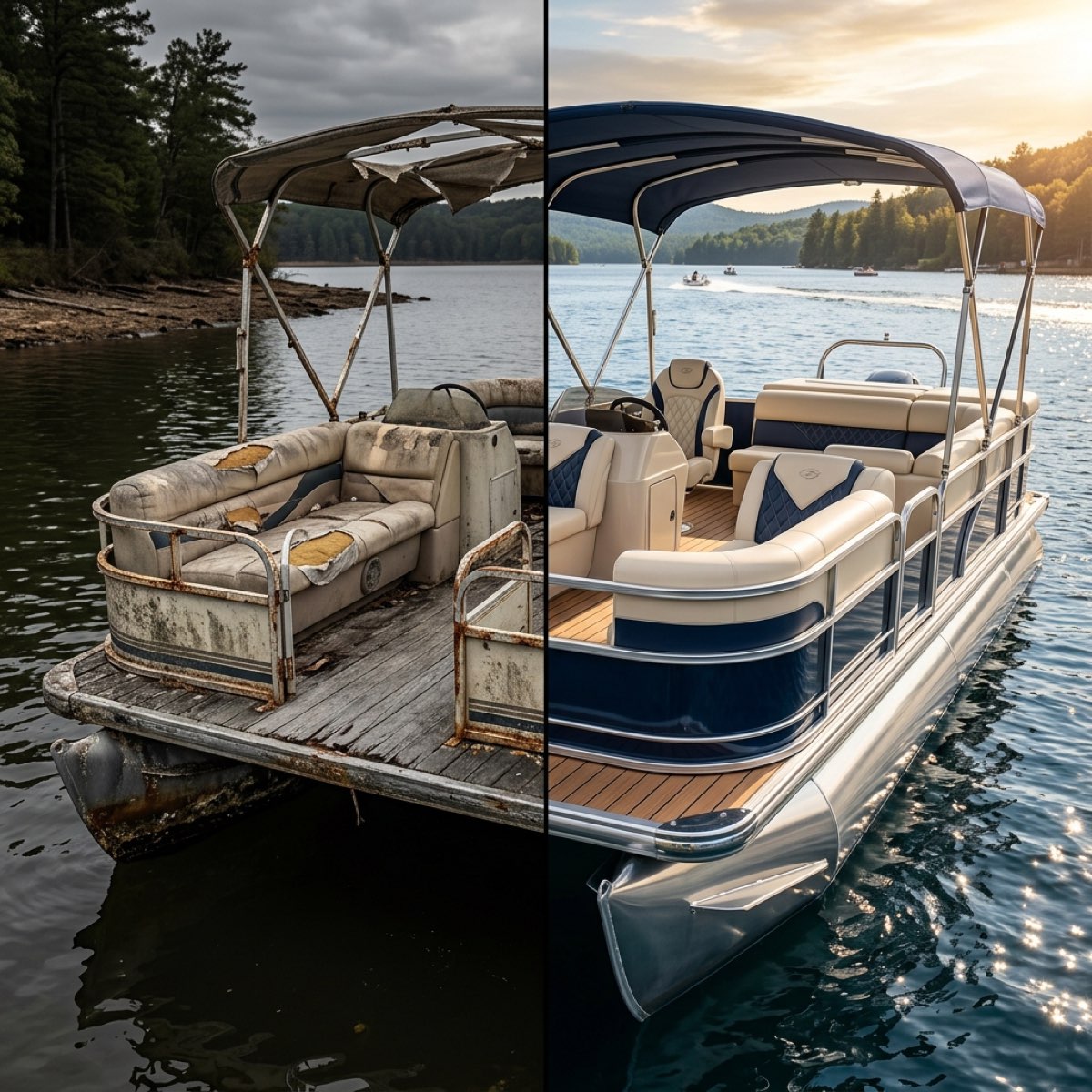
If you are reading this, you’ve likely felt the "spongy" flex of a rotten floor beneath your feet. Or perhaps you are looking at a 20-year-old pontoon and wondering if you should stick with the traditional wood deck or upgrade to something "immortal."
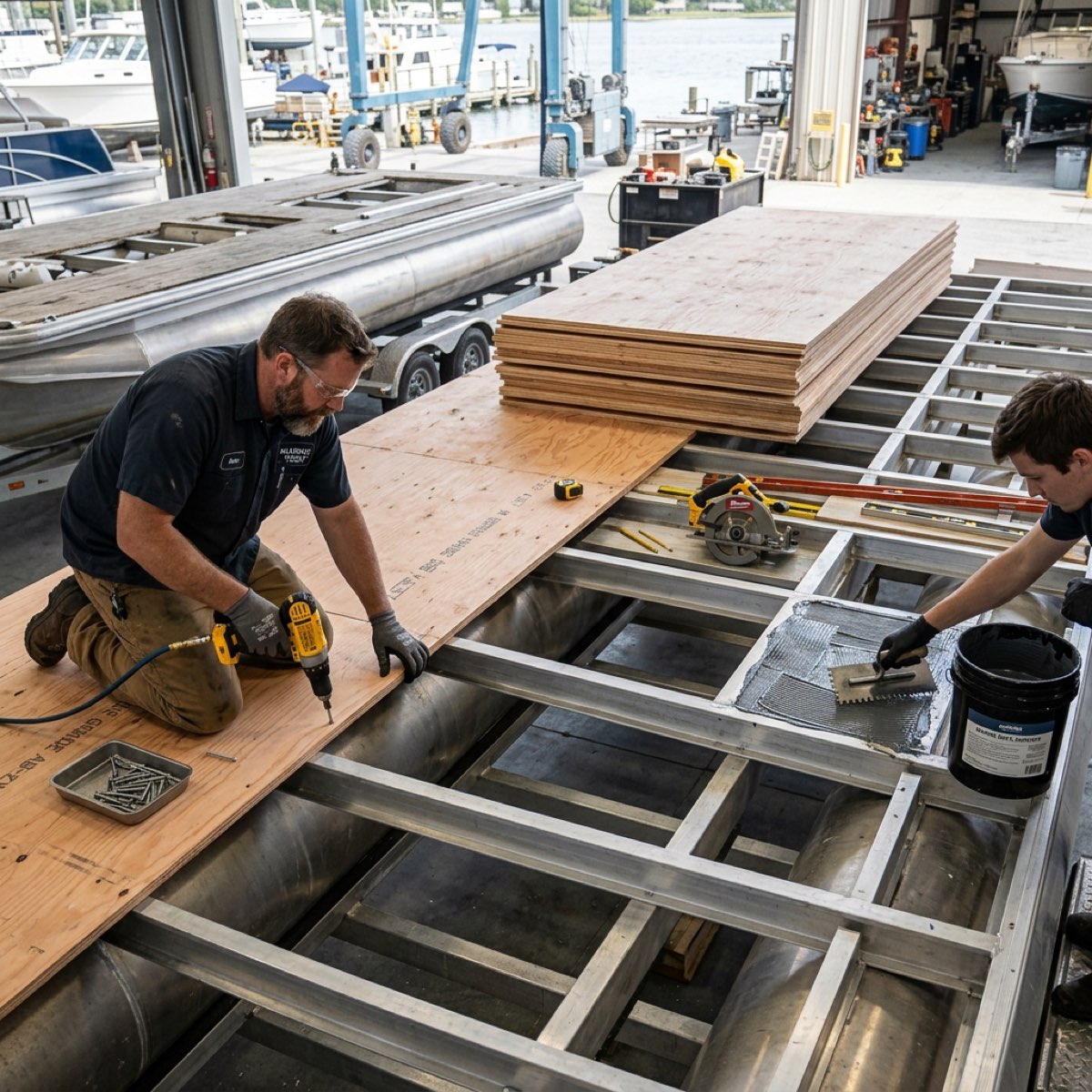
Replacing the deck of a pontoon is the most labor-intensive project you can undertake. It requires stripping the boat to its bare aluminum cross-members, which means removing the engine, the console, every seat, and every inch of the aluminum fencing. Since you are going to spend 40 to 60 hours of your life on this restoration, the decision of which material to put back down is the difference between a 10-year repair and a lifetime solution.
As a marine service advisor, I have seen every decking failure imaginable. I’ve seen aluminum decks that resonate like a drum, plywood decks that dissolved because of the wrong chemical treatment, and PVC panels that cost more than the boat's engine.
In this authority guide, we are going to dive into the technical physics of weight, thermal conductivity, structural resonance, and the actual chemical bonding requirements of Marine Plywood, Aluminum panels, and PVC composites.
1. The Traditional Standard: CCA Marine Plywood
For 50 years, plywood has been the dominant choice for pontoon decking. It is relatively inexpensive, easy to work with, and provides excellent vibration damping. However, not all "treated" wood is created equal.
The CCA Requirement:
You must use Chromated Copper Arsenate (CCA) treated marine plywood. Do not, under any circumstances, use the "Pressure Treated" plywood found at a local hardware store (which is usually ACQ or Copper Azole).
- The Galvanic Bomb: ACQ-treated wood contains high levels of copper. When wet, that copper creates a battery with your boat's aluminum cross-members. It will literally dissolve the frame of your boat into white powder within five years.
- The Marine Advantage: CCA treatment is "fixed" in the wood fibers and does not cause aggressive galvanic corrosion with aluminum. It is also manufactured with zero internal voids and waterproof phenolic resins that will not delaminate even if submerged.
Pros of Plywood:
- Vibration Damping: Wood is a natural shock absorber. It deadens the "slap" of waves against the logs and the vibration of the outboard motor.
- Thermal Neutrality: Wood does not get excessively hot in the sun.
- Cost-Effective: At roughly $120-$150 per sheet, a full deck replacement costs around $1,200.
Cons of Plywood:
- Finite Lifespan: Even CCA wood will eventually rot (usually 15-20 years) if water is trapped against it by old-fashioned marine carpet.
- Weight: A 3/4" sheet of marine plywood weighs about 75 pounds. For a 24-foot boat, that’s 600+ pounds of dead weight sitting on your logs.
The Decking Comparison Matrix
Want the exact weight and cost-per-square-foot data for all three materials? Download our 2026 Decking Buyer's Guide to see the side-by-side technical specs for your specific boat length.
Expert material analysis from the BoatGuider team. 100% Free.
2. The "Immortal" Option: Aluminum Interlocking Panels
In the last decade, high-end manufacturers like Barletta and Bennington have begun offering all-aluminum decking systems. For a DIY restoration, this is the ultimate "once and done" solution.
The Physics of Rigidity:
Aluminum decking usually consists of hollow-core, interlocking extruded panels. These panels are significantly more rigid than plywood. When you step on an aluminum deck, there is zero "give." This stiffness translates to a more stable feeling at high speeds and in rough water.
The Weight Paradox:
While aluminum is light, the heavy extrusions required for a deck are often heavier than plywood. A 3/4" aluminum panel system can weigh up to 15% more than a marine plywood deck. On a tritoon with a high-horsepower motor, this doesn't matter. On a 20-foot twin-log boat with a 50hp motor, that extra 100 pounds can noticeably decrease your top speed and buoyancy.
Pros of Aluminum:
- Zero Rot: Aluminum will never rot, mold, or warp. It is a lifetime product.
- Structural Integration: Many systems actually bolt together in a way that adds structural rigidity to the boat's cross-members, reducing "flex" in big waves.
- Fire Safety: Unlike wood, it is completely non-combustible.
Cons of Aluminum:
- The "Heat Sink" Effect: Aluminum has incredibly high thermal conductivity. In 95-degree sun, an aluminum deck can become hot enough to burn bare feet if the vinyl flooring is not thick enough.
- The Drum Effect: Aluminum resonates. If you drop a wrench on the deck, it will sound like a gong. You must use thick, high-quality woven vinyl flooring with a padded backing to dampen the sound.
- Price: An aluminum decking kit for a 22-foot boat can easily cost $4,000 to $6,000—four times the cost of plywood.
3. The Modern Miracle: PVC Composite (Coosa Board)
If money is no object and you want the absolute best of both worlds, you look at Coosa Board or similar high-density PVC composite panels.
The Chemistry of No-Rot:
Coosa board is a high-density, closed-cell polyurethane foam reinforced with layers of woven roving and continuous strand fiberglass. It is not "plastic" in the traditional sense; it is a structural composite panel.
The Weight Advantage:
This is where Coosa board wins. It is 40% to 60% lighter than marine plywood while maintaining the same structural stiffness. Replacing a 600-pound plywood deck with a 300-pound Coosa deck will significantly increase your boat's buoyancy, draft, and speed. It is like gaining an extra 3-4 horsepower just through weight reduction.
Pros of PVC Composites:
- Zero Water Absorption: It is closed-cell foam. It can be submerged for 100 years and it will not absorb a single drop of water.
- Incredible Strength-to-Weight: It is stronger than plywood but half the weight.
- Damping: It provides better vibration and sound damping than aluminum.
Cons of PVC Composites:
- Cost: This is the most expensive material on the list. A single sheet of 3/4" Coosa Bluewater 26 can cost $400 to $550. A full deck replacement will cost $4,500+.
- Availability: You won't find this at a local lumber yard. You have to order it from a specialty marine supplier and pay significant freight shipping costs.
4. Deep Dive: The Structural Engineering of Deck Removal
Before you can install your new material, you must face the "Mechanical Strip." This is the part of the project that leads most DIYers to quit.
The Console Disconnect:
The helm console is the nerve center of the boat. To remove it, you must carefully label and disconnect the steering cable (or hydraulic lines), the throttle/shift binnacle, and the entire electrical wiring harness.
- Mike's Golden Rule: Do not cut the wires. Pull them back through the floor and coil them inside the console. This ensures you won't have to rewire the entire boat in the spring.
The Motor Pod Challenge:
If your pontoon uses an integrated motor pod (the "transom" for the outboard), the plywood often runs under the motor mounting brackets.
- The Pro Move: You do not necessarily have to remove the outboard entirely. You can use a gantry crane or a heavy-duty engine hoist to take the weight off the motor, unbolt the motor pod from the cross-members, and slide the new plywood under it. If you choose to remove the motor, you will need a 1/2" drive socket set and an extra set of hands to hold the bolts inside the motor pod.
5. Adhesion Science: Bonding to Different Surfaces
How you glue your new flooring (woven vinyl or carpet) depends entirely on which material you choose.
Bonding to Plywood:
This is the easiest. Most high-temp marine adhesives are designed to "bite" into the porous grain of the wood. You apply the glue with a notched trowel, let it tack up, and roll the vinyl down. The bond is permanent.
Bonding to Aluminum:
This is the most difficult. Aluminum is non-porous and smooth. Standard wood adhesives will not stick. You must use a specialized, high-solids solvent-based adhesive. Furthermore, you must "scuff" the entire surface of the aluminum with a grinder or heavy-duty sandpaper to create a mechanical "profile" for the glue to grab onto. If you don't, the vinyl will bubble and peel off the first time it hits 100 degrees.
Bonding to PVC (Coosa):
Because Coosa board is fiberglass-reinforced, it bonds incredibly well with polyester resins and marine adhesives. It is the gold standard for "no-peel" longevity.
6. Hardware Selection: Stainless Steel is Non-Negotiable
Regardless of which decking material you choose, the hardware that holds it to the frame is the #1 point of failure.
The "Elevator Bolt" Lore:
You must use 316-grade Stainless Steel Elevator Bolts. These have a large, 1-inch flat head that pulls flush into the decking material.
- Plywood Tip: Tighten the bolt until the head is slightly recessed (about 1/16") into the wood. This ensures you won't have "bumps" under your new vinyl.
- Aluminum Tip: You cannot recess bolts into aluminum. You must buy "countersunk" aluminum panels or use specialized fasteners that sit flush within the extrusions.
The "Zinc" Warning:
Never use zinc-plated or galvanized bolts. The chemicals in CCA-treated wood and the moisture in the marine environment will eat the zinc coating in a single season. Once the bare steel starts to rust, it will bleed through your new vinyl and eventually rot the core of your deck from the hardware out.
7. Acoustic Damping: The "Quiet Ride" Protocol
One of the biggest complaints with aluminum or composite decking is the increase in noise. Plywood is naturally quiet, but the other materials can act like a resonator.
The Rubber Isolation Strategy:
Before you lay your new decking (of any material) onto the aluminum cross-members, apply a 1/8" thick strip of EPDM Rubber or heavy-duty marine foam tape to the top of every cross-member.
- Why it works: This creates a "thermal break" and a vibration isolator. It prevents the decking from rattling against the frame and stops the transmission of engine vibration throughout the floor. It also provides an extra layer of moisture protection at the bolt holes.
8. Cost Breakdown: The Reality of 2026
| Material | Cost per Sheet (3/4") | Full Deck Cost (22') | Lifespan | Difficulty |
|---|
| Marine Plywood (CCA) | $120 - $150 | $1,200 | 15-20 Years | Easy (Standard Tools) |
| Aluminum Panels | $500 - $750 | $4,500 - $6,000 | Lifetime | Hard (Special Glue/Fitting) |
| Coosa Board (PVC) | $450 - $550 | $4,000 - $5,000 | Lifetime | Easy (Standard Tools) |
9. ASTM Standards: How to Verify Your Wood
If you choose the plywood route, don't just trust the guy at the lumber yard. You need to verify the stamp on the wood.
The APA Stamp:
Look for the APA (Engineered Wood Association) stamp. It should specify PS 1-09 (the structural standard for plywood).
The "Marine" Designation:
True marine plywood must have a grade of A-A or A-B, meaning the face and back plies are of high quality with no open knots. If the stamp says "C-D Plugged," it is not marine plywood; it is standard exterior plywood that will fail prematurely on a boat.
10. The "Underskinning" Factor: Protecting Your Investment
If you are going through the effort of a deck restoration, you should almost certainly "underskin" the boat.
The Aluminum Shield:
Underskinning involves riveting thin sheets of aluminum (usually .063 gauge) to the bottom of your cross-members.
- For Plywood: It stops the "power-wash" effect of waves hitting the bottom of the wood, which can strip the chemical treatments and keep the wood perpetually damp.
- For Aluminum/PVC: While it's not needed for rot protection, it stops "surging" between the logs, which increases your top speed by 3-5 MPH and makes for a much smoother, quieter ride.
11. Final Verdict: Which should you choose?
Choose CCA Marine Plywood if:
You are on a budget, you want the quietest possible ride, and you plan on keeping the boat for another 10-15 years. It is the most logical choice for 90% of DIY restorations.
Choose Aluminum Interlocking Panels if:
You have a high-horsepower tritoon, you want a "stiff" performance feel, and you never want to think about the floor again for the rest of your life.
Choose Coosa Board if:
You have a small pontoon where every pound of weight matters, or you are building a custom "forever boat" and want the absolute best performance-to-weight ratio available in the marine industry.
12. Installation Lore: The "Drum-Tight" Vinyl Secret
The biggest mistake I see in my shop is people who spend $5,000 on the deck and then mess up the vinyl installation.
- The 100-lb Roller: You must rent a heavy vinyl roller from a flooring store. Your hands and feet cannot apply enough pressure to eliminate the microscopic air pockets that cause bubbles in the summer heat.
- The High-Temp Adhesive: Do not use "indoor/outdoor" carpet glue from a hardware store. It will melt at 110 degrees (a common deck temperature in July). You must use a marine-specific, high-temperature contact cement or specialized vinyl adhesive.
- The Seam Seal: If you are using plywood, apply a coat of Penetrating Epoxy to the edges of every sheet before installation. This seals the end-grain and prevents water from wicking into the center of the panel.
13. Maintenance Protocol: Ensuring Longevity
Once your new deck is installed, you need a different maintenance mindset.
For Aluminum Decks:
You must rinse the deck with fresh water after every use if you are in a saltwater or brackish environment. Even though aluminum doesn't "rot," it can develop "pitting" or surface oxidation if salt is trapped between the vinyl and the metal.
For Plywood Decks:
The enemy is standing water. Never store your boat perfectly level. Always tilt the trailer tongue as high as possible so that any water that gets under the seats can drain out the back. If water pools on the vinyl, it will eventually find a way through a bolt hole and start the rot process all over again.
14. Conclusion
A pontoon deck restoration is a rite of passage for many boat owners. It is a grueling, messy, and expensive project, but it is also the most rewarding. By moving away from water-trapping marine carpet and choosing the right combination of decking material and stainless hardware, you are transforming an old boat into a modern, high-performance vessel.
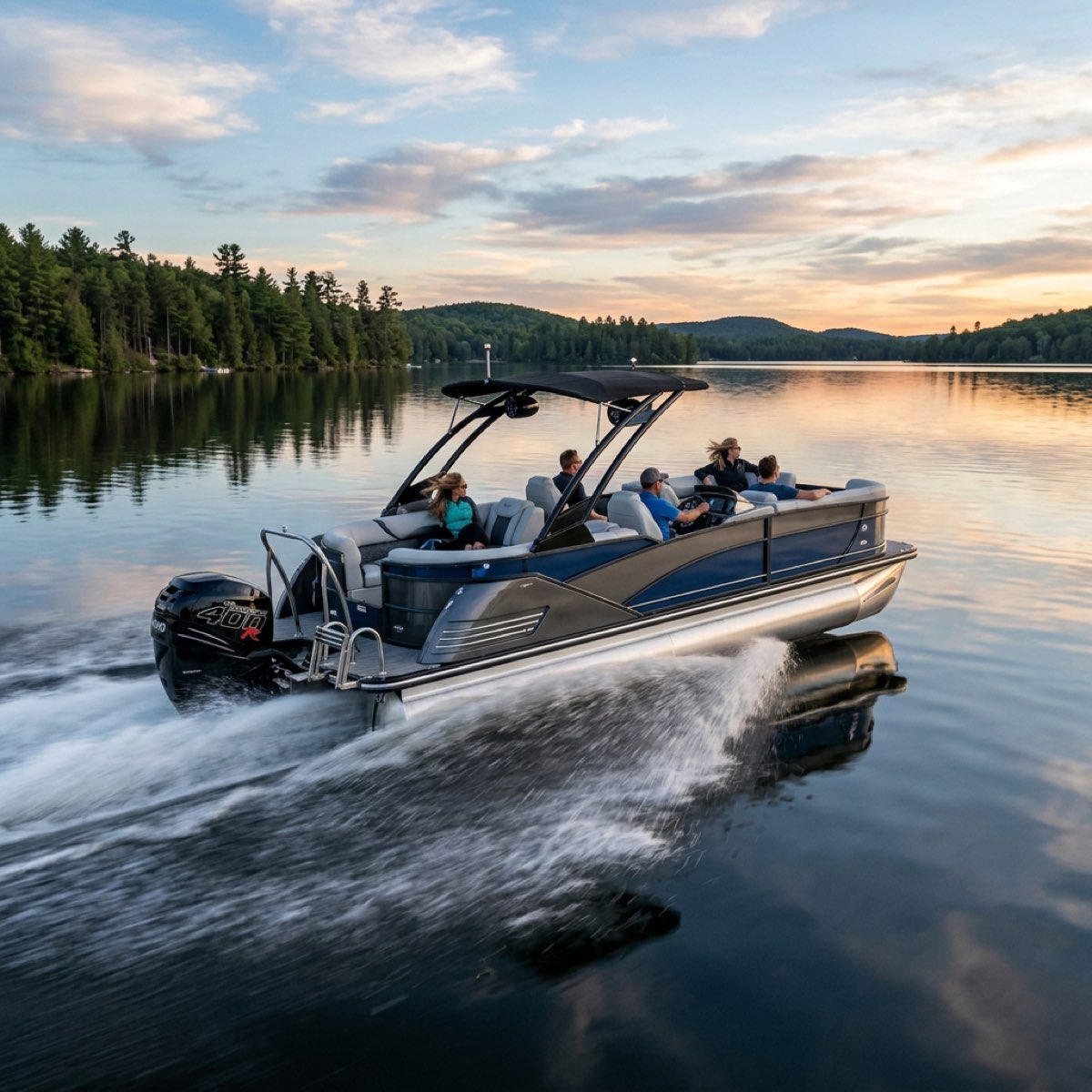
Take your time, weigh the costs vs. the weights, and don't skimp on the adhesive. Whether you choose the reliable value of CCA plywood, the immortal strength of aluminum, or the high-tech lightness of Coosa board, your "floating patio" will be solid for decades to come.
Stay safe, measure twice, and I'll see you on the water!
15. The "Lumber Grading" Fraud: How to Spot Fake Marine Plywood
As the price of lumber has fluctuated, I have seen a rise in "Counterfeit" marine plywood. A salesman might tell you that "Exterior Grade" is the same thing—it is not.
15.1 The "Void" Problem
Standard ACQ exterior plywood allows for internal voids (hollow spots) in the center plies.
- The Hazard: In a house, this doesn't matter. On a boat, these voids trap moisture. When the wood gets hot in the sun, that moisture turns to steam, causing the plies to delaminate and bubble your vinyl from the inside out.
- The Test: Look at the edge of the sheet. True Marine Plywood (BS 1088 or PS 1-09) will have zero visible gaps or overlaps in the center layers. If you see a hole in the middle of the stack, put it back.
16. Cross-Member Forensics: While the Deck is Off
The only time you will ever see your boat's "Skeleton" is when the deck is removed. Do not waste this opportunity to inspect the aluminum cross-members.
16.1 The "Cracked Weld" Scan
Pontoons flex. Over 20 years, the welds where the Z-bars (cross-members) meet the logs can develop stress cracks.
- The Fix: If you find a crack, you must have a mobile welder fix it with a spool gun or TIG welder before putting the new wood down. A new deck on a cracked frame is like putting a new roof on a house with a broken foundation.
16.2 The "Galvanic Scale" Cleanup
You will likely find a layer of white, chalky powder on top of the aluminum bars. This is aluminum oxide (corrosion).
- The Protocol: Use a wire brush on a drill to strip this powder off until you see shiny aluminum. Then, apply a coat of Zinc Chromate Primer to the top of the bars. This creates a chemical barrier between the metal and the new wood.
17. The "Callahan Elevator" Protocol: Bolting for Silence
A squeaky pontoon deck is usually caused by the wood "sawing" against the bolts as the boat flexes in waves.
- The "Center-Out" Pattern: Always start bolting from the center of the boat and work your way toward the bow and stern. This "Stretches" the wood across the frame and prevents "buckling" or air gaps.
- The "Double-Nut" Rule: Marine vibration is intense. For every elevator bolt, I use a Large Fender Washer and a Nyloc Nut. If you use a standard nut with a lock washer, it will vibrate loose in three years, and you will hear a "clunking" sound every time you hit a wave.
- Torque Specs: Tighten the bolts until the head is recessed 1/16" into the wood, but do not crush the fibers. If you crush the wood, you create a "Bowl" that collects water under the vinyl.
18. Summary: The 30-Year Rebuild
Replacing your pontoon decking is a monumental task, but it is also the only way to ensure your boat is safe for the next generation. By choosing CCA Marine Plywood, utilizing 316 Stainless hardware, and adding Underskinning, you are building a boat that is technically superior to the day it left the factory.
Don't rush the strip-down, don't skimp on the adhesive, and for heaven's sake, inspect those cross-member welds.
I'll see you at the ramp.