Sailing the Azores: The Complete Yachtmaster's Guide to Routes, Anchorages & Island Hopping
The first sperm whale surfaced fifteen meters off our starboard bow on a flat-calm September morning south of Pico. We'd been motor-sailing in six knots of true wind when the ocean simply exhaled — a six-metre plume of mist hanging in the air like a question mark. My crew of four went silent. That's the Azores for you: it answers questions you didn't know you were asking.
This guide gives you everything you need to actually sail the Azores — not just visit it. I've completed three circuits of the archipelago, logged passage notes across all nine islands, and made every expensive mistake so you don't have to. By the end of this article you'll know exactly which months to go, which routes suit your skill level, how to book the right charter, and how to read the Azores High before it reads you.
"The Azores exists at the edge of everywhere. It is the Atlantic's comma — the pause between the Old World and the New." — taken from my passage log, September 2024
About this guide: All navigation intelligence, anchorage notes, and weather patterns in this guide are drawn from Alex Rivera's three complete Azores circuit passages (2019, 2022, and 2024), covering all nine islands and logging over 1,400 nautical miles within the archipelago. Meteorological references are cross-checked with IPMA (Instituto Português do Mar e da Atmosfera) forecasts. Disclosure: No charter company, marina, or tourism authority compensated BoatGuider for any recommendation in this guide.
Key Takeaways
- Best window: May and September give the ideal balance of settled weather, fewer crowds, and full marina services
- Minimum skill level: Competent crew boat, tidal water experience, and offshore passage-making for inter-island legs over 50nm
- The golden triangle: Faial (Horta) → Pico → São Jorge is the most rewarding 3-island circuit for a week afloat
- Don't underestimate the swell: The Azores sits in the open North Atlantic even in summer, a 2.5m westerly swell can arrive without warning
- Plan the passage, not just the destination: The sailing between islands is often more memorable than the anchorages
When to Go: Seasonal Weather Decoded
The Azores doesn't have a "bad time to visit" — it has a "wrong time to sail." Here's the truth behind each month:
The Azores High: Your Best Friend and Worst Enemy
The semi-permanent Azores High pressure system is what makes summer sailing here predictably beautiful and winter sailing genuinely dangerous. In the warm months it sits northwest of the archipelago, channelling steady NE–E winds of 10–18 knots across island channels. Drift south or west of its centre and you're back in open Atlantic chaos.
I learned this the expensive way on my 2019 circuit when I left Flores for Faial in what looked like a settled window — 15 knots NE, 1.2m swell on the forecast. By the time we were halfway across, a secondary low had pushed the high north and we were taking 3m westerly swell on the beam in 25 knots. The boat was fine. The crew's lunch was not.
The lesson: Always check the position of the Azores High, not just the local wind forecast. I use Windy.com for surface pressure charts and PredictWind for GRIB files.
Azores Sailing Season at a Glance
| Month | Avg Wind (kts) | Conditions | Crowds | Verdict |
|---|
| Jan–Mar | 18–28 | Atlantic fronts, gales, rough passages | Very low | Not recommended |
| Apr | 12–20 | Improving, variable, occasional storms | Low | Experienced crew only |
| May | 10–18 | Settled, warm, green and lush | Low–Med | Sweet spot |
| Jun–Aug | 8–16 | Hottest, most stable, busy marinas | High | Ideal for beginners |
| Sep | 10–18 | Warm sea, post-season calm, empty marinas | Low–Med | Sweet spot |
| Oct | 12–22 | Autumn fronts building, shorter days | Low | Experienced crew only |
| Nov–Dec | 18–30+ | Full Atlantic winter begins | Very low | Not recommended |
Alex's pick: September 1–25 is the single best sailing window in the Azores. The sea temperature is at its warmest (22–24°C), the marinas are half-full, berth prices drop 20–30%, and whale sightings — particularly of sperm whales and dolphins — are still peaking. After the 25th, Atlantic lows start arriving with intent.
Festivals and Events Worth Timing Around
- Sanjoaninas (June, Terceira): The biggest festival in the Azores — ten days of bullfighting, street parades, and fireworks. Horta berth space becomes premium. Book 3 months ahead.
- Pico Whale Watching Season (April–October): Operators get booked weeks out in July/August. Shoulder months give better access and calmer conditions.
- Regata dos 4 Ventos (August): An inter-island sailing race. Marinas are packed and electric — fantastic atmosphere but zero walk-up berths.
Island-by-Island: What Every Sailor Needs to Know
The nine islands sit in three groups spanning 600km of open ocean. You won't do all nine in a week — and if someone tells you otherwise, they've never been caught in the Faial–Flores passage in a Force 6.
The Three Island Groups at a Glance
| Group | Islands | Distance from Faial | Character | Best For |
|---|
| Eastern | São Miguel, Santa Maria | ~200nm east | Most accessible, best infrastructure | First-timers, provisioning, departure point |
| Central | Faial, Pico, São Jorge, Graciosa, Terceira | Hub | The sailing heart of the archipelago | Island hopping, whale watching, culture |
| Western | Flores, Corvo | ~200nm west | Remote, dramatic, limited facilities | Experienced offshore sailors, wilderness |
São Miguel: The Gateway Island
I always start or end circuits here. Ponta Delgada Marina (700+ berths) is the best-equipped facility in the archipelago — it has everything from a travel lift to a chandlery to a decent café that does espresso before 0700, which matters more than you'd think after an overnight passage.
What to do ashore: Drive (or taxi) to Sete Cidades — twin crater lakes of different colours joined by a narrow bridge. I've taken that drive three times and it still stops conversation. Then Furnas for the cozido das furnas — a slow-stew cooked in volcanic heat underground. It takes six hours to cook and about six minutes to disappear.
Navigation note: The north coast of São Miguel has submerged rocks and no shelter. Stay south. The approach to Ponta Delgada is straightforward but the outer breakwater creates significant chop in SW winds — come in under power with fenders rigged before you need them.
Faial & Pico: The Golden Triangle Hub
Horta on Faial is the most famous transatlantic waypoint in the Atlantic. The legendary Peter Café Sport — open since 1918 — has a wall of 30,000+ burgees and a rum punch strong enough to make you forget what a frontal system is. It is mandatory. I will not apologise for the pun: you'd be Faial to miss it.
The Faial–Pico channel (7nm wide, less than 1 hour in 10 knots) is one of the finest short passages in the Atlantic. Pico looms at 2,351m — the highest point in Portugal — and creates its own microclimate: you can sail from sunshine on Faial into squalls on Pico in the same passage.
Pico's leeward anchorages (Madalena, Lajes) are sheltered but can get uncomfortable in strong NE swell. Use a stern anchor in Madalena if the trade wind pipes up — the harbour is narrow and boats swing unpredictably.
What I came for: The Pico wine. The UNESCO-listed Black vineyards — currais — are stone-walled lava field plots that look like a map drawn by someone who was lost. Verdelho and Arinto do Açores are the grapes to try. Visit Adega do Pico for tasting and a tour.
São Jorge: The Sharp One
São Jorge is shaped like a blade — 54km long, 8km wide, with cliffs falling straight from 700m peaks to tiny harbours called fajãs (coastal lava platforms). It has almost no natural shelter, which means the sailing around it is exposed but spectacular.
Essential stop: Fajã dos Cubres — a sheltered lagoon on the north coast accessible only by dinghy through a narrow channel. The water is calm, green, and utterly unlike anything else in the archipelago.
Navigation warning: The Urzelina-Calheta stretch of the south coast has submerged basalt shelves extending 200–400m offshore. Don't cut the headlands. Stay 0.5nm off.
Flores & Corvo: The Western Frontier
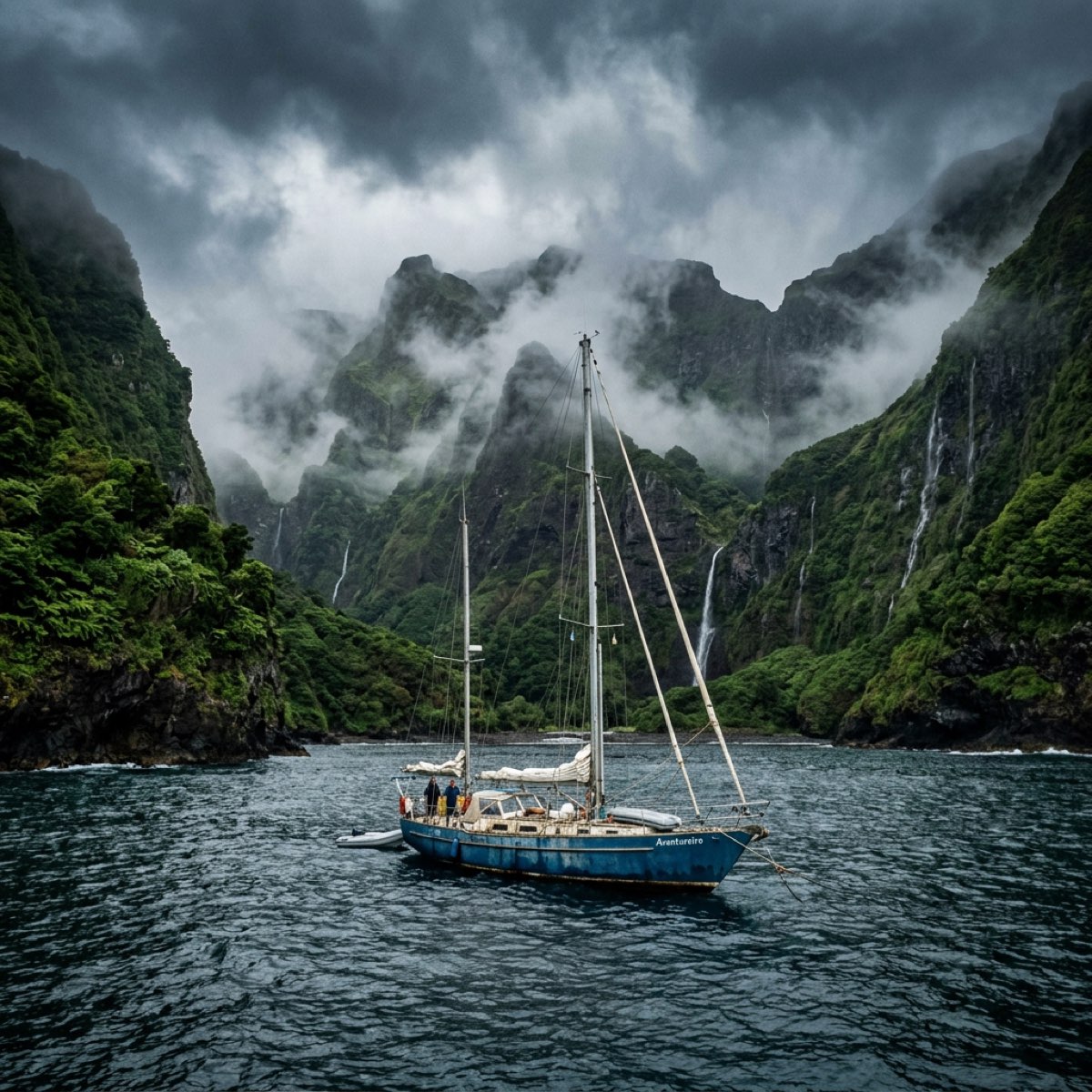
Flores is where the Azores shows off. Waterfalls drop directly into coves. The island is so green it looks colour-corrected. It is also the most testing passage from the Central Group — typically 12–18 hours from Faial in open Atlantic conditions, with no shelter until you're in.
I only recommend Flores to experienced offshore crew. The anchorage at Lajes das Flores is open to the west and can become untenable quickly. The marina is small and reserves berths — call ahead on VHF 16 before committing to the passage.
Corvo (population ~400) is the smallest, most remote island in the archipelago. The anchorage is essentially unprotected. Beautiful for a day visit in calm weather; no overnight anchorage on a short trip.
The Best Sailing Routes
7-Day Circuit: The Golden Triangle (Recommended for First-Timers)
This route keeps passages short, maximises anchorage quality, and gives you three distinct islands without requiring overnight passages.
| Day | Route | Distance | Notes |
|---|
| 1 | Arrive Horta (Faial) | — | Provision, clear in, explore Peter Café Sport |
| 2 | Horta → Madalena (Pico) | 7nm | Early morning, flat water in the channel |
| 3 | Pico day | — | Winery visit, whale watching, Mount Pico attempt |
| 4 | Madalena → Velas (São Jorge) | 22nm | 3–4 hrs, exposed coast, spectacular cliffs |
| 5 | São Jorge day | — | Fajã dos Cubres, local cheese (queijo São Jorge) |
| 6 | Velas → Horta (Faial) | 28nm | 4–5 hrs, direct return, usually a good reach |
| 7 | Buffer/depart Horta | — | Fuel, laundry, final meal at Peter Café |
14-Day Extended Circuit: Central + Eastern Groups
| Leg | Route | Distance | Difficulty |
|---|
| 1–2 | Horta → Pico → São Jorge | 50nm total | Easy |
| 3–4 | São Jorge → Graciosa → Terceira | 70nm total | Moderate |
| 5–6 | Terceira → São Miguel | 90nm | Moderate, longest leg |
| 7 | São Miguel base (Ponta Delgada) | — | Provisioning, rest |
| 8–9 | São Miguel → Santa Maria | 45nm | Easy, southernmost island |
| 10–11 | Return to Central Group | 110nm | Moderate–Hard, check swell window |
| 12–14 | Return circuit: Pico → Faial | 50nm | Easy |
Navigation Intelligence: What the Charts Don't Tell You
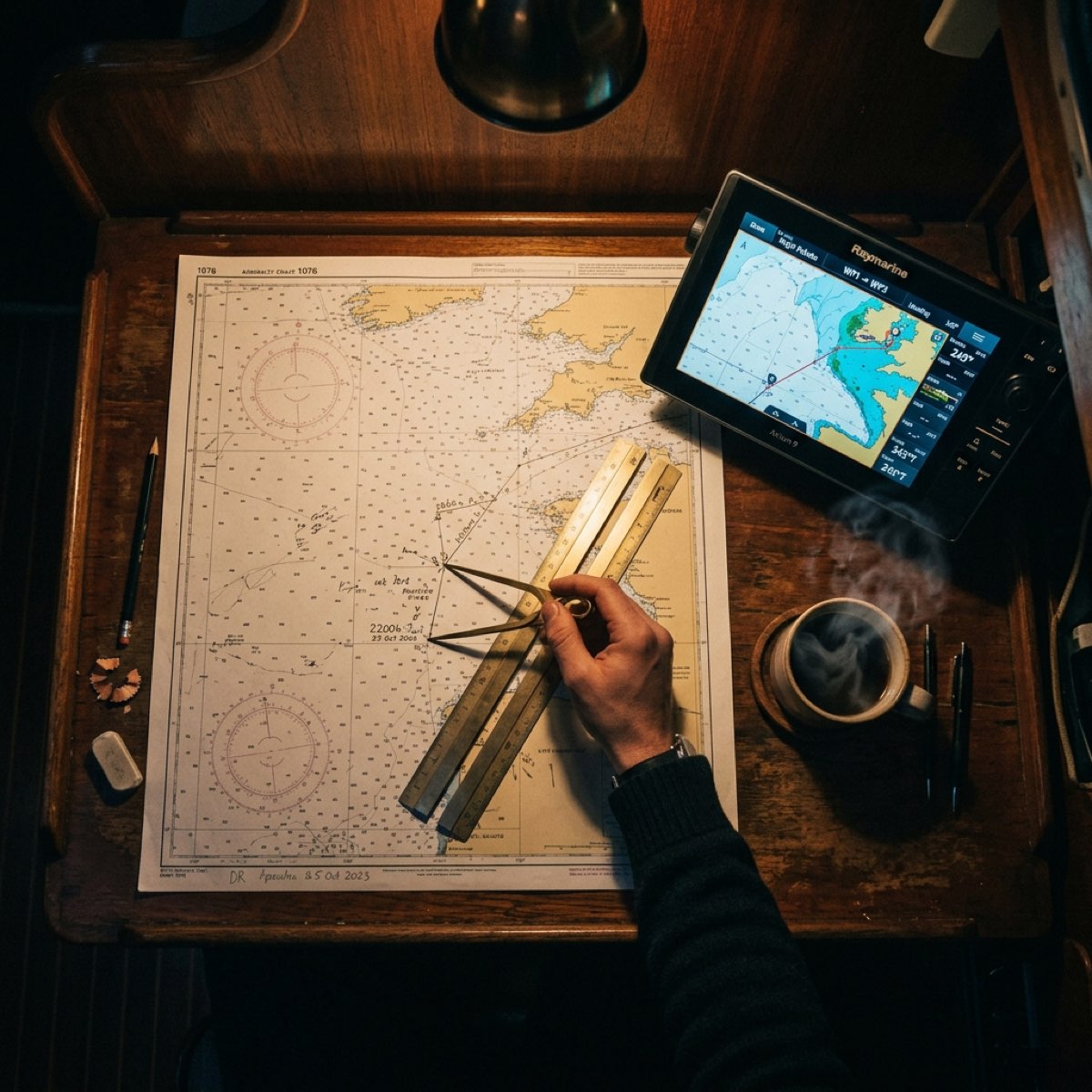
I carry two chart sets for the Azores:
- Electronic: Navionics on the plotter + backup on iPad in a waterproof case
- Paper: Imray Portuguese Waters pilot book (available on Amazon) — not just for emergencies, but because it has local knowledge no ENC carries
Critical hazard list:
- São Miguel north coast: Submerged volcanic rocks to 0.5nm offshore at Rabo de Peixe — stay outside the 20m contour
- Faial/Pico channel: Strong tidal streams (up to 2.5 knots) at springs — time crossings for slack or favourable current
- São Jorge south coast: Basalt shelves at Urzelina — 0.5nm clearance minimum
- Flores approaches: Strong wind acceleration around headlands — forecast 18kts often arrives as 25kts at the island
Weather Windows: How I Decide to Go
My personal go/no-go checklist for inter-island passages over 30nm:
- Less than 1.5m significant wave height at departure time
- Wind 8–20 knots from a favourable quarter for at least 80% of the passage window
- No fronts forecast to arrive within 12 hours of expected landfall
- Azores High central pressure above 1020 hPa and stationary or moving north
- VHF weather forecast checked from Portuguese Coast Guards (Channel 16 → switch to working channel)
If fewer than 4 of these are green, I wait. There is always another day. There is not always another boat.
Marina & Harbour Guide
Facilities by Island
| Marina | Island | Berths | Fuel | Haul-out | Wi-Fi | Advance Booking |
|---|
| Horta | Faial | ~300 | Yes | Yes | Yes | Essential Jul–Aug |
| Ponta Delgada | São Miguel | 700+ | Yes | Yes | Yes | Recommended |
| Angra do Heroísmo | Terceira | 150 | Yes | Limited | Yes | Recommended |
| Madalena | Pico | 80 | Yes | No | Yes | Advisable |
| Velas | São Jorge | 60 | Yes | No | Limited | Walk-in usually OK |
| Santa Cruz | Graciosa | 50 | Yes | No | Limited | Walk-in usually OK |
| Lajes das Flores | Flores | 30 | Yes | No | No | Call ahead on VHF 16 |
| Vila do Porto | Santa Maria | 60 | Yes | No | Limited | Advisable |
Berthing Fees (Approximate, 2025 Rates)
| Marina | Low Season (Nov–Apr) | High Season (Jun–Aug) | Per Night (40ft yacht) |
|---|
| Horta | €25–35 | €40–55 | + €5–8 utilities |
| Ponta Delgada | €22–30 | €38–50 | + €5–8 utilities |
| Smaller islands | €15–25 | €25–35 | Often cash only |
Non-EU vessels must clear customs at the first port of entry. Carry original vessel registration, skipper's licence, and proof of insurance.
Charter Guide: Choosing the Right Boat
Bareboat vs Crewed: The Honest Comparison
| Type | Best For | Cost (7 days, 40ft) | What You Need |
|---|
| Bareboat | Experienced certified skippers | €1,800–€3,500 | ICC or national licence + logbook proof |
| Skippered | Mixed experience crews | €3,000–€5,500 | Nothing — the skipper handles passage planning |
| Fully crewed | Pure relaxation + luxury | €5,000–€10,000+ | Credit card and a towel |
My recommendation for first-time Azores sailors: Take a skippered charter for the first trip. The inter-island passages are short, but the weather can change fast and local knowledge about where to anchor in Pico's leeward side — which side of the chain to run, which mooring buoys hold in 25 knots — is worth more than the price premium.
What to Look For in a Charter Boat
Before signing, verify:
- Safety kit: SOLAS-approved life jackets for all crew, EPIRB (registered, not expired), and at least 4 flares. If unsure what to look for, our EPIRB vs PLB buyer's guide has the full checklist.
- Communications: Fixed VHF with DSC (not just handheld), and ideally a satellite weather receiver or SSB radio for offshore passages
- Navigation: Chartplotter with Navionics or C-Map loaded for all nine islands — not just the Central Group
- Anchoring: Minimum 60m of chain on the primary anchor; danforth or Rocna-style anchor, not a CQR on a volcanic bottom
Recommended Charter Bases
Primary base ports for charter pick-up:
- Horta (Faial) — best for Central Group circuits, excellent facilities, Peter Café Sport conveniently close to the dock (this is not a coincidence)
- Ponta Delgada (São Miguel) — best for Eastern Group exploration and those flying direct from Lisbon or the UK
- Pico — smaller selection but growing, ideal if the mountain is your priority
Gear and Provisioning: What I Actually Pack
Essential Kit for the Azores (Amazon Links)
The Azores is not a milk-run. It's open North Atlantic sailing. Here's what earns its space below decks:
Safety:
Navigation:
Clothing:
Provisioning:
What to Buy on the Islands
| Island | Best Supplies | Notes |
|---|
| São Miguel | Full provisioning, diesel, spare parts, fresh produce | Continente supermarket 10 min walk from Ponta Delgada Marina |
| Faial | Full provisioning, diesel, marine chandlery | Chandlery near Horta Marina stocks most common parts |
| Pico | Wine, cheese (buy 2kg of queijo, you'll wish you bought 4) | Limited supermarket in Madalena |
| São Jorge | Queijo São Jorge DOP (the best cheese in the archipelago, full stop) | Buy at the cooperative in Velas |
| Flores | Basic food, diesel | Stock up in Faial before crossing west |
| Corvo | Nothing — bring what you need | Bring a gift for the harbourmaster |
Wildlife: The Azores' Real Attraction
"If you sail to the Azores for the sailing, you'll be impressed. If you sail there for the wildlife, you'll be changed." — Alex Rivera, passage log, September 2022
The Azores sits above the Mid-Atlantic Ridge — a volcanic chain that creates abrupt depth changes from 3,000m to 200m near the islands. These depth gradients concentrate prey and attract the highest density of cetacean species in the North Atlantic.
Species and Where to Find Them
| Species | Season | Best Spot | Behaviour |
|---|
| Sperm whale | Apr–Oct (resident year-round) | South of São Miguel and Pico | Long dives (45–90 min), loud clicks audible on hydrophone |
| Blue whale | Apr–Jun | Northern transects | Transits, rarely lingers — the bus to the Arctic |
| Fin whale | Mar–May, Sep–Oct | Open water between groups | Fast, elusive — the Ferrari of whales |
| Common dolphin | Year-round | Faial–Pico channel | Bow-rides, massive pods of 200–500 |
| Risso's dolphin | Year-round | Pico leeward coast | Greyish-white scars, distinctive rounded head |
| Pilot whale | Year-round | All deep channels | Social, slow — approaches boats out of curiosity |
| Loggerhead turtle | May–Oct | Near São Miguel and Santa Maria | Often seen basking at surface in calm conditions |
Approach Rules (Portuguese Law, 2024)
The Azorean Whale Watching Regulations set minimum approach distances. Breaking them risks a fine of up to €22,500 and, more importantly, stresses animals exhibiting natural behaviour.
- Minimum distance: 100m for cetaceans; 300m for mother-calf pairs
- Approach angle: From the side — never head-on or from directly behind
- Speed: Idle or off when within 200m
- Time limit: No more than 30 minutes with any one group
- Log encounters: GPS, species, time, behaviour. Share with GMFL Azores research programme.
Onshore: Culture, Food, and What Not to Miss
The Three Meals You Must Eat
-
Cozido das Furnas (São Miguel): A whole meal — beef, pork, blood sausage, chouriço, vegetables — slow-cooked for 6 hours in volcanic hydrothermal vents beneath Furnas Lake. The restaurants above the vents lift the pots at midday. Arrive by 12:15 or go hungry. Tony's Restaurant in Furnas: unassuming, consistently outstanding.
-
Limpets (lapas) everywhere: Grilled on a flat stone with garlic and lemon butter, they're the Azores' street food. Order them at any harbour-side café the moment you tie up. Do not wait until you're back in the marina — the best ones are at the smallest places.
-
Queijo São Jorge: A firm, peppery, slightly crystalline cow's milk cheese that's been made on the island since the 15th century. Buy it at the Cooperativa na Beira in Velas. Buy more than you think you need. You will regret not buying more.
Cultural Highlights Worth a Half-Day
- Angra do Heroísmo (Terceira): UNESCO World Heritage city, the best-preserved Portuguese colonial town in the world. Walk the cobblestones, visit the Castelo de São João Baptista.
- Faial's Capelinhos Volcano: Erupted in 1957–58, burying a lighthouse in ash. The Capelinhos Interpretation Centre built inside the original lighthouse is one of the best small museums I've visited anywhere.
- Whale watching vigia (Pico): Walk up to one of the old lookout towers used by shore-based whale spotters — the vigieiros — before motorised whale watching existed. The views and the history are extraordinary.
Environmental Responsibility
The Azores is one of Europe's most pristine marine environments. It is not hard to keep it that way — it just requires five habits:
The Azores Zero-Impact Charter:
- Never anchor on rock or reef — sand only, or use a mooring buoy. Period.
- No sewage discharge within 12nm of shore — use holding tanks or pump-out facilities at marinas
- Maintain a minimum of 100m from all cetaceans — engine off at 200m
- Offload all waste at the marina — separate glass, plastic, and organic where recycling bins are available
- Report entangled or stranded animals — IMAR Azores emergency: +351 292 281 811
Quick-Reference FAQ
Do I need a sailing licence to charter in the Azores?
Yes. Most charter companies accept the RYA Day Skipper (coastal) for sheltered waters, but require Coastal Skipper or equivalent for inter-island passages. The ICC (International Certificate of Competence) is widely accepted. Bring your original certificate and a minimum 10-day offshore logbook record.
Is the Azores suitable for beginner sailors?
With a qualified skipper: absolutely. Solo or as bareboat skipper: not for your first offshore experience. The inter-island passages are open Atlantic sailing, not sheltered coastal water.
What's the currency situation on smaller islands?
Euro everywhere. Card payment is hit-or-miss on Corvo and Flores — carry €200–300 cash before leaving Faial or São Miguel.
Can I sail to the Azores from mainland Europe?
Yes. The most common routes are Cascais or Lagos (Portugal) → Azores: approximately 850–1,000nm, typically 7–10 days depending on conditions. The Azores are also a major waypoint on trans-Atlantic passages from the UK and northern Europe.