There is a distinct difference between the faint, oily exhaust smell of an older two-stroke outboard and the sharp, volatile sting of raw, unburned gasoline. When you smell raw gas on a boat, the diagnostic process doesn't start with opening the engine hatch to take a look. It starts with turning everything off.
Gasoline fumes are heavier than air. In a car, a fuel leak drips onto the road and the wind blows the fumes away. In a boat, the hull acts as a giant bucket. The fumes sink into the bilge, filling the deepest parts of the hull. They sit there, waiting for a single spark from a bilge pump float switch, a starter motor, or a loose battery terminal.
This is not a theoretical hazard. According to Coast Guard statistics, fuel explosions are one of the leading causes of catastrophic boat loss.
When your boat smells like gas, you do not have a nuisance issue; you have a structural emergency. Here is exactly what to do the moment you smell it, and the step-by-step process to locate the leak safely.
About this guide: Mike Callahan has twenty-two years of recreational boating experience. During his time as a service advisor at a marine dealership, finding and fixing fuel leaks was a critical safety priority. The procedures below follow standard marine safety protocols. Warning: If you smell a strong, overpowering odor of raw fuel, evacuate the boat immediately and call the fire department or marina staff. Do not attempt to diagnose a massive fuel spill yourself.
If you are on the water or at the dock and suddenly smell raw fuel:
- Do NOT start the engine. If the engine is running, shut it down immediately.
- Turn off the main battery switch. Do not operate the bilge pump, the blower, the VHF radio, or the cabin lights. Any electrical switch can create a micro-spark when toggled. Cut the master power.
- Extinguish all smoking materials.
- Open all hatches. Lift the engine box, the bilge access, and any cabin doors. Let the wind naturally ventilate the hull.
- Get passengers off the boat if you are at the dock. If on the water, move everyone to the bow (away from the engine and bilge).
Only after the boat has been thoroughly ventilated for at least 15-20 minutes, and the overpowering smell has faded to a localized scent, should you begin looking for the source.
The 4 Most Common Sources of Boat Fuel Leaks
Marine fuel systems degrade much faster than automotive systems due to UV exposure, saltwater corrosion, and the harsh chemical effects of ethanol-blended fuel (E10) on older rubber components.
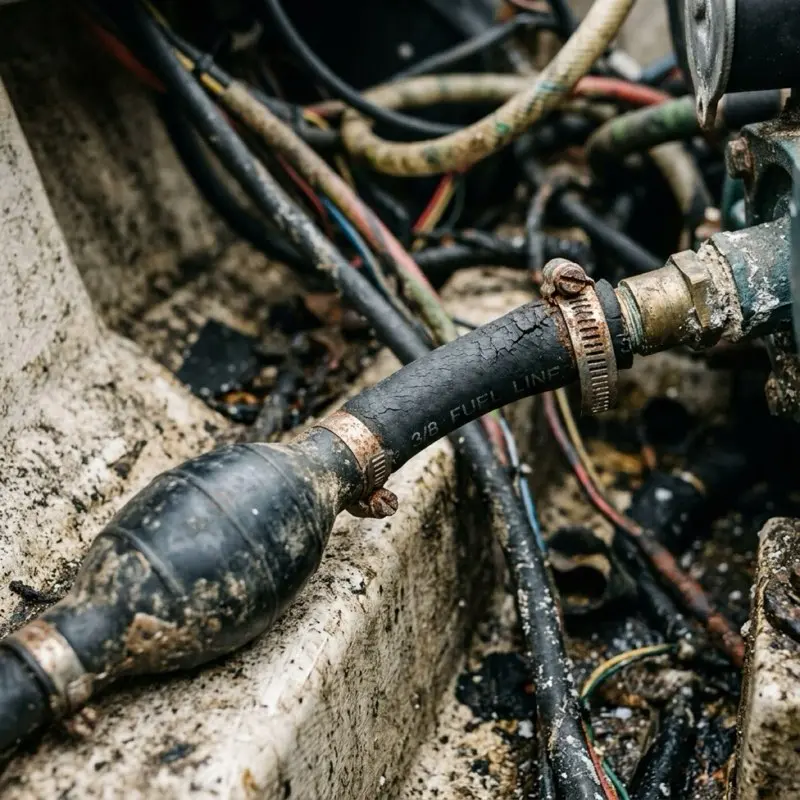
1. Cracked or Degraded Fuel Lines (The #1 Culprit)
Rubber fuel lines have a lifespan. The Coast Guard and the ABYCAmerican Boat and Yacht Council—the governance authority for maritime specs. (American Boat and Yacht Council) mandate specific fuel hoses for boats, stamped with "USCG Type A1" or "Type B1".
However, even the best marine hoses dry rot over time. Ethanol fuel accelerates this by leaching the plasticizers out of the rubber, making it brittle.
How to find it:
Trace the fuel line from the tank all the way to the engine. Run your bare hand along the underside of the hose. You are feeling for:
- Wet spots or a tacky, sticky residue.
- "Alligator cracking" on the outside jacket of the hose.
- A strong fuel smell on your fingers after touching a specific section.
The Fix:
If a hose is cracked, the entire run must be replaced. Do not patch a marine fuel line. Buy only Coast Guard-approved A1-15 hose (which is rated for ethanol blends). A complete Moeller Marine Fuel Line Assembly (which includes the hose, primer bulb, and motor fittings) costs $30–$50 and takes 10 minutes to install.
2. Leaking Primer Bulbs and Hose Clamps
The primer bulb and its connection points are the weakest links in the fuel delivery chain. They sit exposed to the sun and are constantly squeezed and manipulated.
How to find it:
Squeeze the primer bulb firmly until it gets hard. While maintaining pressure, look closely at:
- The ends of the bulb where the hose attaches.
- The seams of the bulb itself.
- Every hose clamp between the tank and the engine.
Often, a leak won't show up when the engine is off because there is no pressure in the line. Squeezing the bulb simulates fuel pump pressure and will force fuel out of a loose clamp or a cracked bulb valve.
The Fix:
Tighten any loose stainless steel hose clamps (use a nut driver, not a flathead screwdriver, to get them tight without slipping). If the bulb itself is weeping fuel, replace the entire assembly. Sierra International Primer Bulbs are high-quality, ethanol-resistant replacements.
3. The Fuel Tank Vent
Every built-in marine fuel tank has a vent that allows air to enter the tank as fuel is consumed, and allows expanding fumes to escape when the boat sits in the hot sun. This vent usually exits the side of the hull via a small chrome or plastic fitting.
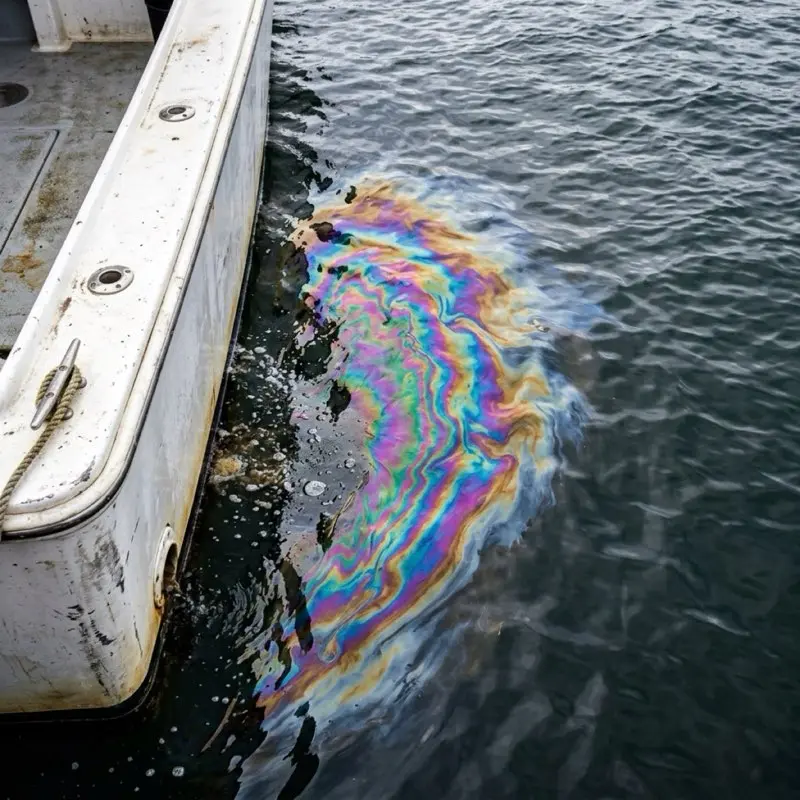
If you overfill the tank at the gas dock, the fuel will expand as it warms up during the day. Because the tank is full, it pushes raw liquid gasoline out through the vent line. This can spill down the side of the hull or, if the vent hose inside the boat has a sag in it, leak into the bilge.
How to find it:
Check the outside of the hull below the vent fitting for yellow stains or a clean streak where gas has washed the hull. Check the vent hose connection at the top of the fuel tank to ensure the hose clamp hasn't rusted away.
The Fix:
Never fill a boat tank past 90% capacity, especially if the boat is going to sit on a trailer in the sun. If the vent hose itself is leaking inside the hull, replace it with USCG Type A2 or A1 hose.
4. Carburetor Float Stuck Open (Carbureted Engines Only)
If your motor has a carburetor, the float bowl stores a small amount of fuel. A needle valve opens and closes to keep the bowl full.
If a piece of debris (or sticky varnish from old fuel) prevents the needle valve from closing, the fuel pump will continue pushing gas into the carburetor. The carb will overflow, dumping raw fuel directly into the engine cowling and down into the water (or the bilge).
How to find it:
Remove the engine cowling. Squeeze the primer bulb firmly. If you hear a hissing sound and see fuel dripping out of the front of the carburetor (the air intake), the needle valve is stuck.
The Fix:
Sometimes you can dislodge the debris by tapping the side of the carburetor bowl firmly with the plastic handle of a screwdriver. If that doesn't work, the carburetor needs to be removed, cleaned, and rebuilt.
What About Inboard/Sterndrive Boats?
If you have an inboard or I/O (sterndrive) boat, the fuel smell is exponentially more dangerous because the engine is enclosed in a compartment inside the hull.
Outboards vent naturally to the open air. Inboards trap fumes.
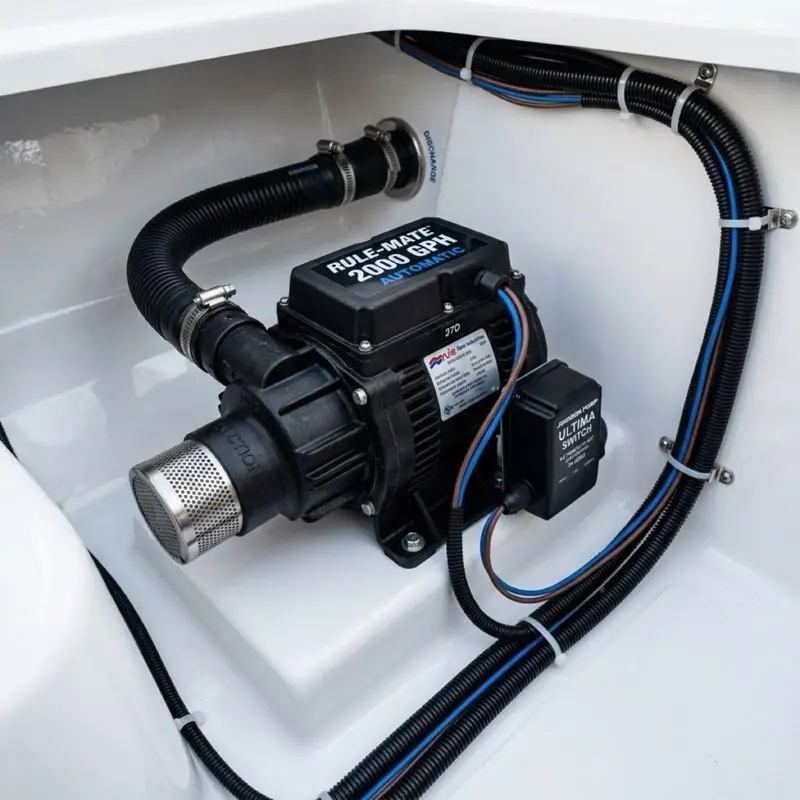
This is why all inboard gasoline boats are equipped with a Bilge Blower. The blower is an ignition-protected exhaust fan designed to suck heavy gas fumes out of the bilge and vent them overboard.
The Golden Rule of Inboards: You must run the bilge blower for a minimum of 4 minutes before turning the ignition key, every single time you start the boat. If you smell gas while underway in an inboard, shut down, open the engine hatch, and do not restart until the source is found.
When to Call a Professional
Diagnosing a loose hose clamp or a cracked primer bulb is basic DIY maintenance. However, you should immediately call a certified marine mechanic if:
- The leak is coming from the aluminum or plastic fuel tank itself. Do not attempt to patch or weld a marine fuel tank.
- The fuel fill hose (the large 1.5-inch or 2-inch hose from the deck fill to the tank) is leaking. These are notoriously difficult to replace on many boats as they run under sealed decks.
- You cannot find the source, but the smell persists. Do not assume it is "just how boats smell."
Prepare for the Worst: Fire Safety on Board
Because fuel leaks are always a possibility, you must have the correct safety gear readily available.
- Fire Extinguishers: The Coast Guard requires at least one B-I type fire extinguisher on most recreational boats. However, one is rarely enough. Keep one near the helm and one near the stern/engine area. Check the pressure gauges monthly.
- Towing/Emergency Service: If a fuel leak leaves you stranded, you need a safe way home. A BoatUS Unlimited Towing Membership is the cheapest insurance you can buy against a catastrophic day on the water. Do not risk restarting a compromised fuel system just to avoid a towing bill.
Quick Reference Leak Locator
| If the smell is strongest... | Look for... |
|---|
| Near the outboard motor | Leaking primer bulb, stuck carburetor float, cracked engine fuel lines. |
| Inside the center console / under the deck | Leaking fuel tank sending unit gasket, degraded main fuel lines, loose hose clamps at the tank. |
| Near the side of the hull | Fuel tank vent overflow, leaking fuel fill hose. |
| Inside an inboard engine box | Leaking carburetor/throttle body, failed mechanical fuel pump diaphragm dripping into the bilge. |
5. The Chemistry of Permeation: Why Your Boat Smells Like Gas (With No Leak)
If you have a plastic (polyethylene) fuel tank, you may notice a faint smell of gasoline in the cabin or storage lockers even when the bilge is bone dry and every hose is perfect. This is called Permeation.
5.1 The "Molecular Sieve"
Plastic fuel tanks are slightly porous at a molecular level. Over time, gasoline molecules physically migrate through the walls of the plastic tank and evaporate into the surrounding air.
- The Regulatory Shift: Modern EPA-rated fuel tanks have an internal "barrier layer" (usually EVOH) to stop this. But if your boat was built between 1990 and 2011, you likely have a standard poly tank that "sweats" gas fumes.
- The Diagnostic: If the smell is persistent but faint, and your bilge doesn't trigger a gas-sniffing sensor, you are likely dealing with permeation.
- The Fix: You cannot "seal" a permeating tank. The only solution is increased ventilation. Adding a passive louvered vent to the locker where the tank is stored will usually solve the smell.
6. The "Anti-Siphon Valve" Engineering: Your Silent Guardian
Every boat with a built-in fuel tank is required to have an Anti-Siphon Valve at the tank's exit.
6.1 The "Siphon" Hazard
Because most fuel tanks are located higher than the bottom of the bilge, a broken fuel line would act like a siphon, gravity-draining your entire 50-gallon tank into the hull.
- How it Works: The anti-siphon valve is a spring-loaded ball check valve. It requires the suction of the engine's fuel pump to pull it open. If the engine stops or a hose breaks, the spring snaps the ball shut, stopping the flow of gas.
- The Failure: If your boat smells like gas and the engine is running rough, the anti-siphon valve might be stuck partially closed. If it fails open, you have a massive safety risk.
- The Test: If you disconnect your fuel line from the tank and gas starts pouring out, your anti-siphon valve has failed. Replace it immediately (~$15).
7. Fuel-Water Separator Forensics: The "Internal Leak"
A gas smell can also be caused by the failure of your Fuel-Water Separator filter.
7.1 The "Corrosive Pinhole"
Water is heavier than gas. It sits at the bottom of the metal filter canister. If you don't change your filter annually, that trapped saltwater will corrode a pinhole through the bottom of the steel canister.
- The Result: High-pressure fuel begins to "mist" out of the bottom of the filter. This mist is incredibly explosive.
- The Callahan Standard: I only use Stainless Steel filter heads. If your filter head is painted cast iron, the paint will eventually flake off, allowing corrosion to start the leak. Upgrade to a SeaStar/Sierra Stainless Steel Water Separator Bracket to eliminate this failure point forever.
8. The "Callahan Sniff Test" Protocol: 5-Point Safety Inspection
Before you head out for a day on the water, perform this 60-second "Sniff Test":
- The Bilge Check: Open the bilge hatch. If you smell even a hint of raw gas, do not proceed.
- The "Pinky" Trace: Run your pinky finger under the primer bulb and the fuel-water separator. If your finger is wet or smells of gas, you have a weeping leak.
- The Deck Fill Gasket: Check the rubber O-ring inside your fuel fill cap. If it is cracked, rainwater is entering your tank (causing stalling) and gas fumes are escaping (causing the smell).
- The Vent Obstruction: Look at your fuel vent on the side of the hull. Mud dauber wasps love to build nests here. If the vent is blocked, the pressure inside the tank will force gas out of the hose clamps inside the boat.
- The Hose "Flex" Test: Squeeze your fuel lines. If they feel hard like a plastic pipe or if they "crunch" when bent, the internal liner has collapsed. Replace them before they leak.
9. USCG Fire Safety Update (2026 Standards)
As of 2026, the Coast Guard has updated the requirements for fire extinguishers.
- Disposable vs. Rechargeable: Disposable extinguishers (the kind with plastic triggers) now have a 12-year expiration date from the date of manufacture. If your extinguisher was made in 2014, it is now legally "expired," even if the gauge is in the green.
- The Standard: For a 20-25 foot boat, I recommend two 5-lb ABC dry chemical extinguishers. One in the cockpit and one in the cabin/bow.
10. Summary: Respect the Volatility
Gasoline is one of the most energy-dense and volatile substances on earth. In a boat, it must be contained with 100% integrity. If you smell gas, the boat is telling you that the integrity has been compromised.
Don't be the boater who "just lives with the smell." Find the leak, replace the hose, and ensure your bilge blower is healthy. Your family's safety depends on those $2 hose clamps.
I'll see you at the ramp.