There is a very specific type of frustration that happens when your boat runs beautifully at 4,000 RPM, but the moment you pull back the throttle to navigate a no-wake zone or approach the dock, the engine shudders, coughs, and dies.
You restart it. It fires right up. You put it in gear. It dies again. You end up having to slam it into gear while giving it too much throttle just to keep it running, which makes docking an exercise in controlled collision.
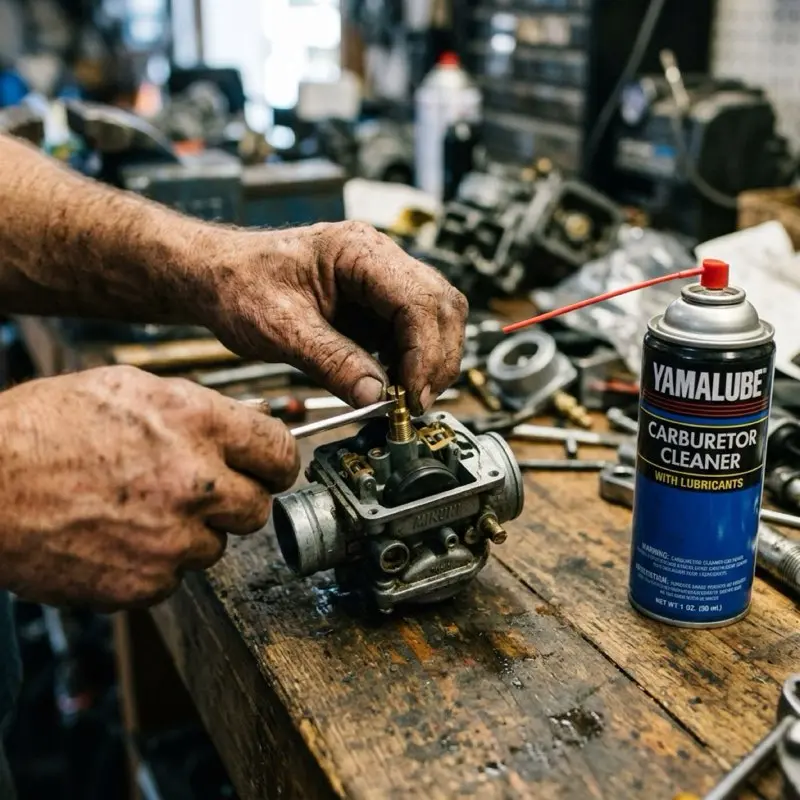
I dealt with this exact issue on a 21-foot Mako with a 150HP carbureted Yamaha. It took me three weekends of adjusting idle screws and replacing fuel lines before I finally broke down, pulled the carburetors, and found the real culprit: a speck of varnish the size of a grain of sand blocking the idle jet in the middle carburetor.
When an outboard runs fine at mid-to-high RPM but stalls at low RPM, the engine is fundamentally healthy. It has spark, it has compression, and the main fuel delivery system works. The problem lies entirely in the idle circuit, the specific systems designed to keep the engine running when the throttle plates are closed.
Here is how to diagnose and fix the three most common causes, whether you have an older carbureted motor or a modern fuel-injected (EFI) one.
About this guide: Mike Callahan has twenty-two years of experience with outboard motors and spent four years as a service advisor at a Yamaha-certified marine dealership. He has diagnosed hundreds of low-speed stalling issues across both two-stroke and four-stroke outboards. The procedures in this guide reflect standard dealership diagnostic logic for isolating idle-circuit failures. This guide covers both carbureted and EFI outboards. If you are uncomfortable working with fuel systems or compressed air, the carburetor cleaning steps should be performed by a professional.
The Rule of Thumb: Fuel vs. Air vs. Spark
Before taking anything apart, understand what an engine needs to idle smoothly:
- A very small, precisely metered amount of fuel.
- A very small, precisely metered amount of air.
- Consistent spark.
If the engine runs fine at wide-open throttle, the main fuel pump and main ignition coils are working. A low-speed stall means either the idle fuel passage is blocked (starving the engine), there is a vacuum leak (giving the engine too much air), or an idle-specific sensor/valve has failed.
Part 1: Carbureted Outboards (Motors pre-2010 and smaller portables)
If your motor has a carburetor, there is a 90% chance your stalling issue is caused by a clogged idle jet.
Why Carburetors Fail at Idle First
A carburetor has two main fuel passages. The main jet is a relatively large hole that supplies fuel when you open the throttle. The idle jet (or pilot jet) is a microscopic hole, often narrower than a sewing needle, that supplies fuel when the throttle plates are closed.
When ethanol-blended fuel (E10) sits in a carburetor over the winter, it evaporates and leaves behind a sticky residue called varnish. Because the idle jet is so tiny, it is always the first passage to get clogged by this varnish. When you pull the throttle back, the engine starves for fuel and dies.
The Fix: Cleaning the Idle Circuit
Spraying carburetor cleaner down the throat of the carb while the engine is running will not fix a clogged idle jet. The cleaner just gets sucked into the main intake. You have to remove the bowl.
Step 1: Drain the Carburetor
Locate the drain screw at the bottom of the carburetor bowl (the lowest part of the carb). Place a rag underneath and open the screw to let the fuel drain out. If the fuel looks yellow, smells like stale varnish, or has water droplets in it, you have found your problem.
Step 2: Remove the Bowl
Remove the two or four screws holding the bowl to the bottom of the carburetor. Carefully drop the bowl down, ensuring you don't tear the rubber gasket or lose the float pin.
Step 3: Locate the Jets
Look up into the body of the carburetor. You will see a central brass tube (the main jet) and usually a smaller brass tube or screw set off to the side (the idle/pilot jet).
Step 4: Clean the Jets
- Using a properly sized flathead screwdriver, unscrew the idle jet.
- Hold it up to the light. You should be able to see a tiny pinhole of light through the center. If you cannot, it is clogged.
- Spray Berryman B-12 Chemtool Carburetor Cleaner through the jet.
- If the varnish is stubborn, pluck a single bristle from a wire brush (or use a dedicated carburetor cleaning wire set) and gently push it through the hole. Never use a drill bit or force anything that might widen the hole; enlarging the jet by even a fraction of a millimeter will ruin the carburetor's tuning.
- Reinstall the jet and the bowl.
When to buy a Rebuild Kit:
If the inside of the bowl is coated in heavy green or brown sludge, or if the rubber bowl gasket is flattened and brittle, a quick cleaning won't last. You need to pull the entire carburetor off the engine, soak it in a chem-dip, and replace all the gaskets and needle valves.
Part 2: Fuel Injected (EFI) Outboards (Modern motors)
If you have a modern four-stroke with Electronic Fuel Injection, you don't have an idle jet to clog. Stalling at low speeds on an EFI motor is usually an air control problem.
Cause 1: The IAC Valve (Idle Air Control)
When you pull the throttle back to idle on an EFI motor, the main throttle plates close completely. To keep the engine running, the computer opens a small electronic bypass valve, the IAC valve, to let a metered amount of air into the engine.
If the IAC valve gets stuck closed by carbon buildup, or the internal electric motor fails, the engine chokes for air the moment you close the throttle and dies instantly.
How to Diagnose a Faulty IAC Valve:
- The "Crack the Throttle" Test: When starting the engine, use the fast-idle lever (or push the button on the control binnacle that allows you to advance the throttle without putting the engine in gear). Advance the throttle slightly and crank. If the engine starts and runs fine, but dies the exact second you pull the lever back to the neutral/idle position, your IAC valve is not functioning.
- The Sound Check: On many outboards (like Suzuki and Yamaha four-strokes), you can hear the IAC valve click or hum for a few seconds when you turn the key to the "ON" position (without cranking). If it is silent, it may be dead.
The Fix:
Locate the IAC valve on the intake manifold (consult your manual; it usually has a 2 or 3-wire electrical connector). Remove it (usually two bolts). Inspect the pintle (the plunger) and the passage it sits in. If it is black with carbon, spray it heavily with throttle body cleaner (not carb cleaner, which can damage sensor plastics) and wipe it clean. Reinstall and test. If it still stalls, the valve has failed electronically and must be replaced. OEM IAC valves run $80–$150.
Cause 2: Vacuum Leaks
An engine expects a specific ratio of fuel to air. A vacuum leak is an unmetered source of air getting into the engine after the throttle body, making the fuel mixture too "lean" (too much air, not enough fuel).
At wide-open throttle, so much air is rushing in anyway that a tiny leak doesn't matter. But at idle, when the engine is only sipping air, a small leak completely ruins the air/fuel ratio, causing the engine to stumble, surge up and down in RPMs, and eventually stall.
How to Diagnose a Vacuum Leak:
Look for cracked or brittle rubber hoses connected to the intake manifold.
To test for a leak while the engine is idling (or while someone keeps it running with slightly advanced throttle):
- Take a can of CRC Marine Quick Start or Carb Cleaner.
- Very carefully spray short bursts around the base of the intake manifold, the throttle body gasket, and any vacuum hoses.
- Listen to the engine RPMs. If the RPMs suddenly surge higher when you spray a specific spot, you have found your leak. The engine sucked in the combustible spray through the leak, temporarily enriching the mixture.
The Fix: Replace the cracked hose or the leaking gasket. Vacuum hose is cheap; running a lean engine can cause detonation and piston damage.
Part 3: The "In-Gear" Stall (Propeller Hub or Shift Switch)
Does the engine idle perfectly in neutral, but die the absolute second you shift it into forward or reverse?
This is a specific sub-category of stalling. When you put the engine in gear, you apply a sudden load (the resistance of the water against the propeller).
1. The Shift Interrupt Switch (Mostly Sterndrives, some Outboards)
Many marine engines have a shift interrupt switch. When you shift out of gear, this switch momentarily cuts the ignition to a few cylinders to relieve torque on the gears, allowing them to disengage smoothly. If this switch gets stuck or the shift cable is stretched and out of adjustment, it will kill the ignition completely when you shift.
The Fix: Locate the shift interrupt switch on the engine bracket where the shift cable terminates. Manually depress and release the switch to see if it is sticking.
2. Tangled Propeller
If you picked up a thick braided fishing line, a crab pot rope, or heavy weeds wrapped tightly around the propeller shaft behind the prop, the engine may idle fine in neutral but the friction binds the shaft so tightly that the engine doesn't have enough low-RPM torque to turn it when put in gear.
The Fix: Always tilt the motor up and visually inspect the propeller hub for wrapped line before diagnosing engine components.
The Prevention Protocol: Fuel Management
Whether carbureted or EFI, 80% of all idle and stalling issues are fuel-related. You can prevent almost all of them with a strict fuel protocol:
- Use Non-Ethanol Fuel (REC-90): If you can find it at your local marina or gas station, use it exclusively. It does not attract water and does not break down into varnish nearly as fast as E10.
- Use a Daily Enzyme Treatment: If you must use E10 pump gas, add Star Tron Enzyme Fuel Treatment to every tank. It breaks down the moisture clusters in ethanol fuel, preventing phase separation.
- Run It Dry (Carburetors only): If you are putting a carbureted boat away for more than two weeks, disconnect the fuel line while the engine is idling at the dock. Let the engine run until it dies. This completely empties the carburetor bowl, ensuring there is no fuel sitting in the idle jet to turn into varnish while you are away.
4. The Physics of the "Lean Sneeze": Why Your Outboard Coughes
If your engine is idling and you hear a sharp, metallic "clack" or a "cough" followed by an immediate stall, you are witnessing the Lean Sneeze.
4.1 The Chemistry of Combustion
A healthy engine burns a mixture of roughly 14.7 parts air to 1 part fuel. When that ratio climbs to 18:1 or 20:1 (too much air), the fuel doesn't burn quickly, it smolders.
- The Sneeze: Because the smoldering fuel is still burning when the intake valve opens for the next cycle, it ignites the fuel/air mixture inside the intake manifold. This mini-explosion pushes back against the carburetor or throttle body, creating that "cough" sound.
- The Diagnostic: A lean sneeze is a 100% confirmation that your engine is starving for fuel at idle. Check your idle jets (carb) or look for a massive vacuum leak (EFI).
5. Vapor Lock and the VST (Vapor Separator Tank)
On modern EFI outboards, stalling at idle after a long run is often caused by Vapor Lock.
5.1 The Heat-Soak Effect
When you run your engine hard and then shut it off, the heat from the engine block radiates into the fuel rails. Because modern fuel has a low boiling point (especially ethanol blends), the fuel can turn into a gas inside the lines.
- The VST: Modern outboards have a Vapor Separator Tank (VST) that acts as a mini-fuel reservoir with a high-pressure pump inside.
- The Failure: If the VST cooling water passage is clogged with salt, the fuel inside the tank gets too hot, turns into foam, and the engine stalls.
- The Callahan Fix: If your engine stalls only after it has been running for 30 minutes, feel the VST tank. If it is too hot to touch, you have a cooling blockage in the fuel cooling circuit.
6. The "Callahan Carbon Soak" Protocol: Restoring Idle Compression
Sometimes, an engine stalls at idle not because of fuel or air, but because the Piston Rings are stuck.
6.1 Carbon Buildup
Two-stroke and even some four-stroke outboards build up carbon behind the piston rings. At high RPM, the sheer force of combustion keeps things moving. But at idle, leaky rings cause a loss of "Primary Compression," and the engine doesn't have the "squeeze" to stay running.
6.2 The Protocol (Every 100 Hours)
- Warm the Engine: Run the engine on muffs for 10 minutes.
- The Seafoam Treatment: Use a can of Seafoam Spray (Deep Creep) and spray it directly into the air intake while the engine is running until it starts to smoke heavily.
- The "Hot Soak": Shut the engine off immediately while still spraying. Let it sit for 30 minutes. The chemicals will penetrate the carbon and soften it.
- The Blowout: Restart the engine and run it at high RPM (in the water, under load) for 15 minutes. You will see a cloud of white/grey smoke, that is the carbon being evacuated. Your idle will often smooth out instantly.
7. Pro-Level Diagnosis: The "Digital Handshake"
If you have tried the basic fixes and your EFI outboard still stalls, it is time for a Digital Diagnostic.
Most modern outboards (Yamaha, Mercury, Suzuki, Evinrude) use a proprietary communication protocol.
- YDS (Yamaha Diagnostic System): A technician plugs a laptop into the engine's ECM.
- What They See: They can see the exact millisecond "Open Time" of every fuel injector. They can see the "Duty Cycle" of the IAC valve.
- The Value: If the IAC valve duty cycle is at 90% just to keep the engine idling, the computer is telling us it's working overtime to compensate for a problem elsewhere (like a vacuum leak). This eliminates "parts cannon" guessing.
8. Summary: The Fine Art of the Idle
An outboard motor is a study in extremes, designed to run at 6,000 RPM for hours, yet expected to sit at 600 RPM perfectly while you maneuver a million-dollar yacht into a tight slip.
By understanding the Lean Sneeze, the IAC Valve's role, and the importance of Carbon Management, you can maintain a "Rock Solid" idle. A boat that won't idle is a liability; a boat that idles perfectly is a joy.
See you at the dock.